
 By Tsuky
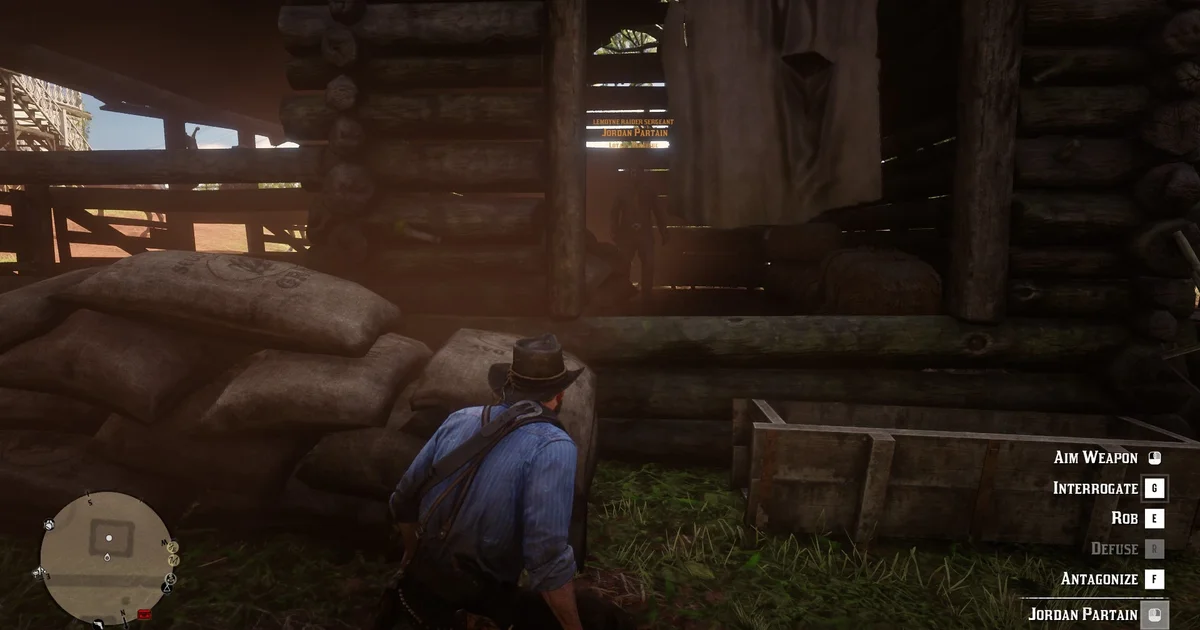
A Living World Does Not Necessarily Need a Language Model
Discussions about intelligent NPCs often focus on characters capable of unrestricted conversations through generative models.
However, that is only one possible approach.
Characters can appear autonomous when their actions emerge from sufficiently detailed and coherent rules.
enRAGE attempts to create that continuity.
The mod gives Red Dead Redemption 2 inhabitants identities, relationships, temperaments and memories.
It also introduces simulations of armed factions with their resources, leaders and rivalries.
The creator describes an additional social simulation architecture integrated into the existing game.
The published documentation does not establish that each NPC continuously queries a language model when deciding what to do.
Claude Code Assisted Development
The Nexus Mods listing includes an explicit AI disclosure.
Nicklovin99 states that Claude Code assisted in creating scripts and systems.
That describes the software development process.
A coding assistant can help write code, revise it or prepare tests.
That does not mean the finished program necessarily depends on the same service during gameplay.
The technical implications are very different.
In one case, AI helps produce software files.
In the other, AI is part of the program's runtime dependencies.
The available information confirms the first situation, not the second.
Describing every character as an autonomous Claude agent would therefore be misleading.
Persistent Memory Is the Foundation
According to the creator, the mod identifies encountered characters and stores information about them.
That changes how interactions can be interpreted.
An insult is no longer necessarily a temporary trigger for an immediate fight.
It can alter a persistent relationship.
A later encounter then takes place within a different world state.
Temperaments contribute to that behavior.
A proud or aggressive character need not follow the same reaction rules as a cowardly individual.
Such systems can produce varied responses through stored data and defined rules without generating each decision through a language model.
Identities That Survive Individual Encounters
enRAGE gives characters personal histories involving family and work.
The developer also describes relationships between inhabitants.
Friends, relatives and fellow faction members can influence the consequences of events.
A character's death does not necessarily erase them from the simulation without consequences.
It may change relationships among survivors.
Individual memories and collective events therefore form multiple levels of persistence.
The technical challenge is keeping them coordinated.
Storing one character's state is relatively straightforward. Maintaining coherence across hundreds of relationships and world changes is much more demanding.
Factions Have Their Own Simulation
The mod extends beyond personal enemies.
Armed groups have leaders, officers, members, resources and territory.
Their behavior changes as conflicts unfold.
A group may go to war, lose supplies or negotiate a truce.
The advertised simulation allows such events to take place without direct player involvement.
The underlying concept is a world with an internal state that evolves over time.
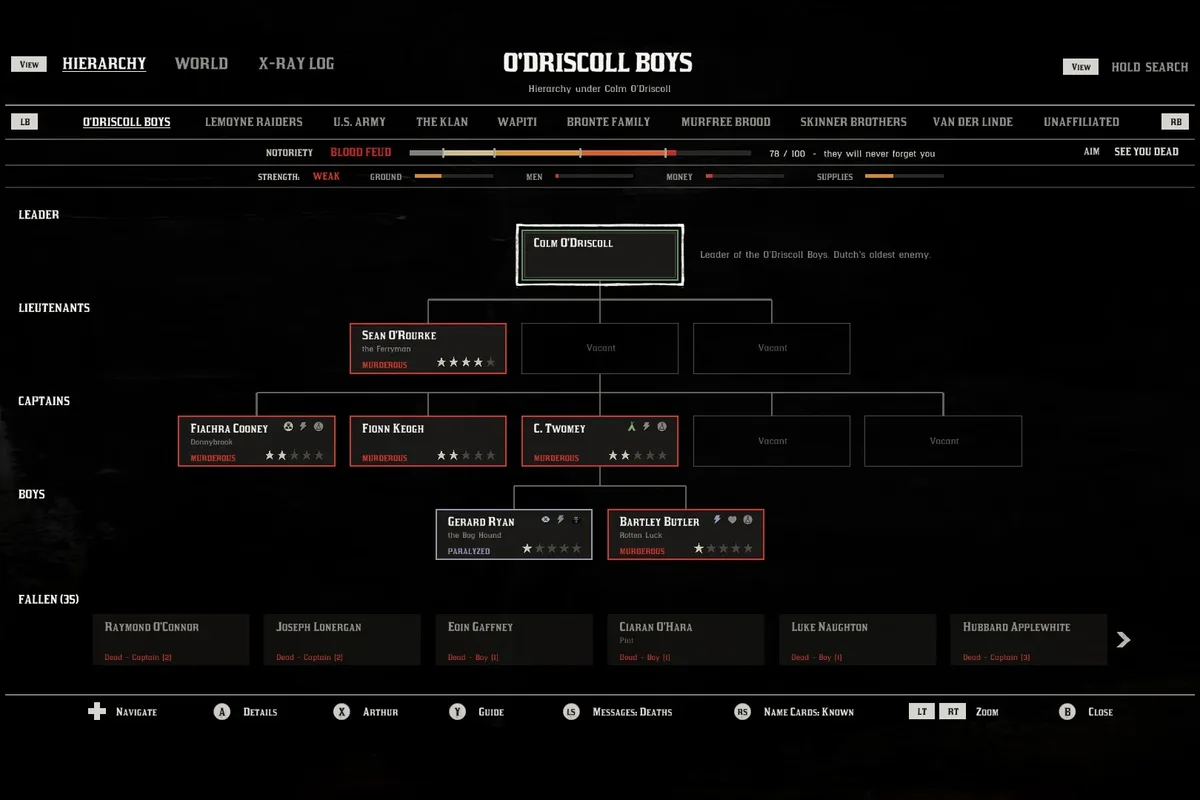
The hierarchy interface shows how the creator represents leadership within individual factions.
That visualization helps players understand otherwise complex systems.
Warfare Consumes Resources
enRAGE describes group conflicts as events that affect actual faction capabilities.
Casualties reduce available manpower.
Financial reserves can support recruitment.
Supplies influence what equipment groups can use.
Destroying a camp's resources is therefore intended to have practical consequences.
This brings a strategic simulation dimension to the game's combat.
However, it does not establish that every battle receives a fully detailed physical simulation across the entire world at all times.
The creator describes management systems and encounters, not a complete architecture specifying the simulation precision of every distant unit.
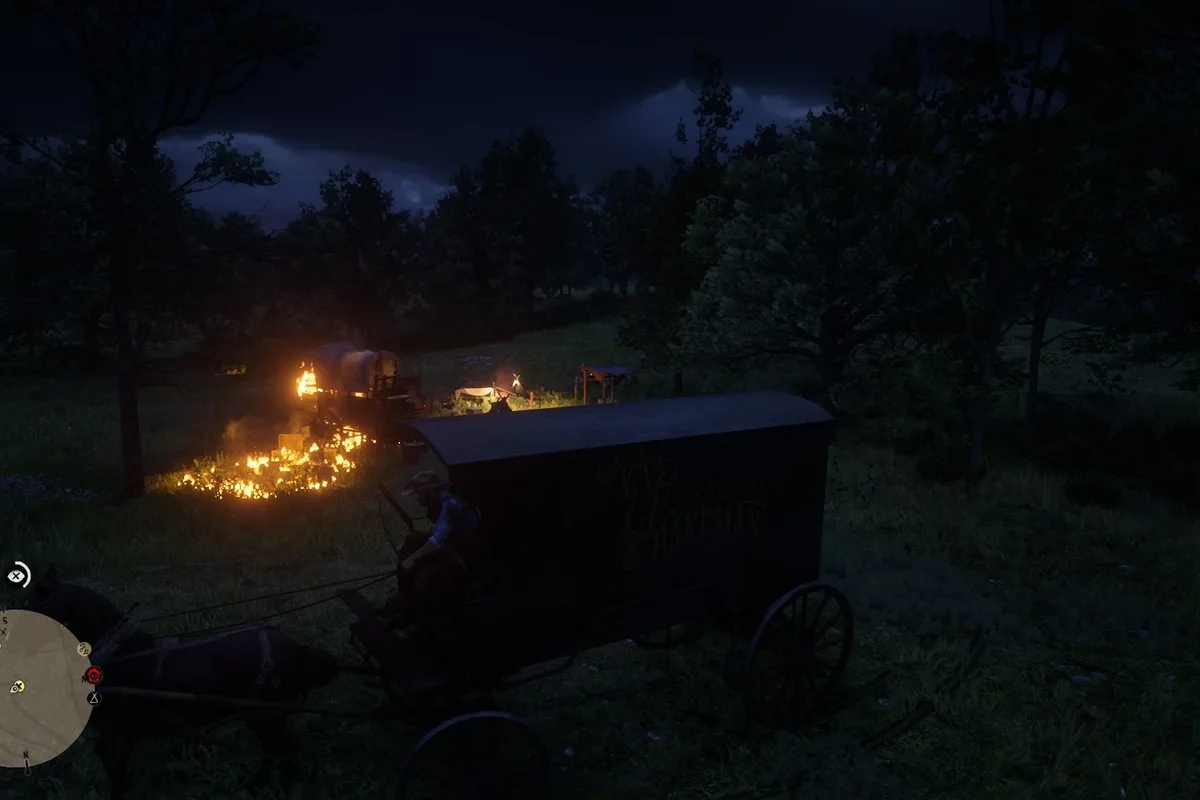
A Chronicle Turns Data Into Stories
One particularly interesting feature is how the mod presents world events.
Changes can be recorded in a living chronicle.
Some events also appear as stories in an in-game newspaper.
This presentation is essential to making the simulation understandable.
A system can perform many calculations without players noticing their consequences.
Turning those results into readable information gives the changes narrative meaning.
The newspaper becomes an interface between simulated data and the stories players construct about their experiences.
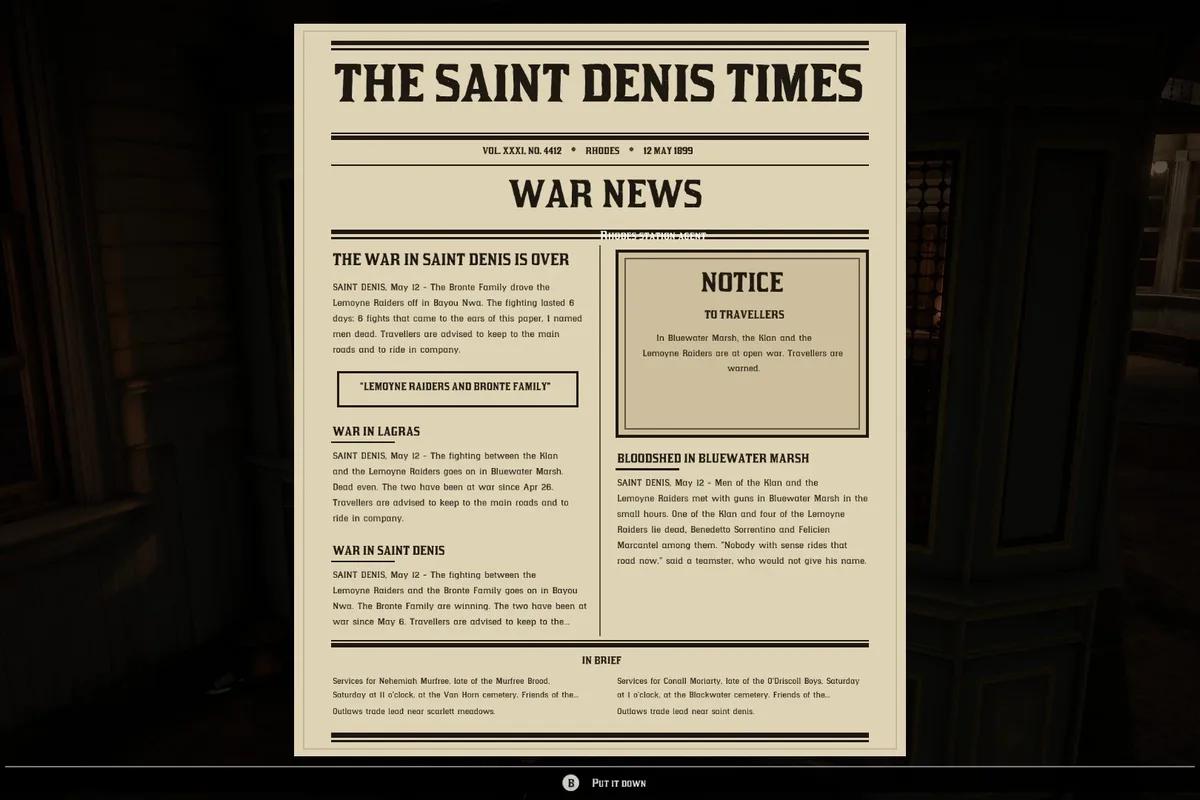
However, this does not necessarily mean every article is written by a generative language model.
The creator does not confirm using a live generative service to produce each newspaper story.
Rule-based systems and text templates can also provide narrative variation.
The Transition From 1899 to 1907 Tests Persistence
Version 0.9.5, released October 19, adds support for Red Dead Redemption 2's epilogue.
This is a significant change to the advertised architecture.
The simulated world can now progress across several fictional years.
Some characters disappear, while others change their circumstances or join new organizations.
The simulation also transitions from Arthur Morgan to John Marston.
The creator specifies that personal grudges against Arthur are not automatically transferred to John.
That distinction requires separating relationships belonging to the world from those associated with the current protagonist.
The update introduces factions and territories appropriate to the epilogue period.
These systems expand the mod's ambitions, although long-term stability across saves remains to be evaluated.
Technical Dependencies Still Matter
enRAGE is not a modification enabled through an official in-game menu.
It requires Red Dead Redemption 2 on PC and two external tools: ScriptHookRDR2 and ScriptHookRDR2DotNet V2.
The mod operates through scripts installed in the game's directory.
The developer provides installation instructions on Nexus Mods.
This approach allows the game to be extended, but creates dependencies on external tools and the original game's software versions.
Community discussions already indicate that certain combinations can cause problems.
Users mention compatibility fixes when scripts load without functioning correctly.
That does not mean every installation encounters the same problem.
It does show why the runtime environment matters when evaluating whether the mod is ready for broad use.
Early Access Comes With Real Stability Risks
The creator does not describe enRAGE as finished software.
The early-access label reflects the difficulty of testing every possible interaction between its many systems.
Reported problems include functionality errors and potential conflicts with other modifications.
Version 0.9.5 already contains numerous fixes.
Some address camps and patrols.
Others concern character identity, faction warfare and the epilogue transition.
The update demonstrates active development.
It does not prove that every issue has been resolved.
What the Mod Demonstrates and What It Does Not
enRAGE provides an interesting example of coding assistance contributing to an ambitious game modification.
It also illustrates how memory and simulation rules can produce the appearance of continuity among NPCs.
However, several conclusions would be premature.
Nothing in the examined sources demonstrates that every NPC runs live generative AI.
The project does not establish that a coding assistant can automatically create a coherent world without substantial design and integration work.
Software dependencies, game-specific implementation and bug fixes remain important.
Long-term functionality must also be assessed across playthroughs involving many characters, factions and saves.
A Simulation Experiment Worth Following
The most important feature of enRAGE is not its AI label.
It is the attempt to connect individual behavior, social relationships and collective conflicts within one world.
Personal rivalries give encounters continuity.
Factions provide a strategic context.
The chronicle and newspaper make changes understandable.
If these systems work together reliably, they could add another dimension to Red Dead Redemption 2 without changing its official campaign.
That potential success still requires testing, continued development and evidence from extended play.
For now, enRAGE remains an ambitious community experiment, developed with assistance from Claude Code, whose simulation systems deserve more attention than the mere presence of the term artificial intelligence.