
 By Kilam
A game that performs consistently for the first twenty minutes can still encounter problems after several hours. Repeated loading, resource allocation and transitions between environments can expose issues that are less obvious in short gameplay sessions.
The Coalition has identified long-session stability as an area of concern in Gears of War: E-Day. Its October 14 patch includes multiple memory-related improvements aimed at crashes and performance degradation on PC, Xbox consoles and supported handheld devices.
The studio does not provide numerical performance gains, memory-consumption comparisons or benchmark results with the patch notes. The improvements are confirmed as development work, but their measured effects remain configuration-dependent.
Memory optimization without published benchmarks
E-Day uses Unreal Engine 5, with a demanding visual presentation that combines detailed environments, dynamic lighting and extensive combat effects.
Memory management is particularly relevant in large games, although the patch notes do not identify a single root cause for the reported problems. They do not establish whether the issues resulted from memory leaks, resource fragmentation, streaming behavior or several unrelated causes.
Proper before-and-after testing would need to control hardware, graphics settings, drivers, gameplay duration and test locations.
Frame-time consistency and stability after extended play are at least as relevant as average framerate when evaluating this type of update.
Unreal Engine 5 across console and PC
Xbox advertises support for 4K output and up to 60 frames per second under compatible conditions, across Campaign and Multiplayer.
Those specifications should not be treated as guarantees of identical native rendering resolution or constant performance on every device. Actual behavior depends on the hardware and graphics configuration.
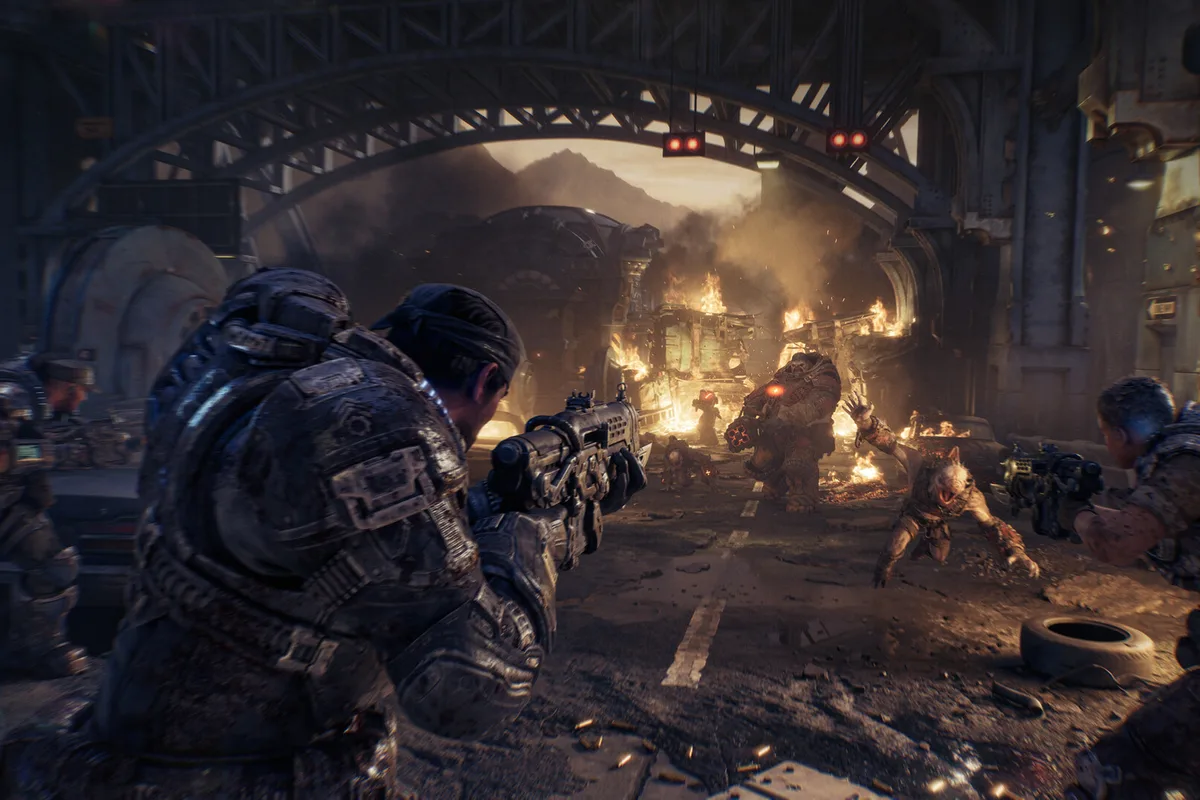
The game is available through Steam and Xbox PC, with Xbox Play Anywhere supporting compatible digital purchases across Microsoft platforms.
Supported gaming handhelds introduce their own constraints involving power consumption, thermals and memory budgets. The Coalition includes these devices in its optimization statement without publishing new battery-life or power-efficiency measurements.
Combat feedback and platform-specific fixes
The update corrects several weapon and interface behaviors that did not operate as intended. These include active reload indicators, melee interactions and objective-related inputs.
One Xbox Series S-specific issue prevented active reload bars from appearing for certain weapons during Team Deathmatch on Precinct. The fix addresses a gameplay feedback problem rather than a graphics-quality limitation.
Reliable visual indicators matter because Gears uses active reload timing as an important combat mechanic. Missing feedback can affect the player's ability to perform actions consistently.
The patch also includes fixes for headshot markers, players becoming stuck in menus or animations, and unexpected behavior during executions and revives.
Horde Siege relies on multiple interacting systems
Horde Siege supports twelve players in three squads of four, operating across shared environments with separate objectives and large encounters.
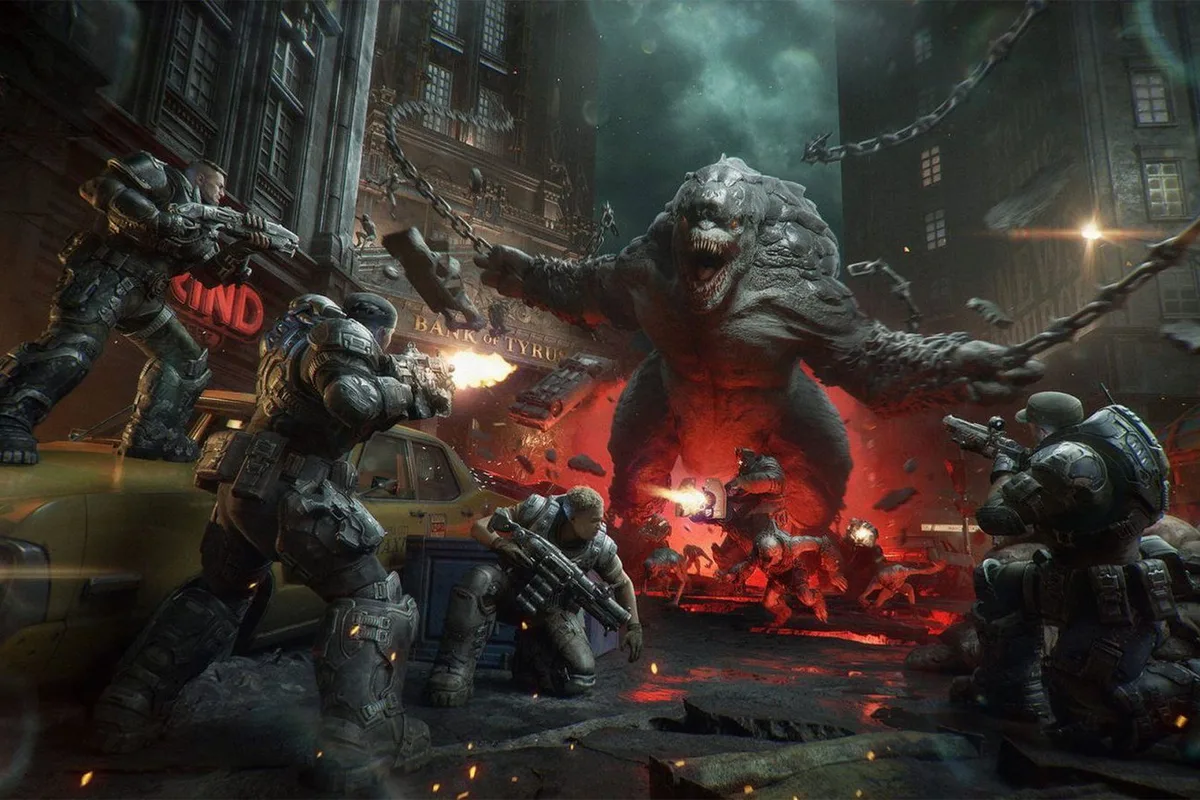
The October patch addresses issues involving extraction objectives failing to end, briefly invisible enemies, equipment interactions, spectator cameras and mission behavior after squad members disconnect.
These are important reliability fixes for a mode in which several teams interact with objectives and enemies simultaneously.
The patch notes describe the corrected behavior but do not always document its technical cause. Not every cooperative gameplay bug can be attributed specifically to networking or synchronization.
Campaign progression and unresolved restoration limits
Campaign fixes cover blocked encounters, incorrectly functioning interactions, War Journal progress and achievement tracking.
Some rewards cannot be automatically restored to players affected before the patch. Missing collectibles have to be recovered, and certain mission rewards require replaying completed content.
Account linking, friends lists and server anti-cheat protection have also received improvements. The Coalition additionally corrected an issue involving the display behavior of certain colorblind accessibility settings.
What the update establishes
The October 14 release confirms work on stability, memory behavior and numerous functional issues across the game's main modes.
It does not supply a new official benchmark profile, an independently measured framerate improvement or a quantified reduction in memory usage.
The most useful technical comparisons will therefore involve repeatable tests on equivalent versions, particularly under long-session conditions where the studio identified performance degradation.
Gears of War: E-Day continues to receive maintenance across its Unreal Engine 5 presentation, competitive multiplayer systems and cooperative campaign, with the first major post-launch fixes addressing problems that affect different hardware and gameplay configurations.