
 By Camille
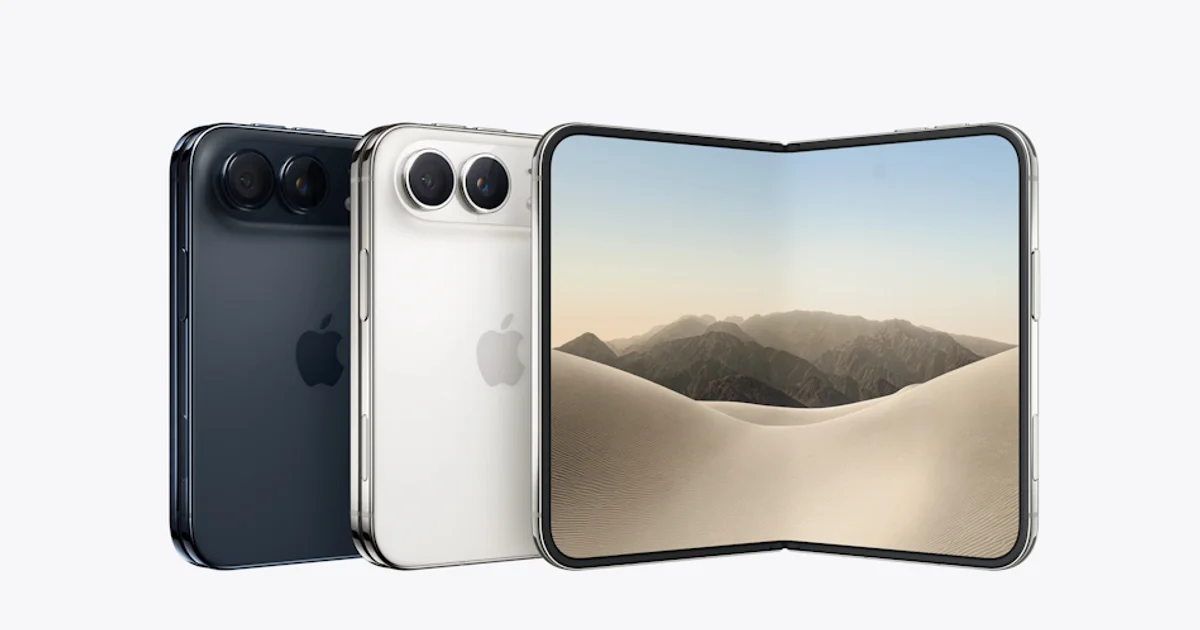
Apple's first foldable iPhone is approaching its retail launch with an important question: how much battery capacity can fit inside a device built around two connected halves? The answer is now available in an official European regulatory document. Apple's product information sheet for model A3720 lists a rated battery capacity of 4,883mAh. That number had previously appeared in unofficial reports. It is now part of documentation published through Apple's regulatory information service. MacRumors highlighted the figure on October 18, 2026, and additional coverage followed on October 19 from publications including GSMArena and Android Authority. The timing is significant. iPhone Duo preorders opened on October 16, and Apple has scheduled retail availability for October 23. The device is therefore not a rumored future product. Apple has officially announced it, and the energy label provides information that can be examined before independent retail reviews arrive. The 4,883mAh capacity is the most immediately recognizable number. It is not necessarily the most informative one.
Two battery cells inside a folding iPhone
The iPhone Duo uses a book-style folding design. Closed, it offers a 5.4-inch outer display. Opened, it reveals a 7.6-inch inner screen. This construction creates packaging constraints that differ from those of a conventional smartphone. The hinge occupies internal space. Components must be distributed across two sections while keeping the overall device reasonably slim. Apple has adopted a dual-battery architecture, which it confirmed during the official product announcement. Earlier reports described two cells rated at 2,962mAh and 1,921mAh. Together, those figures total exactly 4,883mAh. The European product sheet confirms the overall capacity, although it does not individually list the capacity of each cell. That distinction matters. The total is directly verified through Apple's documentation, while the detailed split comes from earlier reporting. Using two cells allows the company to take advantage of the available space on both sides of the hinge. However, this architecture does not automatically guarantee superior battery life. Actual consumption also depends on the displays, processor, software and usage patterns.
A capacity between the iPhone 18 Pro and Pro Max
The figure becomes more meaningful when compared with other recent iPhones. According to capacities reported by MacRumors from iFixit's findings, the eSIM-only iPhone 18 Pro contains a 4,288mAh battery. The corresponding iPhone 18 Pro Max reaches 5,567mAh. At 4,883mAh, the iPhone Duo sits between them. It therefore has more nominal capacity than the Pro but less than the Pro Max. That is notable given its folding construction. However, the capacity ranking cannot be translated directly into a battery-life ranking. The Duo has two displays and usage patterns that can differ substantially from those of a conventional phone. Watching a video on its smaller outer display may consume a different amount of power from using several applications on the larger inner screen. Battery capacity in milliamp-hours is also not a complete measure of energy efficiency across devices. A larger battery may simply be supporting more demanding hardware. Comparable real-world tests will be necessary to determine how these phones actually perform.
What the 51-hour-and-30-minute endurance figure really means
Apple's regulatory document includes another important number: 51 hours and 30 minutes of battery endurance per cycle. This is a standardized result reported under the European energy labeling framework. It does not mean users can expect more than two days of continuous intensive screen use. Regulatory tests follow defined conditions intended to make products easier to compare. Everyday usage is far less predictable. Someone checking messages, using navigation and taking occasional photos may see different results from a person gaming for hours on the large display. Brightness, mobile signal quality and background activity also affect power consumption. The 51-hour-and-30-minute figure should therefore be understood as a regulatory laboratory result. It provides a useful reference point. It does not replace testing for browsing, video playback, photography or gaming. For a foldable smartphone, reviewers will also need to distinguish between use of the outer display and prolonged use of the larger inner screen.
An A energy rating does not guarantee the longest battery life
The iPhone Duo receives an A energy efficiency classification in the European documentation. That rating reflects the applicable evaluation framework. It does not mean the device has the largest battery on the market. Nor does it guarantee that it will outlast every differently rated smartphone in every possible activity. Energy efficiency depends on several factors. A processor that completes certain tasks quickly may reduce the amount of time components operate at high power. A large, bright display can increase consumption. Apple equips the Duo with its A20 Pro chip and a thermal management system designed for the foldable format. The company also emphasizes software that adapts the interface to whichever display is being used. These features may contribute to overall efficiency. Their real-world behavior still needs to be measured. The label provides a standardized reference, not a comprehensive review of the user experience.
At least 1,000 battery cycles under the regulatory test
The product sheet lists battery endurance of at least 1,000 cycles under the relevant default testing conditions. This figure concerns the battery's ability to withstand repeated charging cycles. Lithium-ion batteries gradually lose some capacity as they age. The rate of degradation depends on temperature, charging habits and operating conditions. Cycle endurance is therefore an indicator of durability. It should not be converted directly into a precise number of years. Someone who charges heavily every day may accumulate cycles faster than an occasional user. Other usage patterns may lead to slower wear. Battery lifespan should also be distinguished from the lifespan of the phone itself. A smartphone can remain operational after its battery has lost a meaningful portion of its original capacity. Replacing the battery may then become an economic and practical consideration. That is where another part of the European label becomes especially relevant.
Repairability class C highlights a different compromise
The iPhone Duo receives a C repairability classification. Its detailed repairability index is 2.65 out of 5. The product sheet includes individual scores for fasteners, tools, spare parts and repair information. That additional detail is useful. A foldable device combines a hinge, multiple display surfaces and a dense arrangement of internal components. This complexity can make some repairs more difficult. The document also indicates that the battery is not user-replaceable under the specific European regulatory criterion. That does not mean battery replacement is impossible. Apple points to its Self Service Repair program for applicable parts, tools and instructions. It is important to distinguish technical repairability, accessibility to ordinary users and the cost of professional service. The C rating suggests repairability is not among the device's strongest characteristics under this assessment method. However, the score alone does not establish the price of a battery replacement. Actual service costs and conditions must be evaluated separately.
IP68 and drop resistance appear in the documentation too
The European product sheet contains more than battery information. It lists an IP68 ingress protection rating, with a declared immersion depth of six meters under the relevant IPx8 criterion. It also assigns the device a B classification for repeated drop reliability. The documentation reports at least 140 drops without defects under the applicable test. For testing in the fully extended state, it lists 35 drops. These figures do not mean an iPhone Duo will survive every accidental fall. Standardized tests use controlled conditions. A real impact against a hard surface, at a particular angle or with an already damaged hinge, can produce a different outcome. Water resistance also requires careful interpretation. An IP68 rating does not make a device indestructible or waterproof under every circumstance. Protective seals can deteriorate with age and wear. The regulatory data offers measurable reference points, but it does not eliminate the risks associated with using a foldable smartphone.
Why European energy labels matter more than ever
Smartphone manufacturers frequently emphasize processor performance, displays and cameras. Exact battery capacity is not always central to their marketing. Apple has often preferred to communicate battery-life estimates for particular activities rather than highlight milliamp-hour figures. European labeling requirements make more information accessible. They require standardized disclosures covering battery capacity, endurance and certain durability characteristics. For the iPhone Duo, that documentation provides a perspective beyond the marketing presentation. It establishes the nominal battery capacity. It supplies a standardized endurance result. It identifies a repairability classification and battery cycle data. These figures do not tell the entire story. They do make comparisons more transparent. That is especially valuable for an expensive device with an unfamiliar form factor. Buyers can begin assessing its engineering compromises before independent reviews are available.
The real battery-life verdict depends on both displays
The iPhone Duo has a 5.4-inch outer display and a 7.6-inch inner display. That dual-screen arrangement is central to its appeal. It is also essential to understanding its battery life. Someone who mainly uses the outer screen may obtain very different results from a person spending hours on the larger panel. Multitasking features in iOS 27 could also change how applications use the hardware. The A20 Pro processor, brightness settings and power management systems will need to be assessed together. Independent reviews should answer several questions. How long does the device last during mixed everyday use? How much does battery life change between the outer and inner displays? What happens during video calls, navigation and gaming? Does the charging experience compensate for the constraints of the battery design? None of these answers can be established from the 4,883mAh figure alone. The European label provides a starting point. It does not replace extended real-world testing.
The capacity is confirmed, but the practical verdict is still ahead
Publication of Apple's European product sheet has turned a previously reported battery figure into an officially documented specification. The iPhone Duo has a rated capacity of 4,883mAh. Its standardized endurance reaches 51 hours and 30 minutes. It receives an A energy classification and a C repairability rating. Together, those numbers paint a more nuanced picture than battery capacity alone. Apple has fitted two batteries into a folding device with a large inner display. But the complexity of that construction also raises questions about long-term durability and repair. The European label makes those questions easier to examine. It does not prove that the Duo will be the longest-lasting foldable phone, or that repairing it will be particularly convenient. With retail availability scheduled for October 23, the central unknown is no longer the nominal battery capacity. It is how those 4,883mAh translate into daily endurance when the same device alternates between a compact phone and a large folding screen. Independent testing will provide the answer.