
 By Camille
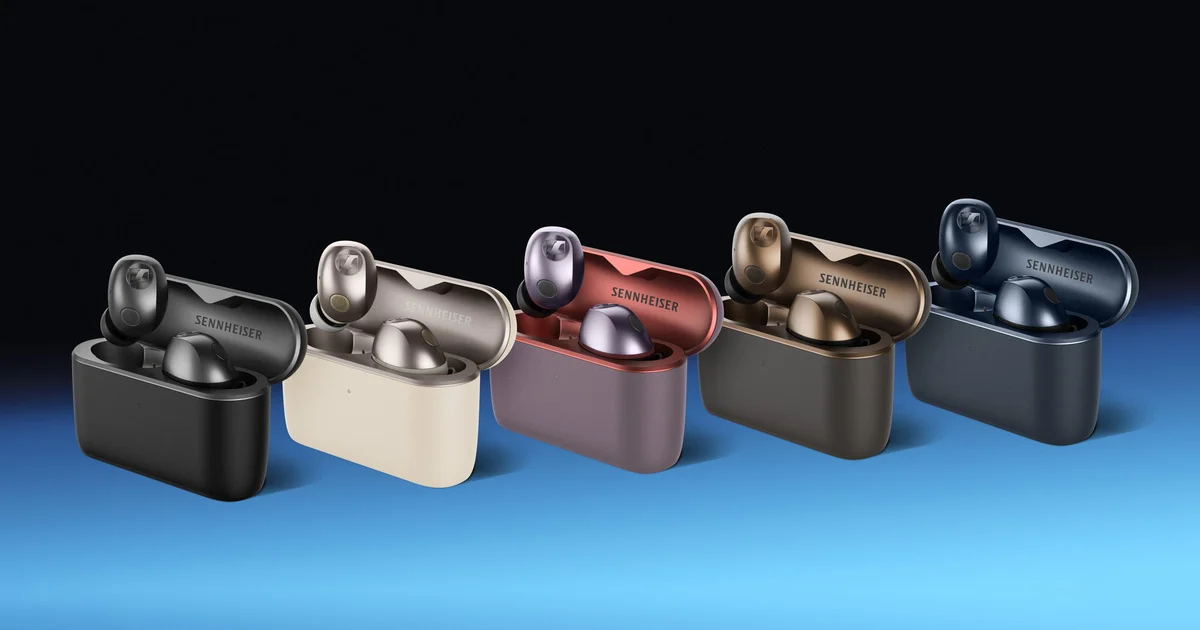
Buying earbuds in 2026 can become an exercise in comparing increasingly complicated specifications. Bluetooth versions, codecs, microphone counts, adaptive noise cancellation and long battery-life claims compete for attention. It is easy to spend an hour reading product descriptions without answering the most useful question: where and how will these earbuds actually be used? A pair designed to isolate commuters from train noise might be uncomfortable for someone who needs to hear colleagues throughout the day. An open-ear model could be excellent at home but frustrating on a noisy aircraft. And the longest advertised battery life may matter less than the possibility of replacing worn-out batteries after several years. TechRadar's October 18 roundup of its standout earbuds from 2026 offers a useful illustration of these differences. The article draws on reviews conducted earlier in the year. It is not announcing that every featured product has just launched. Five models are particularly useful for understanding the market: the Sennheiser Momentum True Wireless 5, Samsung Galaxy Buds 4 Pro, Shokz OpenDots 2, Baseus Bowie MC2 and Sennheiser CX 80U. Rather than delivering the same experience at different prices, they represent different approaches to personal audio.
Sennheiser Momentum True Wireless 5: premium sound with a longer life in mind
The Momentum True Wireless 5 are the most ambitious traditional wireless earbuds in this selection. Sennheiser is targeting listeners who value sound quality, active noise cancellation and advanced wireless features. TechRadar's September 27 review was particularly positive about their musical presentation, comfortable fit and overall usability. The earbuds offer adaptive active noise cancellation, Bluetooth 6.0 and support for compatible aptX technologies. Dolby Atmos spatial audio with head tracking is another advertised feature. These capabilities are consistent with the expectations surrounding high-end wireless earbuds. But the most distinctive improvement is not a codec or an audio processing mode. It is battery replacement. Sennheiser has designed the batteries in both earbuds and their charging case to be replaceable by the user. That addresses one of the persistent weaknesses of truly wireless audio products. Their tiny rechargeable cells lose capacity over time. Eventually, a pair that sounded excellent when new may provide too little listening time to remain useful. Many wireless earbuds are difficult to repair because their batteries are enclosed within compact, sealed structures. Sennheiser's design allows the cells to be changed using a small screwdriver and the appropriate replacement parts. This does not make every component indefinitely repairable. It does, however, create a path to extending the useful life of an expensive product. For regular listeners, that could be more valuable over time than another incremental wireless feature.
Battery life matters today, but replacement matters years later
Sennheiser advertises up to 12 hours of playback per charge and up to 40 hours including the charging case. These are maximum figures obtained under particular conditions. Actual endurance depends on volume, codecs, noise cancellation and other settings. Using several advanced functions simultaneously can reduce listening time. TechRadar nevertheless found the earbuds convincing in everyday use. Their replaceable batteries introduce an important distinction between initial and long-term endurance. A product may deliver excellent battery life when new but gradually lose that advantage as the cells age. Being able to replace the batteries creates an opportunity to restore performance without discarding the complete earbuds. The financial value depends on replacement-part prices and continued availability. A pair that can be maintained is not automatically cheaper to own. But it offers an option absent from many sealed competitors. That makes the Momentum True Wireless 5 particularly attractive to intensive users who want premium audio and plan to keep their equipment for several years.
Samsung Galaxy Buds 4 Pro: a strong choice for Galaxy owners
The Galaxy Buds 4 Pro take a different approach. Samsung emphasizes sound performance and deep integration with its smartphone ecosystem. TechRadar's March review praised their audio quality, effective noise cancellation and extensive software features. For someone who already owns a recent Galaxy phone, that combination can be appealing. The earbuds and handset are designed to operate as parts of the same system. Software settings, supported codecs and selected intelligent functions can provide a more integrated experience than a generic pair of wireless earbuds. However, that close relationship also creates compatibility differences. A person using an iPhone or another Android brand should not assume access to every function available on Samsung hardware. The exact experience depends on the source device and supported software. That matters because modern premium earbuds are no longer defined solely by their acoustic components. Their companion applications and ecosystem-specific capabilities can be major parts of their value. The Galaxy Buds 4 Pro make the strongest argument when those capabilities match the phone a buyer actually owns.
Samsung still has some comfort and endurance compromises
TechRadar's favorable assessment was not without reservations. The reviewer criticized battery life, found the ear tips difficult to change and reported that the earbuds did not always feel completely secure. Those observations are worth considering, but fit is personal. The shape of someone's ears and the chosen tips influence both comfort and isolation. The same earbuds may feel stable to one person and unreliable to another. A poor seal can also reduce the perceived effectiveness of noise cancellation and bass reproduction. Prospective buyers should therefore consider fit rather than relying entirely on a favorable audio review. The Buds 4 Pro remain attractive for Galaxy owners seeking strong sound and ANC. They become less compelling when battery endurance or secure fit during exercise takes priority. Excellent audio performance is of limited value if earbuds frequently require readjustment.
Shokz OpenDots 2: listening without blocking out the room
The Shokz OpenDots 2 belong to a different category. They use an open-ear clip design rather than sealing the ear canal with conventional silicone tips. The intention is to let listeners enjoy music and spoken audio while remaining more aware of surrounding sounds. This approach can be useful in shared workplaces and at home. People can hear someone calling their name without constantly removing their earbuds. The physical sensation is also different. Some listeners find in-ear tips uncomfortable during long sessions. Open-ear models avoid much of that pressure, potentially making them more pleasant for extended use. TechRadar praised the OpenDots 2 for comfort and endurance. The review also identified a weakness: they could be displaced relatively easily under some circumstances. Their open design introduces acoustic compromises as well. Ambient noise remains audible, and bass reproduction may feel less immersive than through well-sealed in-ear models. That is not necessarily a flaw in the design. The OpenDots 2 prioritize a different listening experience. They make sense for people who value comfort and environmental awareness more than maximum isolation.
Open-ear listening helps awareness, but does not guarantee safety
One attraction of open-ear earbuds is the ability to hear more of the environment. This can be helpful while walking, working or remaining available to other people. However, it should not be confused with guaranteed safety. Audio playback still occupies attention. Higher volume can mask important sounds even when the ear canal is not sealed. Rules concerning headphone use in traffic and other activities also depend on local law and circumstances. The OpenDots 2 should therefore be understood as a comfort and awareness-oriented product, not as a device that removes every risk associated with listening while moving. For someone who dislikes conventional in-ear designs, the benefits may be substantial. For someone who wants silence during a train journey, an open-ear model is unlikely to be the best choice.
Baseus Bowie MC2: an affordable introduction to open-ear audio
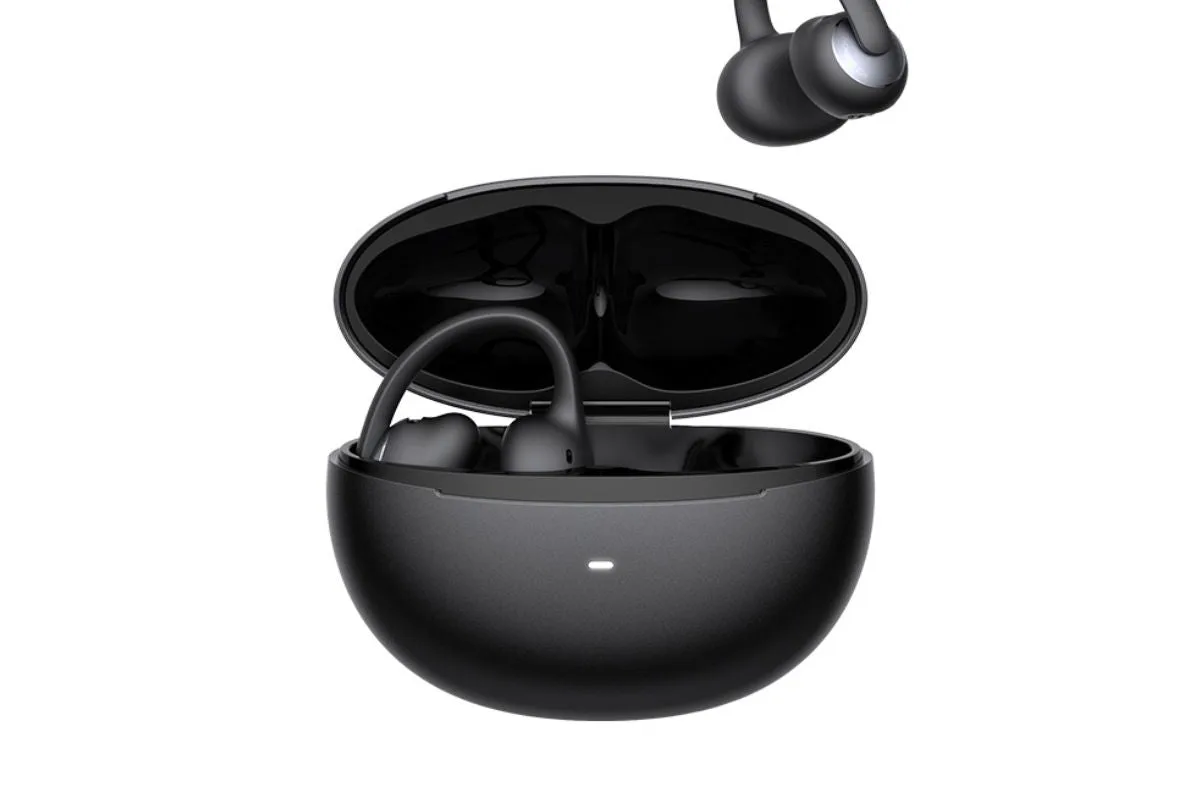
The Baseus Bowie MC2 pursue a similar goal to the Shokz model while placing greater emphasis on affordability. They use a clip-style open-ear design with interchangeable cushioning intended to improve comfort across different ear shapes. TechRadar's August testing praised their comfort and found the sound enjoyable for the price. Their presentation favors a satisfying bass response, although they are not positioned as reference-grade audiophile products. Baseus advertises Bluetooth 6.0, multipoint connectivity and up to 11.5 hours of playback per charge. The charging case extends the manufacturer's claimed total to as much as 55 hours. The company also lists IP67 protection. Its US reference price is $79.99, with discounts sometimes bringing the cost closer to $59.99. Promotional prices can change, and those figures should not be treated as confirmed French retail pricing. What makes the Bowie MC2 compelling is their combination of features and accessibility. They provide a relatively inexpensive way to experiment with the open-ear format. A buyer who is unsure about wearing clip-style earbuds does not necessarily have to start with a much more expensive model.
The Bowie MC2 compromise on controls and finish
Affordable technology usually involves trade-offs. TechRadar highlighted several with the Bowie MC2. The controls can be awkward to operate while moving. The charging case feels less premium than those supplied with some expensive alternatives. The companion application also leaves room for improvement. These limitations do not make the earbuds unsuitable for everyday listening. But someone who frequently changes tracks, switches devices or adjusts settings may find them frustrating. The key advantage remains their balance of comfort, battery life and cost. They make open-ear listening accessible to a wider range of buyers. For podcasts, casual music and long sessions in a quiet environment, that may be more important than a sophisticated app. The value proposition is particularly strong when a buyer does not require the most elaborate features available from premium competitors.
Sennheiser CX 80U: a cable is still a perfectly good solution
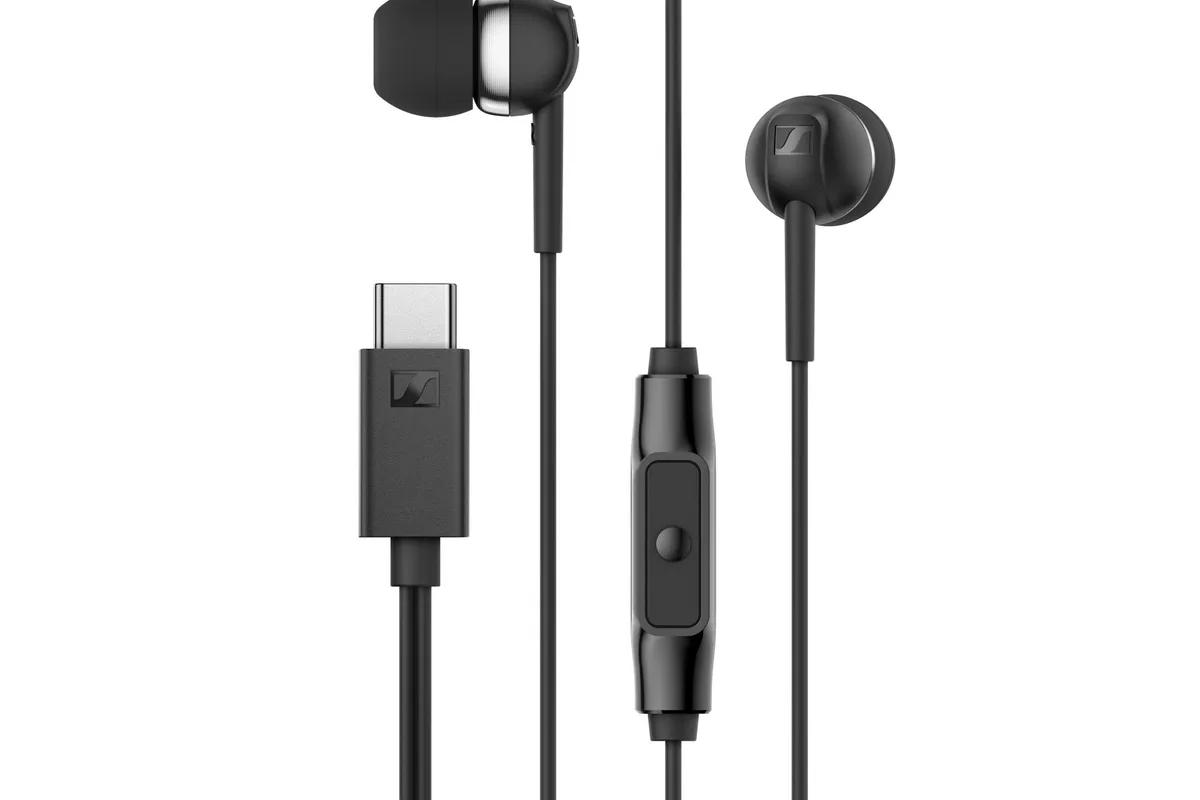
The Sennheiser CX 80U are a reminder that wireless technology is not mandatory for good personal audio. These in-ear earbuds connect through USB-C. They do not need Bluetooth pairing, a wireless charging case or a separate battery that must be recharged. Users plug them into a compatible device and listen. Sennheiser's US reference price is around $39.95. TechRadar praised the quality of their sound at this level, highlighting clear midrange reproduction, controlled bass and detailed treble. The earbuds include different sizes of ear tips and an in-line microphone and remote. Their isolation comes from the physical seal provided by the ear tips. That is passive noise isolation, not electronic active noise cancellation. Compared with premium wireless alternatives, the CX 80U are extremely simple. That simplicity is part of their appeal. There is no wireless connection to troubleshoot and no tiny Bluetooth battery gradually losing capacity. They offer an inexpensive way to enjoy music, podcasts and calls without paying for functions that may never be used.
Wired earbuds still make sense for work and travel
Wired audio has obvious drawbacks. A cable can snag on clothing or furniture and restrict movement. The device must also support compatible USB-C audio output. Not every adapter or electronic device behaves identically. But these compromises may be acceptable in many situations. At a desk, in a quiet room or while watching video on a tablet, a cable can be more convenient than keeping another wireless accessory charged. The absence of an internal rechargeable battery also removes one common source of long-term deterioration. That does not mean wired earbuds are indestructible. Cables, connectors and in-line controls can still fail. But the simpler design can be appealing to users who prioritize reliability and low cost. The CX 80U demonstrate that good listening does not necessarily require an application, wireless codecs or expensive processing features.
Noise cancellation and open-ear comfort are different priorities
These five models fall into three broad groups. The Momentum True Wireless 5 and Galaxy Buds 4 Pro are premium in-ear wireless products with active noise cancellation. Their objective is to offer immersive listening and reduce outside distractions. The OpenDots 2 and Bowie MC2 prioritize an open fit that allows more ambient sound to remain audible. The CX 80U combine traditional in-ear isolation with the simplicity of a USB-C cable. Comparing them solely through noise cancellation would be misleading. Open-ear products are not designed to eliminate outside sounds in the same way. Comparing battery life would be equally strange when one product has no wireless battery at all. The correct starting point is the intended use. Frequent commuters may prefer in-ear models with strong ANC. People working in shared spaces may benefit from open-ear comfort. Users who want inexpensive audio without charging concerns may be happiest with wired earbuds. Each approach solves a different problem.
Phone compatibility can matter as much as sound
Samsung's Galaxy Buds 4 Pro illustrate how much modern earbuds depend on software. Some functions are designed specifically for Galaxy smartphones. Using another Android device or an iPhone can change what is available. The Momentum True Wireless 5 also offer advanced audio features that depend on compatible source hardware and software. Support for a codec does not mean it will automatically be used with every phone. Spatial-audio capabilities can likewise depend on the content and ecosystem. The open-ear products offer their own configuration options and wireless features, including multipoint on supported models. And the CX 80U avoid wireless pairing while requiring compatible USB-C audio output. Buyers should therefore examine compatibility before purchase. A product may offer excellent sound but lack an important feature on their particular smartphone. Conversely, a simpler model may perform every function they actually need without any complication.
Advertised battery figures are not directly comparable
Manufacturers generally publish maximum endurance figures under selected test conditions. Those values can be impressive. Sennheiser claims up to 40 hours with the Momentum True Wireless 5 case. Baseus advertises up to 55 hours for the Bowie MC2 when the charging case is included. But the test conditions may differ. Volume levels, wireless codecs and processing features influence energy consumption. A figure that includes charging-case capacity also represents several listening sessions, not one uninterrupted 55-hour run. Battery degradation adds another consideration. Rechargeable cells gradually lose capacity as they age. That is why Sennheiser's replaceable-battery design deserves particular attention. A product that retains a useful life after its original battery becomes worn may offer better long-term value than one that simply starts with a large advertised endurance figure. For many buyers, durability is a more meaningful measure than a marketing number taken under ideal conditions.
Does spending more guarantee better listening?
Premium earbuds can offer improvements in sound reproduction, noise cancellation and comfort. But their value depends on the environment and the listener. In a quiet room, inexpensive wired earbuds can provide satisfying audio. On public transport, strong isolation may deliver a more noticeable benefit than a small improvement in tonal detail. Open-ear products make a different trade-off. They accept outside noise to provide greater awareness and a less intrusive fit. Personal preferences also affect the result. Some listeners enjoy prominent bass. Others prefer a more neutral sound with greater emphasis on vocals and detail. Equalizer settings can help, but they cannot eliminate every physical limitation. TechRadar's positive reviews establish that these models performed well according to its testing criteria. They do not prove that one pair will suit every listener better than all the others. Comfort, source compatibility and price remain decisive.
Five earbuds for five different kinds of buyer
The Momentum True Wireless 5 are a strong candidate for people who listen extensively, prioritize sound quality and want premium hardware designed with battery replacement in mind. The Galaxy Buds 4 Pro make particular sense for Samsung smartphone owners seeking strong noise cancellation and close software integration. Their fit and endurance deserve consideration before purchase. The Shokz OpenDots 2 are aimed at listeners who value comfort and environmental awareness and are willing to accept the compromises of an open design. The Baseus Bowie MC2 provide a less expensive introduction to the same broad category. Their comfort, battery life and affordable positioning make them attractive despite less polished controls. The Sennheiser CX 80U are for people who simply want good audio through a cable without maintaining another battery-powered device. That last option may be the least technologically glamorous. For many users, it could also be the most sensible.
The best earbuds are the ones whose compromises you can live with
TechRadar's October roundup shows how diverse the earbud market has become. Premium wireless products continue to improve their features and sound quality. Sennheiser is also beginning to address the long-term sustainability problem created by sealed batteries. Samsung is deepening the relationship between earbuds and smartphones. Open-ear designs from Shokz and Baseus offer alternatives for people who dislike traditional in-ear pressure. And inexpensive USB-C audio remains entirely viable. There is no single winner that makes every other category irrelevant. A pair advertising 55 hours of battery life is not ideal if it constantly slips from someone's ears. Excellent active noise cancellation has limited value when the fit is uncomfortable. And sophisticated software features are less compelling when a user's phone does not support them. The right choice starts with understanding those limitations. The best pair is not necessarily the one with the longest specification sheet or highest price. It is the one that remains comfortable, works reliably with the devices you own and continues to meet your needs long after the excitement of buying it has faded.