
 By Camille
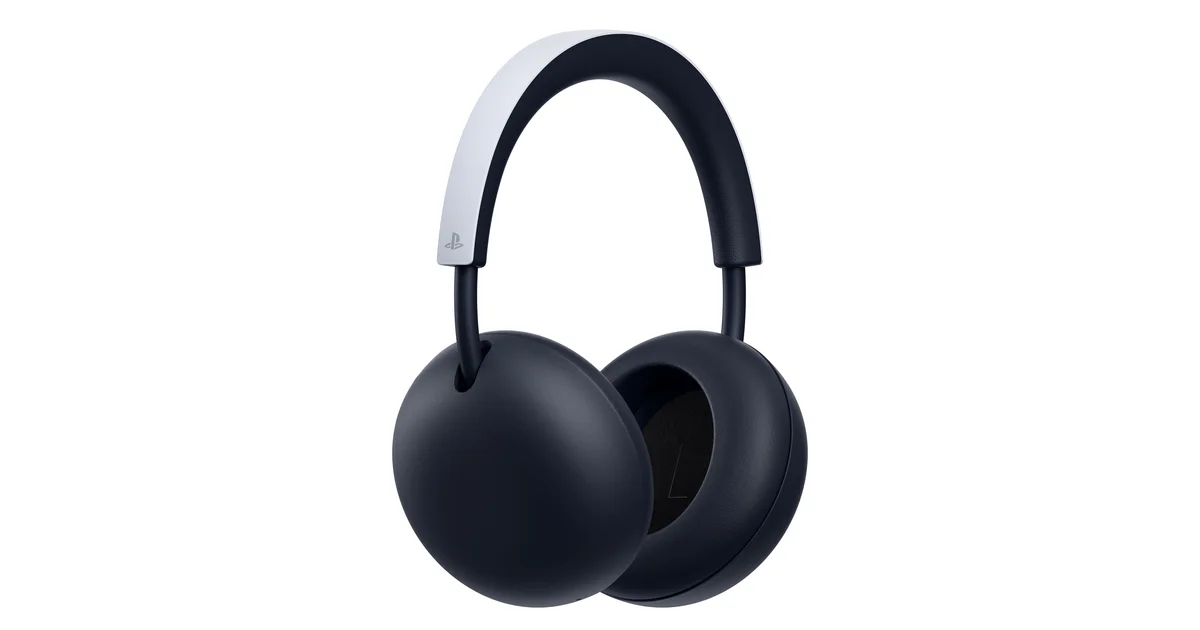
Planar magnetic drivers at a price below €100 sound appealing, especially in an official PlayStation headset.
That is the proposition behind Sony's new Pulse, which opened for pre-orders on October 29 and is scheduled for release on November 19.
The important question is not simply whether it features advanced driver technology. Buyers should also consider its connection options, missing features and untested everyday performance.
Planar technology does not guarantee superior sound
Sony's new Pulse uses custom planar magnetic drivers with four magnets per driver.
The company promises deeper bass, accurate spatial reproduction and improved separation of different sounds.
These characteristics may benefit gaming, particularly when players rely on directional audio cues.
However, acoustic performance depends on driver tuning, ear-cup design, fit and other factors.
A planar driver is not automatically better than every dynamic driver at the same price.
Independent measurements and listening tests will be required to assess Sony's claims.
The headset also supports PS5 Tempest 3D AudioTech in compatible games.
Simultaneous wireless connections offer practical flexibility
The headset supports PlayStation Link for low-latency wireless audio on compatible devices.
A USB-C adapter is included.
Bluetooth provides an additional connection option, including for smartphones.
Sony says both types of connection can operate simultaneously.
This could make it easier to receive game audio from a PS5 while maintaining a connection with a phone.
The feature may also appeal to users who switch between console and computer gaming.
However, PlayStation Link's low-latency characteristics should not automatically be attributed to every Bluetooth connection.
Real-world performance will depend on device compatibility and connection reliability.
AI microphone noise rejection is not ANC
Sony includes an integrated microphone with AI-assisted background-noise rejection.
The processing is intended to improve voice clarity by reducing unwanted sounds captured by the microphone.
It does not actively cancel ambient noise reaching the listener's ears.
The standard Pulse has no active noise cancellation.
Passive isolation will depend largely on the ear cushions and the fit of the headset.
Buyers seeking ANC should consider alternatives or wait for the premium Pulse Edge, which is expected in early 2027.
No analog audio jack or dedicated game/chat balance control
The standard Pulse also lacks an analog audio and microphone jack.
Users therefore cannot rely on an ordinary analog cable as a universal connection fallback.
Sony also reserves integrated PS5 game/chat balance controls for Pulse Edge.
The regular Pulse includes volume controls but no dedicated physical game/chat balance adjustment.
Software-based audio settings may still be available through supported devices.
The difference is the absence of those controls directly on the headset.
Comfort and durability remain untested
Sony has redesigned the headset with rounded ear cups that can rotate to lie flat.
The company highlights comfort and durability, but product images cannot establish long-term mechanical reliability.
Headband pressure, joint strength and ear-cushion wear will matter during extended use.
Independent battery-life results are also needed, particularly for simultaneous wireless connections.
These practical characteristics may prove more decisive than the headline driver technology for some buyers.
A promising option for a specific type of player
The new Pulse is aimed at PS5 owners who want PlayStation Link connectivity and planar magnetic audio at a comparatively accessible price.
Its simultaneous Bluetooth support could be particularly useful for players who regularly use a smartphone while gaming.
Those requiring ANC, wired connectivity or advanced physical controls should account for the missing features before placing an order.
The €99.99 recommended price is competitive on paper, but value cannot be established from specifications alone.
Pre-orders began October 29, with launch scheduled for November 19 in selected European markets and other regions.
Sony has made the commercial details clear. Whether the headset is the right purchase will depend on sound quality, comfort, battery endurance and reliability once independent testing becomes available.