
 By Adri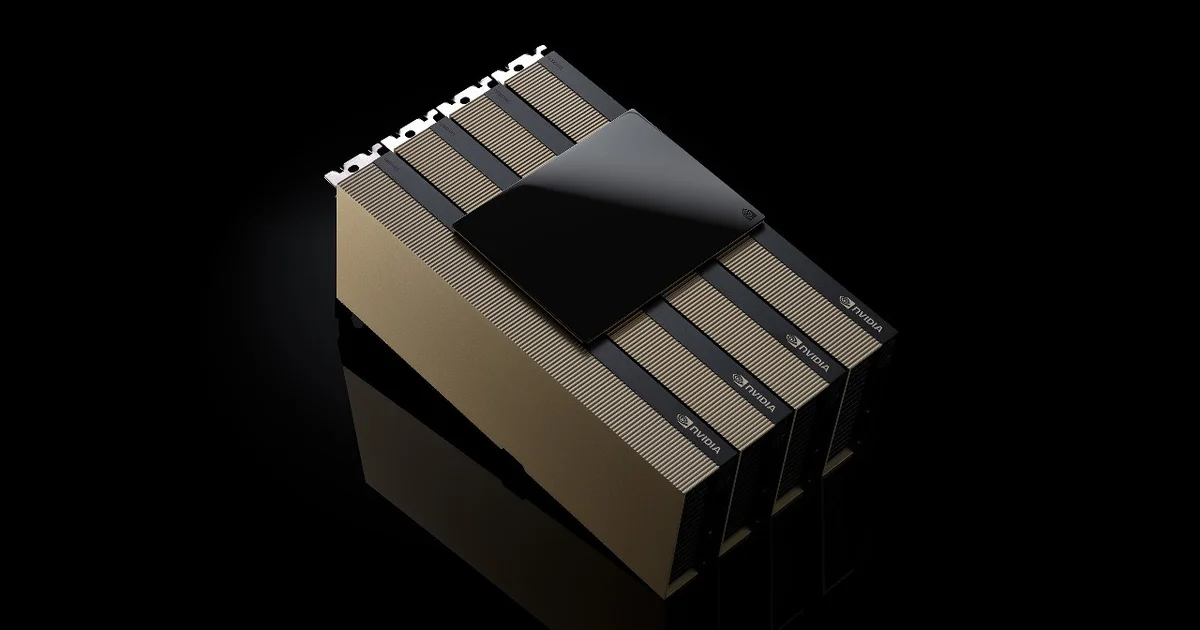
H200's important upgrade was memory
NVIDIA introduced H200 in November 2023 as an extension of its Hopper platform. It kept the basic H100-era architecture but paired it with 141GB of HBM3e delivering 4.8TB/s of memory bandwidth.
That matters because large AI workloads do not scale on arithmetic throughput alone. Model weights, KV cache and intermediate data all have to live somewhere and move quickly enough to keep the compute units useful.
NVIDIA originally positioned HGX H200 systems for large-model training and inference, including configurations with eight GPUs, NVLink and NVSwitch. The hardware has not lost those characteristics because Blackwell and Rubin exist.
Export controls change what "high end" means
For an unrestricted customer, H200 sits behind newer NVIDIA data center products. For a Chinese customer, the relevant comparison is between products that can actually obtain permission to ship.
Beginning in February, the U.S. government granted licenses for small quantities of H200s to specific China-based customers. A Commerce Department official confirmed in July that shipments had begun, although only in limited numbers.
The Financial Times now reports that ByteDance and Tencent have received roughly 10,000 processors each. Reuters says it has not independently verified those quantities.
That caveat should stay attached to every calculation based on the 20,000-chip total.
An H200 cluster also buys familiarity
Hardware performance is only one part of NVIDIA's advantage. Chinese labs have years of code, tooling and operational experience built around CUDA, NVIDIA libraries and the company's interconnect technologies.
Replacing that stack is possible. China has strong reasons to try, and domestic accelerator ecosystems have been improving quickly. Migration still has a cost.
For a team that needs additional training capacity now, a licensed H200 can therefore be attractive even when a faster chip exists elsewhere in NVIDIA's roadmap. It adds compute without forcing the same amount of software change.
Beijing is allowing access without surrendering its industrial policy
China's approach reflects that tension. Reuters has reported that Beijing has approved some H200 sales while continuing to promote domestic semiconductor suppliers.
According to the FT, authorities want much of the approved hardware kept in Hong Kong, outside the mainland customs boundary. Some mainland deliveries are still being allowed.
This makes sense as industrial policy and becomes awkward as infrastructure planning. A GPU allocation is useful only where there is enough power, cooling, networking and data center capacity to operate the resulting cluster.
The server does not care why a customs boundary exists.
There is also a 25% detour through the United States
NVIDIA's filings describe an unusual condition attached to the U.S. licensing program. H200 products covered by it must pass through an inspection process in the United States before being shipped to the customer.
NVIDIA says the process subjects those chips to a 25% tariff when they enter the U.S., and the company may not be able to pass the full cost through to buyers.
For a 700W-class accelerator designed around efficiency and total cost of ownership, geopolitics has managed to add a cost line that no silicon optimization can remove.
April and August now describe very different markets
At the end of NVIDIA's April quarter, the company said it had generated no H200 revenue under the licensing program and did not know whether China would allow imports. It described itself as effectively foreclosed from the country's data center compute market.
By July, a U.S. official was confirming initial shipments. By August, the FT was reporting five-digit deliveries to two of China's largest technology groups.
The exact scale of that August step still needs confirmation. The direction no longer does.