
 By Tsuky
Accessibility Becomes a Question of Time
Housemarque's action games frequently demand decisions made in fractions of a second.
A projectile crosses the screen, an enemy prepares an attack and the player must quickly identify an appropriate response.
This creates the tension appreciated by bullet-hell enthusiasts.
It can also exclude players who do not have the same reaction speed or control comfort.
Zenith introduces a setting called Slow Game Speed.
Rather than slowing enemies alone, the system reduces the pace of the overall simulation, including the player, hostile creatures and projectiles.
The structure of each encounter remains recognizable.
Attacks still occur, and players still need to understand their trajectories.
The difference is the additional time available to observe and respond.
Slowing the Game Without Removing Complexity
Reducing game speed is not identical to lowering incoming damage or removing enemies.
A difficult projectile pattern remains present.
The player still needs to understand it and choose a safe position.
However, the interval between recognizing a threat and responding becomes longer.
Housemarque explicitly avoided reducing the number of projectiles in its encounters.
The team wanted to preserve its combat design while making that design easier to process.
Slowdown can be activated manually or automatically during combat.
Its intensity is adjustable.
This allows players to seek their own balance between reaction demands and comfort instead of choosing only between fixed difficulty levels.
Automatic Firing Addresses a Different Barrier
Weapon Auto-fire targets another challenge.
SAROS often requires players to shoot continuously while concentrating on movement and incoming threats.
Holding a trigger for extended periods can be uncomfortable or physically difficult.
The new setting activates firing automatically when an enemy is targeted.
It can apply to the main weapon, power weapon or both.
However, it does not automate every combat action.
Perfect reloads still require a correctly timed button press.
This distinction illustrates Housemarque's intention to reduce repetitive physical demands without eliminating every element of mechanical skill.
Motion Aiming Expands Control Options
Zenith introduces DualSense motion-sensor aiming.
Players can adjust their aim and camera through controller movement.
That provides an alternative to relying entirely on analog sticks.
Its practical value depends on individual preferences and abilities.
Gyroscopic aiming is not a universal replacement for conventional controls.
It is another available method.
Combined with existing button remapping, it gives players additional ways to interact without requiring everyone to abandon familiar controls.
High Contrast Improves Visual Clarity
Housemarque games can fill the screen with effects, projectiles and moving enemies.
In some situations, distinguishing the player and hostile characters becomes a challenge of its own.
High Contrast Display can apply prominent colors and outlines to characters.
This helps make them easier to identify amid combat effects.
It addresses a visual challenge distinct from reaction speed or controller operation.
That matters because accessibility is not one universal setting.
One player may need slower combat without changing colors, while another may prefer stronger contrast at the original speed.
New Game+ Lets Players Construct Their Own Difficulty
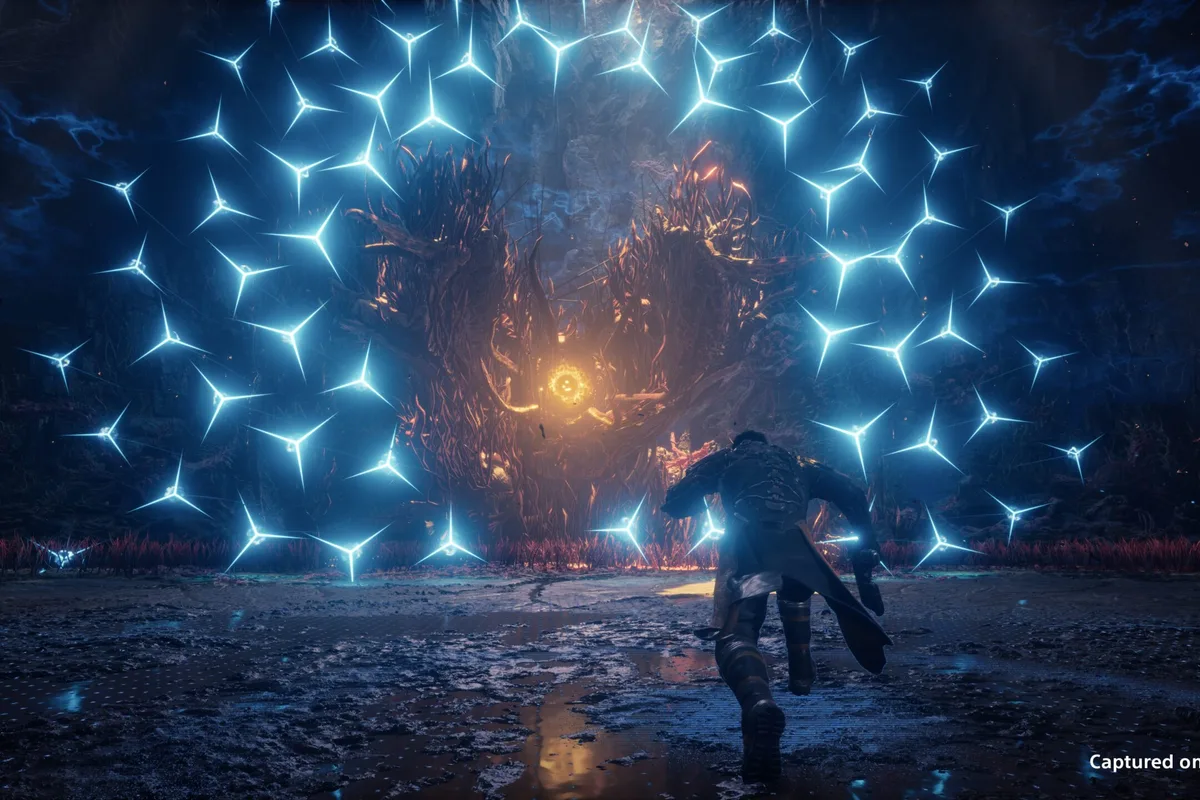
For experienced players, Eclipse Layers offers a different form of customization.
After completing the campaign, players can unlock additional layers through the Armor Matrix.
Each layer requires a minimum level of difficulty modifiers before a run can begin.
However, players choose which challenges to accept.
They can prioritize particular enemy behaviors or combine several restrictions.
The resulting difficulty is shaped by preparation as well as reflexes.
Rather than relying entirely on uniform increases to enemy health or damage, Housemarque allows additional rules to alter how the game works.
Twenty Modifiers Expand the Possibilities
The addition of ten Protection Modifiers and ten Trial Modifiers increases customization.
Protections can change how players survive particular hazards.
Trials modify enemy behaviors or introduce additional constraints.
Hostile Regeneration provides a clear example.
Certain enemies can recover after ranged damage, requiring players to finish them with a melee strike.
That changes tactical decision-making because a purely ranged approach is no longer sufficient.
Corruption Melee Enhancement offers the opposite kind of interaction.
It allows accumulated corruption to become additional melee damage.
A mechanic ordinarily treated as a threat becomes a potential resource.
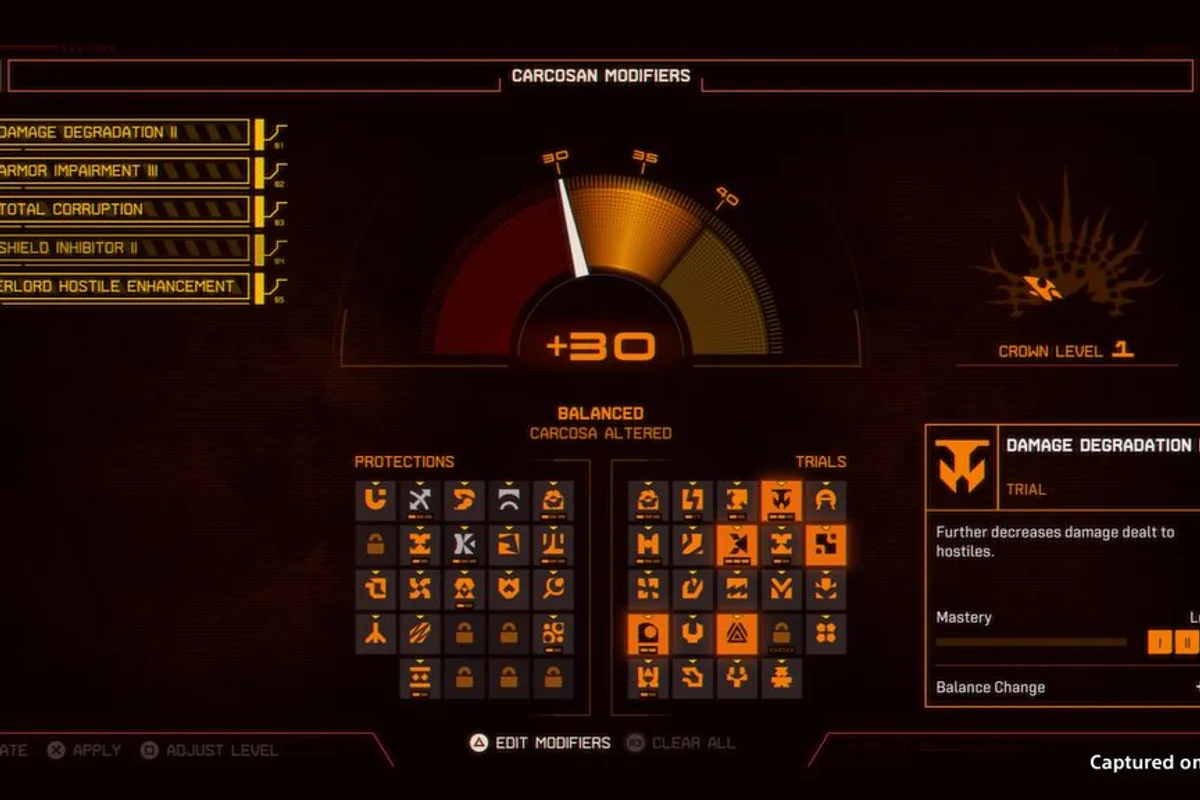
These examples demonstrate how modifiers can change decisions rather than simply adjust numerical difficulty.
Visible Mastery and Risk-Based Rewards
The update also introduces modifier mastery.
Players advance toward mastery by using modifiers during combat.
Once the required progress is achieved, the modifier receives a corresponding status.
This encourages experimentation instead of repeatedly relying on the same combination.
Arjun's appearance also changes as the challenge increases.
From Eclipse Layer 2, he wears a crown and his armor glows gold.
The crown becomes more elaborate as additional constraints are selected.
That provides visible feedback beyond a numerical menu value.
Twelve narrative Visions are connected to this progression.
Some of their information becomes accessible only at sufficiently high crown levels.
Overlord Rush Turns Bosses Into Measurable Challenges
Overlord Rush introduces a different performance structure.
It organizes boss encounters into successive challenges.
Two sets contain three bosses each.
Totality features all eight Overlords in a single sequence.
Players can compare results through online leaderboards.
Filtering by main weapon is a meaningful choice because it supports more relevant comparisons between different equipment preferences.
A player can seek better results within a particular weapon category.
However, leaderboard positions remain measurements within the conditions defined by the game, rather than universal assessments of skill.
Online comparison requires an internet connection and PlayStation account.
What Zenith Has Not Yet Demonstrated
A substantial feature list does not establish the effects those features will have.
Housemarque wants SAROS to become accessible to more players.
Determining the outcome would require usage data, representative player feedback and observations across different needs.
The announcement does not provide statistics demonstrating that the new controls have already increased campaign completion rates.
Similarly, adding a boss rush and New Game+ does not guarantee sustained engagement.
Those results remain to be measured.
Patch 02.000.000 is a documented set of changes, not a completed assessment of their effectiveness.
A More Modular Approach to Challenge
Zenith's main strength lies in its structure.
Players can adjust reaction demands, controls and visual clarity.
Experienced players can instead combine increasingly demanding constraints and extend their progression.
Housemarque is avoiding the assumption that one fixed difficulty level should fit its entire audience.
Its complex attack patterns remain intact, while players gain more choices about how to confront them.
This philosophy does not guarantee that every player will immediately find the right configuration.
It does, however, provide concrete and complementary controls.
Zenith is therefore an interesting example of adaptive game design: rather than changing combat rules for everyone, it allows individuals to decide which constraints to accept, which to reduce and how they want to progress through Carcosa.