
 By Adri
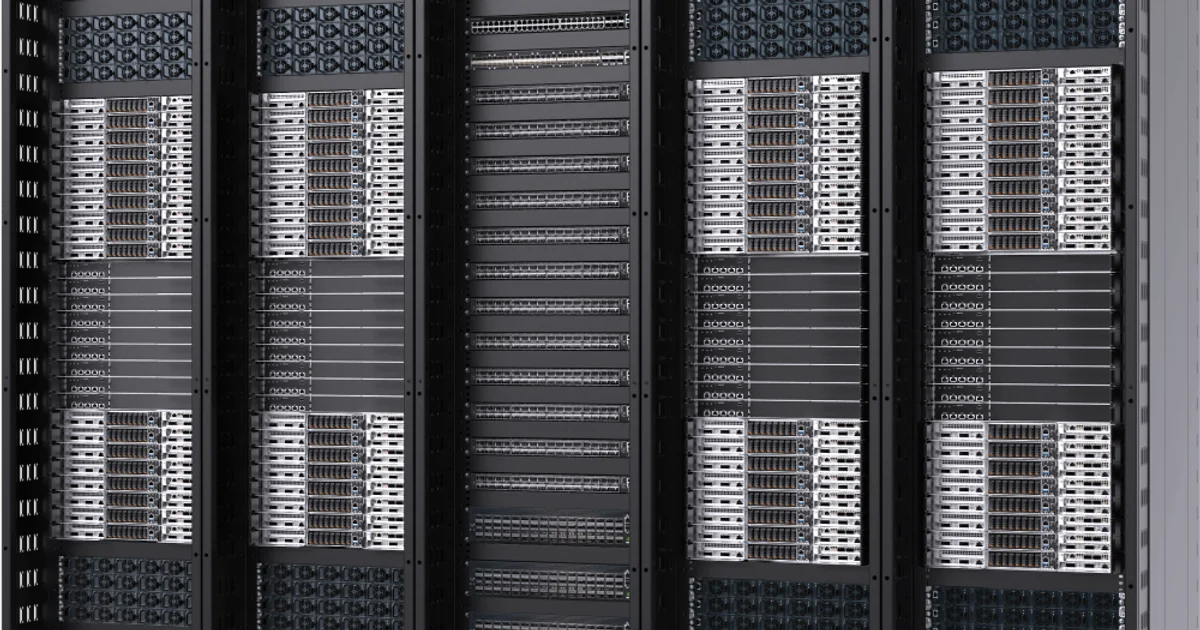
The midpoint of Supermicro's quarterly revenue guidance has increased by $4 billion. That is a substantial revision for a hardware manufacturer, particularly because the underlying quarter had already ended when the company released its preliminary update on October 20.
Super Micro Computer now expects revenue between $18.5 billion and $19.5 billion for the first quarter of fiscal 2027. The previous guidance ranged from $14.5 billion to $15.5 billion.
At the midpoint, the new estimate stands at $19 billion, approximately 26.7% above the earlier midpoint of $15 billion. This percentage measures the change in the company's guidance for the same quarter, not its sequential revenue growth.
The revised figure also exceeds the $15.23 billion average analyst estimate reported by Reuters using LSEG data.
Supermicro attributes the increase primarily to demand for artificial intelligence platforms. The announcement does not identify which customers contributed most or provide detailed shipment volumes for its different computing systems.
Higher margins are an important part of the announcement
Revenue is only half of the update. Supermicro also raised its expected gross margin from 10.4% to 10.8% previously to a new range of 12% to 12.5%.
Gross margin measures the portion of sales remaining after the direct cost of products sold. It should not be confused with net profit, which also reflects operating expenses, financing costs, taxes and other items.
Supermicro says the margin improvement primarily reflects customer and product mix. The company has not yet disclosed enough information to attribute the increase to particular GPU systems, cooling technologies or customer contracts.
This distinction matters in AI infrastructure. Servers containing expensive accelerators can generate substantial revenue while leaving hardware integrators with relatively narrow margins. Winning higher-value orders does not automatically produce proportionately higher profitability.
A simultaneous increase in both projected sales and gross margin is therefore a stronger commercial signal than revenue growth alone. Whether the improved profitability can be sustained will depend on future product demand, costs and customer pricing.
The business has moved beyond individual server boxes
Supermicro designs and integrates servers, storage, networking and supporting infrastructure for enterprise customers and data-center operators. Its products incorporate computing technology from vendors including NVIDIA, AMD and Intel.
AI deployments increasingly require complete rack-scale systems rather than separately configured servers. Those systems combine accelerators, processors, memory, networking equipment, power distribution and cooling infrastructure.
The company's Data Center Building Block Solutions portfolio is designed around this integration process. Supermicro offers modular configurations that can be assembled into larger systems and adapted to different workload requirements.
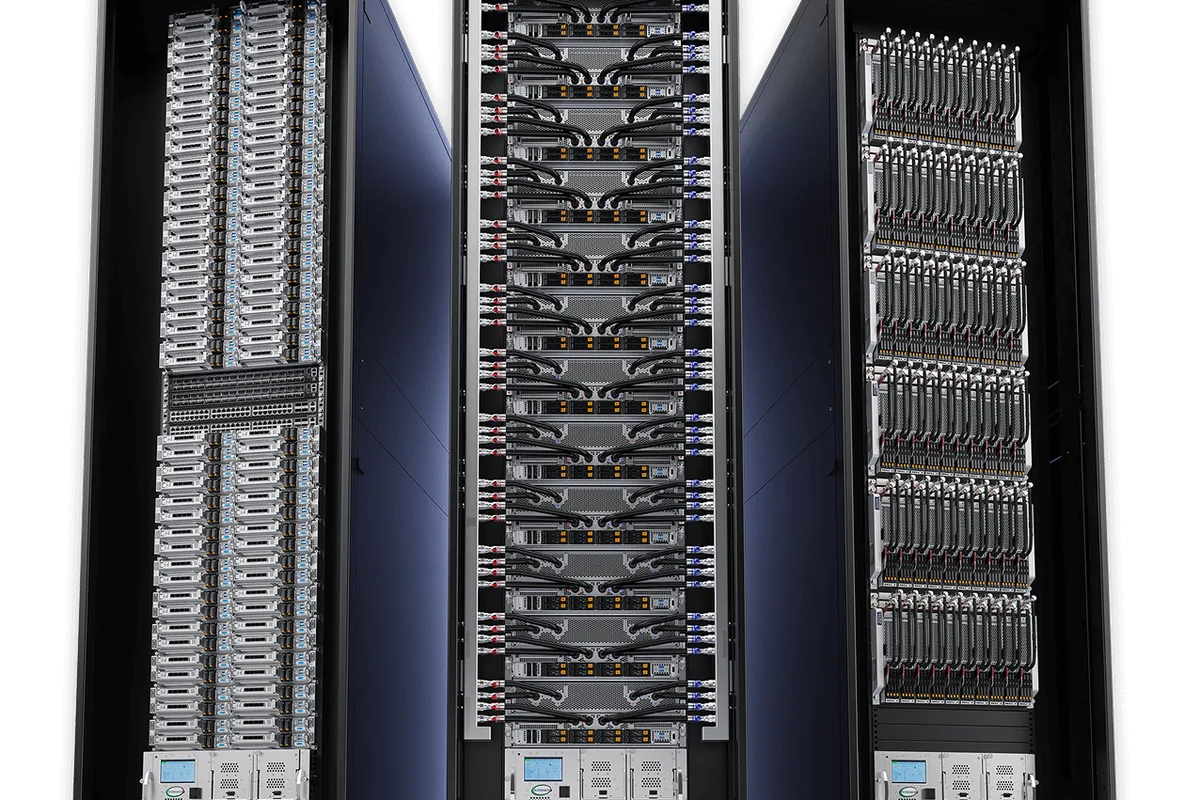
In July 2026, the company announced an expanded rack portfolio covering 44OU, 48U, 48OU and 52U configurations, including designs optimized for liquid cooling and high-density computing.
Supermicro said at the time that its manufacturing operations could deliver up to 3,000 advanced racks per month, including 2,000 liquid-cooled racks. Those are company-stated production capabilities rather than independently verified shipment volumes for the latest quarter.
Preassembled and validated racks can reduce deployment work at customer facilities. That may be particularly valuable for cloud operators building large AI clusters under tight schedules.
The commercial opportunity is not restricted to selling accelerators. It includes the engineering required to make those accelerators operate reliably as part of a complete computing installation.
Liquid cooling is becoming part of the infrastructure equation
High-density AI systems create thermal and electrical challenges that conventional data-center designs cannot always accommodate without substantial modification.
Direct liquid cooling, coolant distribution systems and specialized rack designs are therefore increasingly important components of large accelerator installations.
Supermicro offers integrated cooling infrastructure alongside its servers. Its portfolio includes direct-to-chip liquid cooling, distribution units and rear-door heat exchangers designed for both new data centers and selected upgrades to existing facilities.
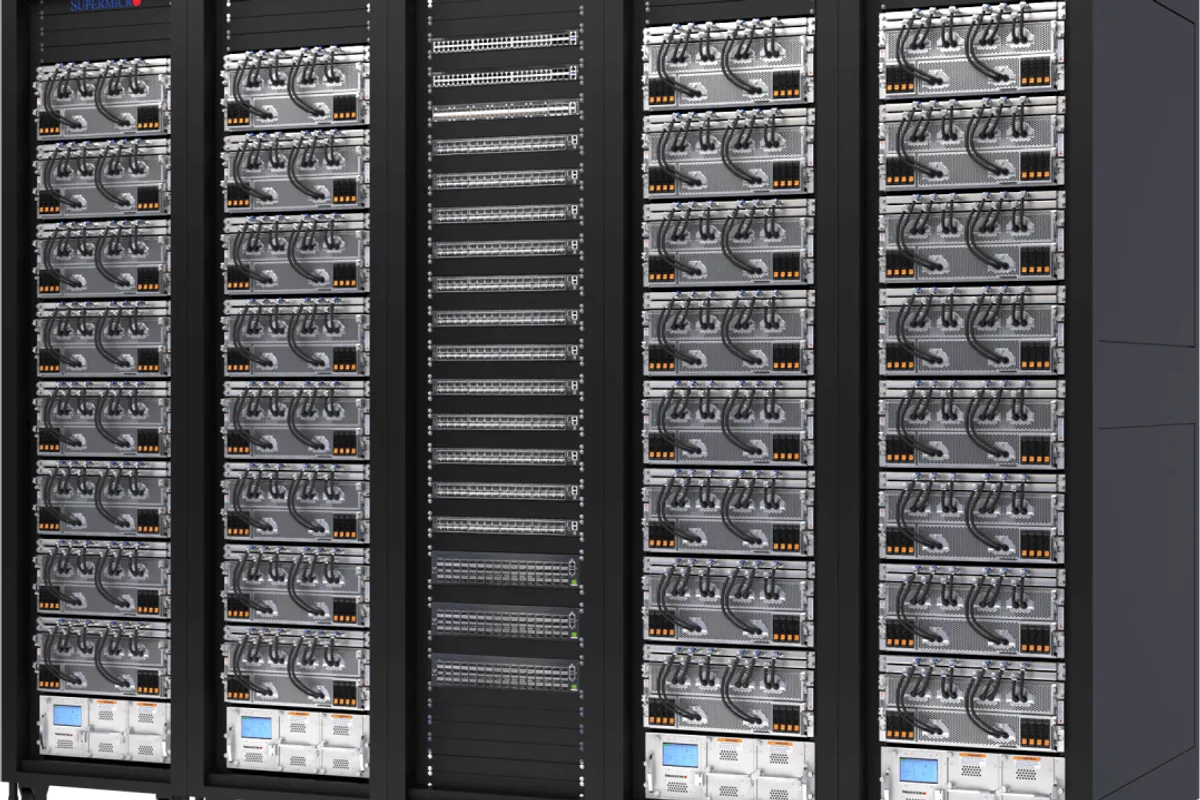
In July, the company introduced an expanded rear-door heat exchanger portfolio with nominal cooling capacities ranging from 10 kW to 120 kW, depending on the model.
These specifications describe the capabilities of individual solutions, not actual power usage across customer installations.
Moving heat away from dense computing hardware requires careful engineering. Flow rates, coolant quality, redundancy, maintenance and power distribution can all affect the operational reliability of a rack-scale deployment.
An AI cluster is only useful when its supporting infrastructure can sustain the workloads it is designed to run.
The AI spending boom is benefiting infrastructure suppliers
Large technology companies continue to expand their computing capacity for AI training, inference and associated cloud services.
Reuters reports that Microsoft, Google, Amazon and Meta are expected to spend more than $700 billion on AI infrastructure this year, based on estimates cited in its reporting.
That capital investment supports a broad supply chain encompassing accelerator manufacturers, memory vendors, networking suppliers, electrical equipment manufacturers and server integrators.
Supermicro participates near the integration end of that chain. Its systems combine expensive individual components into hardware that customers can deploy and operate.
Financial markets responded strongly to the preliminary results. Reuters reported an 11.3% after-hours increase in Supermicro shares on October 20. Dell and Hewlett Packard Enterprise also advanced, while NVIDIA recorded a smaller gain.
A positive market reaction does not settle questions about the long-term economics of AI investment.
Companies supplying data-center equipment can benefit from large construction projects before the operators funding those projects establish that their AI services will produce adequate returns.
The financing of AI infrastructure has become another concern. Data-center projects require substantial capital, and higher borrowing costs can place additional pressure on operators relying heavily on debt.
Reuters notes that a recent decline in CoreWeave securities contributed to renewed investor concerns about the time required for AI infrastructure investments to generate financial returns.
These developments can coexist with strong demand for servers. Orders and deployments indicate that computing capacity is being purchased; they do not automatically establish the profitability of every business using that capacity.
The numbers are preliminary and unaudited
Supermicro's investor announcement explicitly states that the revised financial estimates have not been audited.
They are based on management's current calculations ahead of the completion of normal quarter-end accounting procedures. The final figures may differ materially from the ranges announced.
This warning is particularly relevant because investors do not yet have the complete income statement, balance sheet and cash flow information for the period.
Supermicro has also faced scrutiny of its accounting and financial reporting practices in recent years. On October 15, it announced the appointment of former Western Digital executive Mark Long as chief financial officer.
The company will need to provide a fuller explanation of its quarterly performance, including the composition of revenue, its customer mix, gross margin dynamics and the relationship between orders and recognized sales.
The update establishes a substantial increase in management's current revenue expectations. It does not provide a complete picture of working capital, cash conversion or the financial structure supporting future growth.
November 3 will provide the next important evidence
Supermicro has scheduled its full fiscal first-quarter earnings announcement for November 3, 2026.
The final results should allow investors to compare the preliminary guidance with recognized revenue and gross profit, while assessing operating expenses, cash flow, inventory and the outlook for subsequent quarters.
Those details will be important for understanding whether the unusually strong sales estimate reflects a durable improvement in demand, the timing of large customer deployments or a combination of factors.
For now, the central facts are the company's new revenue outlook of $18.5 billion to $19.5 billion and an expected gross margin of 12% to 12.5%. Both are preliminary estimates for the quarter ended September 30, not audited final results.