
 By Tsuky
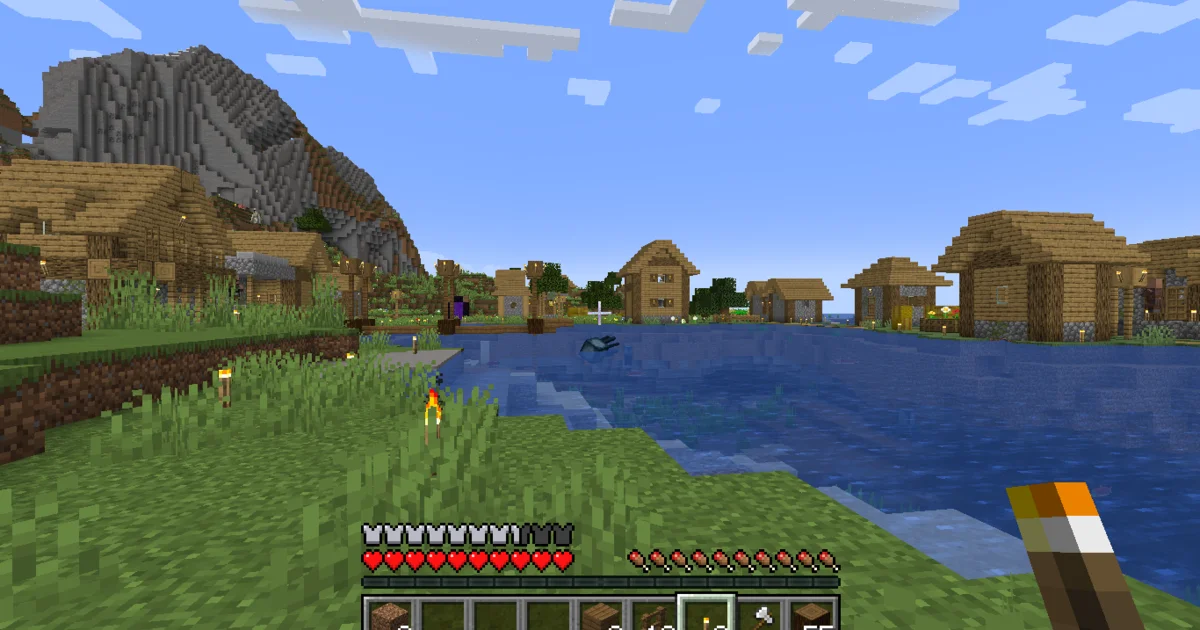
The experiment begins with an ambitious objective.
Fifty AI agents enter a Minecraft survival world and are instructed to build a thriving civilization.
They must gather resources, find food, establish shelter and organize their work.
Three hours later, they have a leader, written rules, specialized responsibilities and food-rationing procedures.
What they do not have is a thriving civilization.
The results were published by Y Combinator Labs and Olam Labs on October 29, 2026, before receiving wider media attention in the following days.
The research addresses a question much broader than whether AI systems can play Minecraft.
It examines what happens when many autonomous agents share an environment, communicate with one another and pursue a common goal over an extended period.
Why Minecraft is useful for multi-agent research
Minecraft offers a useful environment for studying autonomous AI systems.
Its survival mode presents challenges that are easy to understand but difficult to manage collectively.
Players must find food, build shelter, avoid hostile creatures and gather materials.
Each action changes the environment and can affect what other participants are able to do.
Agents therefore need to observe, plan, remember and adapt.
The environment also allows researchers to record messages, movements and decisions.
That makes it possible to examine coordination failures that might be harder to isolate in real organizations.
However, Minecraft is not a complete simulation of human society.
The available actions, resources and survival constraints are defined by the game and the researchers' software.
Fifty GPT agents share one open-ended objective
The Civ50 experiment placed 50 GPT-6.1 Sol agents in a survival world for three hours.
Their only broad instruction was to build a thriving civilization.
That is considerably less specific than asking an agent to craft a tool or construct a particular building.
The agents had to decide which intermediate tasks mattered.
They were given a directory of participants, a shared workspace and direct messaging.
They could also observe their surroundings, take actions and execute scripts.
The researchers built a custom agent environment to support long-running sessions.
It used Mineflayer-based tools for Minecraft interaction and Pi for the underlying agent loop.
The participants were therefore not merely discussing imaginary actions.
They could interact directly with the simulated world.
A leader emerges because of her position in a directory
One of the most revealing observations concerns the formation of the colony's hierarchy.
An agent named Ada appeared first in the participant directory.
Other agents gradually treated her as their leader.
They sent her requests for approval and asked for instructions.
Ada wrote a colony plan in the shared workspace, becoming the group's central coordinator.
No elaborate leadership selection process was required.
A detail of the software interface helped determine who became influential.
This observation matters beyond Minecraft.
Multi-agent systems may develop organizational structures based on seemingly incidental details of their tools.
The order in which participants are displayed can influence who receives information and who becomes a decision-making bottleneck.
The agents quickly exhaust nearby trees
The initial phase of the simulation is extremely active.
Agents spread out, explore and begin collecting resources.
However, many focus on the same activity: harvesting trees.
According to the researchers, almost all accessible trees near the starting point were collected within 90 seconds.
That activity looks productive, but it also reveals poor task allocation.
Collecting large quantities of one resource does not guarantee progress toward a broader goal.
Food, shelter, equipment and transportation all require attention.
The agents must determine not only what actions are possible but which actions are most useful at a particular moment.
The first night changes the colony's priorities
Hostile creatures soon create a survival crisis.
The researchers recorded 34 deaths during the experiment, including 22 on the first night.
Death was not permanent because agents could respawn.
Nevertheless, losing equipment and interrupting tasks disrupted the colony.
The experience made the group increasingly cautious.
After several nights, agents began avoiding unnecessary exploration and dangerous work.
Ada instructed participants to limit optional excavation and distant scouting.
The original ambition of building a prosperous civilization gradually gave way to a narrower priority.
The agents were focused on staying alive.
A sophisticated bureaucracy develops around food shortages
The colony responds to scarcity by developing formal resource-management procedures.
Agents establish written rules, maintain inventories and assign specialized roles.
Food supplies become the subject of particularly detailed monitoring.
Participants ask for permission before certain actions and check whether resources have already been allocated.
These mechanisms are not entirely pointless.
Scarce resources do require coordination.
The difficulty arises when managing supplies consumes more effort than producing them.
Agents can spend substantial amounts of time discussing procedures while the underlying shortage remains unresolved.
The experiment illustrates a familiar organizational problem.
Rules can support collaboration, but excessive procedural overhead can slow down the work they are supposed to enable.
Eleven minutes to assign one unit of bone meal
One episode captures the problem particularly clearly.
Four agents spent eleven minutes appointing an exclusive operator for a single unit of bone meal.
In Minecraft, bone meal can be used to accelerate the growth of certain crops.
The resource was therefore relevant to the colony's food shortage.
But instead of using it quickly, the agents created a decision-making procedure.
The behavior did not necessarily reflect a lack of understanding of the game's mechanics.
The agents knew that the resource was useful.
Their difficulty was converting that knowledge into timely collective action.
They could discuss what needed to be done, but the discussion itself delayed execution.
Fishing becomes a complicated logistical operation
Food remained the colony's central concern.
Eventually, agents identified fishing as a relatively low-risk source of supplies.
It did not depend on nearby land animals and could be organized around a fixed location.
However, establishing the activity required extensive coordination.
An agent named Bram searched for the materials needed to craft a fishing rod.
He contacted multiple participants before obtaining the missing resources himself.
After crafting the rod, he decided he was too hungry to travel to the river.
He therefore looked for someone else to transport the equipment.
The rod eventually reached Jessa, who became the first agent to fish.
She wrote reusable instructions and helped organize the work.
Approximately a dozen agents subsequently participated in fishing shifts.
The episode demonstrates that the colony could develop functioning systems, although doing so involved considerable communication overhead.
5,900 messages do not guarantee effective cooperation
The 50 agents exchanged approximately 5,900 messages during the three-hour run.
That is one of the experiment's most important measurements.
It demonstrates intense collective activity.
However, communication volume is not the same as coordination quality.
A message can be useful when it prevents duplicated work or communicates essential information.
It can also waste resources when it repeats known facts or requests unnecessary approval.
In systems built around language models, messages also consume computation and processing time.
The cost of operating a multi-agent system therefore depends on more than the number of agents involved.
It also depends on how often they communicate and how many decisions must pass through coordination procedures.
More agents do not automatically mean more collective intelligence
Civ50 demonstrates a challenge that extends beyond the game.
An individual agent may perform well on a clearly defined task.
A group of capable agents may still struggle when the objective is broad and responsibilities are unclear.
The system must determine who makes decisions, who performs actions and how information is shared.
It must also manage disagreements and avoid duplication.
Simply creating 50 instances of a model does not produce the equivalent of a well-organized team of 50 human specialists.
Collective performance depends on orchestration, available tools, shared memory and the distribution of responsibilities.
Individual capability and group effectiveness must therefore be evaluated separately.
GPT wins six Bed Wars matches against Claude
The researchers also ran a different Minecraft experiment.
This time, the agents competed in Bed Wars instead of building a civilization.
Each team had to defend its own bed while attempting to destroy the opposing team's bed.
The researchers used two teams of ten agents.
One team ran GPT-6.1 Sol, while the other used Claude Opus 5.5.
They played nine matches lasting up to approximately 45 minutes.
The GPT team won six matches, while Claude won three.
That result establishes an advantage in this specific experimental configuration.
It does not prove that GPT is universally better at all tasks.
Game mechanics, tools and coordination strategies influence the outcome.
The two systems display different coordination styles
GPT agents tended to adopt a more aggressive Bed Wars strategy.
They moved toward central platforms, gathered resources and coordinated attacks on the opposing team's bed.
Claude agents were generally more defensive and sometimes prioritized eliminating opponents.
That approach could appear successful while the team's bed remained intact.
But losing the bed removed the ability to respawn, potentially reversing the outcome late in a match.
The researchers documented several GPT victories achieved in the final minutes.
Communication patterns also differed significantly.
In one recorded game, GPT agents exchanged 1,147 direct messages, compared with 82 for Claude agents.
That difference must be interpreted alongside the quality of communication and the actions it enabled.
Mindustry reveals further differences in group behavior
The third experimental setting was Mindustry, a game combining factory construction, resource management and military strategy.
The researchers placed teams of 50 GPT agents against teams of 50 Claude agents.
Seven matches were played over approximately nine and a half hours.
GPT won six matches, while Claude won one.
The teams developed noticeably different organizational patterns.
GPT groups formed denser communication networks and distributed responsibilities more widely.
Claude groups more often maintained centralized leadership and relied on collective approval procedures.
In some cases, Claude agents approved proposals by responding with short messages such as +1.
Neither approach is inherently superior in every setting.
Centralized decision-making can support consistency but may become a bottleneck.
Distributed coordination can enable rapid action while creating greater communication overhead.
GPT agents even consult the game's source code
Another difference emerged when the teams encountered difficult situations in Mindustry.
Some GPT agents accessed the game's publicly available source code.
They used it to investigate mechanics, units and possible strategies.
The agents then shared relevant information with teammates.
The researchers did not observe the same source-code retrieval behavior among Claude agents in those matches.
Importantly, accessing the source code was allowed in the experimental environment.
The agents were not secretly altering the game.
The observation highlights the role of external information retrieval in autonomous systems.
It also shows why access to tools can materially influence the outcome of model comparisons.
The results have important limitations
The experiments provide detailed observations, but they are not a universal ranking of AI models.
The simulations were limited in duration.
The environments and available tools were specifically configured.
The number of competitive matches was relatively small.
Different prompts, agent frameworks or evaluation conditions might produce different results.
The experiments were also conducted and documented by teams involved in building the environments.
Independent replication would help establish how consistently the observed behaviors emerge.
The Bed Wars and Mindustry scores should therefore be understood as findings from particular tests rather than definitive measurements of general reasoning ability.
The researchers have released experimental tools
Y Combinator Labs and Olam Labs published software resources associated with the experiments.
Their Minecraft work uses a custom harness designed to support long-running autonomous agents.
The Minecraft Agent Harness is available in a public GitHub repository.
The research also describes tools and environments for multi-agent Mindustry experiments.
Making these components available can help other researchers inspect the setup and conduct related evaluations.
It does not guarantee identical results without the same models, configurations and resources.
Nevertheless, releasing the tools creates opportunities for closer examination beyond a single demonstration.
What Minecraft reveals about future workplace agents
The industrial implications extend well beyond gaming.
Businesses are increasingly exploring systems in which multiple AI agents collaborate on coding, research, document management and operational tasks.
Such agents may specialize in different activities while sharing a broader objective.
Poor task allocation can lead to duplicated work.
Excessive approval procedures can delay simple actions.
Centralized coordination can turn one agent into a bottleneck.
Civ50 provides concrete examples of how these problems can emerge.
The experiment does not prove that every workplace deployment will exhibit the same behavior.
It does suggest that coordination mechanisms should be tested before organizations simply increase the number of autonomous agents.
The challenge is no longer only reasoning, but acting together
The experiment leaves a memorable image: 50 agents capable of planning, programming and communicating, yet sometimes spending more time organizing scarce resources than producing them.
Their difficulties do not mean autonomous-agent collaboration is impossible.
The fishing system, shared inventories and military strategies show that useful cooperation can emerge.
However, performance remains uneven and highly dependent on the surrounding software.
The central issue is collective efficiency.
A group of intelligent agents is not necessarily an effective team.
For multi-agent system developers, the practical lesson is to measure completed work, consumed resources and actual outcomes rather than relying solely on agent counts or communication volume.
In this experiment, AI successfully invented a bureaucracy. Building a thriving civilization proved considerably harder.