 By Tsuky
There was no keynote, product demonstration or new iPhone feature. Apple's arrangement with Ascend.io became public through a European regulatory filing.
The disclosure appeared on October 30, although Apple had notified the European Commission about the transaction four months earlier.
The target is a company specializing in a less visible part of artificial intelligence: collecting, preparing, transforming and managing the data that software systems depend on.
Ascend.io has spent years developing automation for data engineering and more recently introduced AI agents intended to help manage those processes.
The agreement is potentially significant, but its exact structure matters. The publicly disclosed terms do not establish a conventional purchase of every asset and exclusive right belonging to Ascension Labs.
What the European filing actually says
The disclosed arrangement involves Apple and Ascension Labs, Inc., which operates Ascend.io.
Apple receives the right to make employment offers to and hire certain Ascension Labs employees.
The agreement also provides a non-exclusive license to Ascend's intellectual property rights and for the assignment of certain patents to Apple.
These provisions have different meanings.
Recruitment rights allow Apple to approach selected employees, but do not prove that every relevant employee has already joined the company.
A non-exclusive license provides rights to use technology without necessarily preventing other parties from receiving similar rights.
Patent assignments concern specific intellectual property assets, rather than automatically transferring ownership of an entire business.
The structure resembles an acquihire, in which engineering talent is an important part of the transaction.
However, the filing does not disclose the financial consideration, the exact number of employees involved or the complete contractual conditions.
The transaction was reported in June, not October
Apple notified the European Commission about the arrangement on June 30, 2026.
The information became public on October 30.
This delay is consistent with the European Union's reporting process under Article 14 of the Digital Markets Act.
Designated gatekeepers are required to notify the Commission about certain planned transactions in the digital sector.
The regulator subsequently publishes non-confidential summaries.
Its stated publication policy provides for disclosure no earlier than four months after receiving the relevant information.
The difference between notification and disclosure is therefore important.
October 30 is the date the details emerged publicly, not proof that all employment or intellectual property transfers occurred that day.
The filing also should not be interpreted as a newly announced consumer product partnership.
Ascend.io built technology for managing data pipelines
Ascend.io was founded in 2015 and developed software for enterprise data engineering.
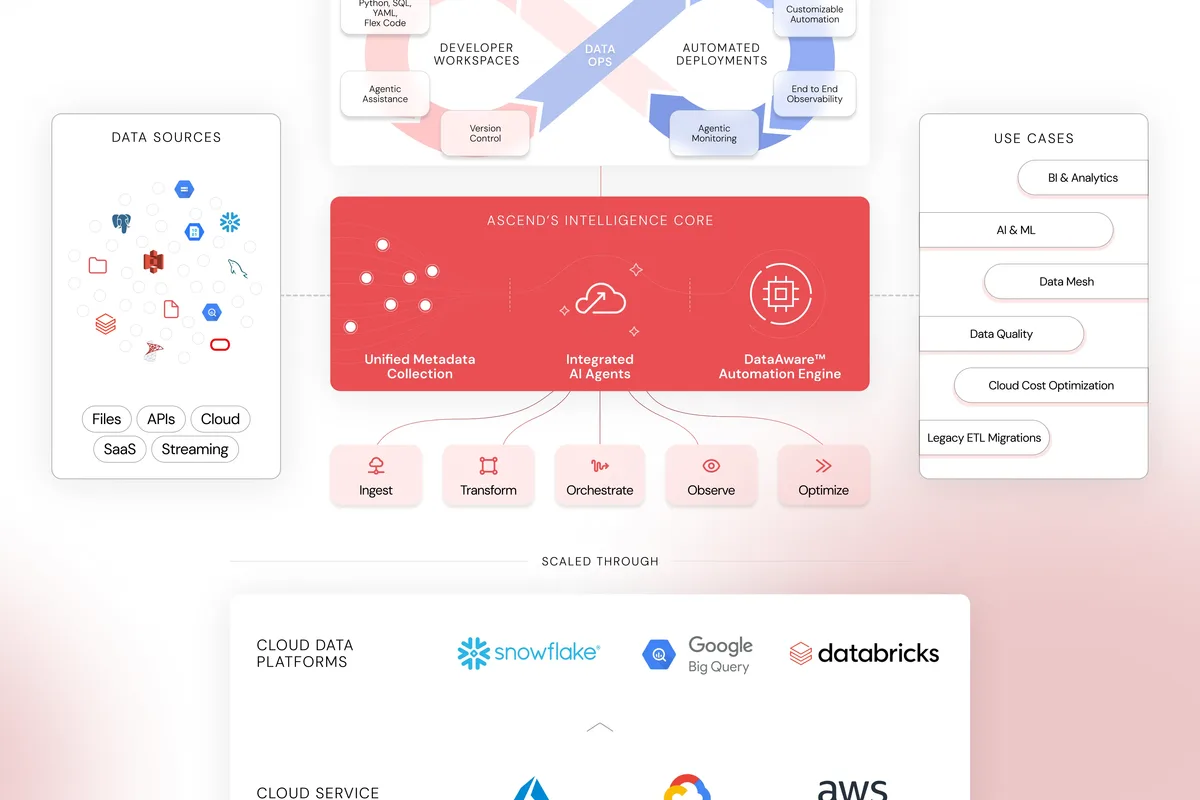
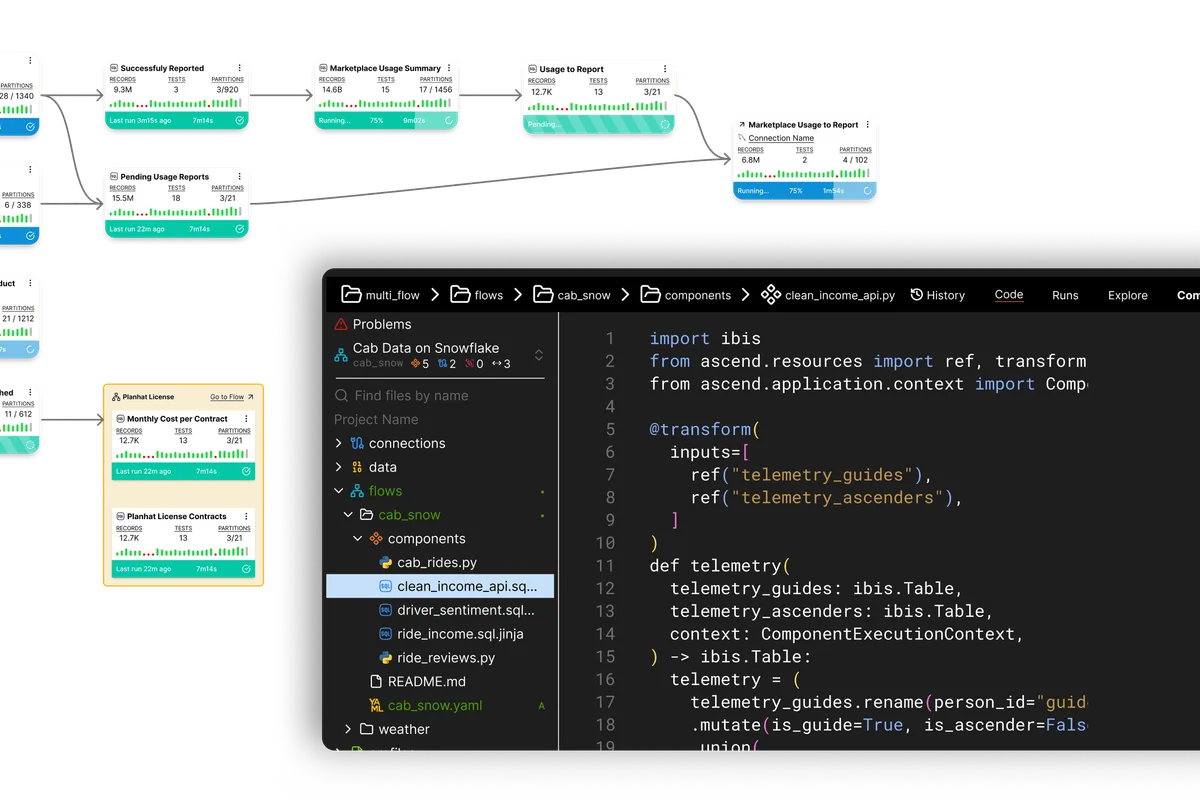
Its platform was designed to automate the movement and processing of information across different systems.
The work includes ingestion, transformation, orchestration and monitoring.
A data pipeline takes information from one or more sources and prepares it for use elsewhere.
Those sources might include operational applications, databases, cloud services and event streams.
Data often needs to be cleaned, reorganized and validated before it can support reporting, analytics or other applications.
These workflows are not always straightforward.
Applications change their formats, network operations fail and dependencies between systems create maintenance challenges.
Ascend.io developed tools intended to reduce the engineering effort required to create and maintain such pipelines.
Its approach included declarative pipeline technology, allowing engineers to describe desired results while the system manages parts of the execution process.
These descriptions explain the company's technology and positioning. They do not independently establish that its products outperform every competing platform.
AI agents became a central part of Ascend's platform
More recently, Ascend.io moved toward what it called Agentic Data Engineering.
The idea was to use AI agents throughout the data engineering lifecycle.
Rather than limiting assistance to code suggestions, the company aimed to automate more of the development, operation and maintenance of data workflows.
Its documentation describes an assistant named Otto.
Otto could help developers complete code, explain errors and understand dependencies between data sources and transformations.
The platform also described agent-based capabilities for more complex tasks and routine monitoring.
This is a different approach from simply adding a conversational interface to a traditional software application.
The intended benefit is to reduce repetitive engineering work.
However, the reliability of such automation depends on permissions, testing and the ability to detect incorrect changes.
AI agents capable of modifying data workflows need appropriate controls, particularly when those workflows support production systems.
Why data infrastructure matters to AI development
Large language models receive most of the attention in discussions about artificial intelligence.
But practical AI applications also depend on the information made available to them.
Data stored in an enterprise system may be unusable for a particular application until it has been properly processed.
Incorrect transformations can produce unreliable results even when the AI model itself is functioning as designed.
Data engineering therefore plays an important role in the development and maintenance of advanced software.
Pipelines must handle failures, changing formats, dependencies and ongoing updates.
Automating some of that work can improve operational efficiency.
However, better data infrastructure should not be confused with a direct improvement to the reasoning capabilities of a language model.
The two areas can complement each other without being the same technology.
Ascend.io's expertise therefore points toward software engineering and infrastructure capabilities, rather than necessarily toward a new AI model architecture.
Apple could use the expertise internally
One plausible explanation for the arrangement is that Apple wants additional expertise in managing complex data systems.
A company operating large software platforms depends on reliable workflows across many engineering teams.
Automation, pipeline monitoring and AI-assisted development could be valuable in that environment.
However, this remains an interpretation rather than a confirmed statement of Apple's plans.
The company has not identified which internal groups might receive Ascend employees.
It has not disclosed which products or infrastructure systems could use the intellectual property covered by the arrangement.
The technology might eventually support internal engineering systems without appearing as a separately branded consumer feature.
There is no public evidence establishing that a future version of Siri will incorporate Otto or that Apple Intelligence will directly adopt Ascend.io's platform.
Those possibilities should remain separate from the facts documented in the filing.
A non-exclusive license limits what can be inferred
The non-exclusive nature of Apple's intellectual property license is particularly important.
An exclusive license can reserve certain rights for a single licensee, depending on the agreement.
A non-exclusive license does not establish that kind of exclusivity.
Apple can obtain rights to use technology without necessarily preventing the rights holder from licensing it elsewhere.
The patent assignment provisions are distinct and may concern specific assets transferred to Apple.
The public summary does not explain every limitation, duration or condition associated with the agreements.
It would therefore be premature to assert that Apple has acquired all of Ascend's code, customer relationships or exclusive commercial rights.
The available disclosure supports a more precise conclusion: Apple has secured defined hiring and technology rights.
Ascend.io says it is winding down
Ascend.io has also posted a message announcing that it is winding down operations.
The company reflects on a decade of development in data engineering.
It highlights its declarative pipeline technology, unified data platform, DataAware automation and more recent agentic capabilities.
The message thanks customers, engineers and members of its community.
It does not provide a detailed shutdown schedule.
It also does not explicitly state that Apple caused the decision or describe the arrangement with the iPhone maker.
The regulatory disclosure and the wind-down announcement are consistent with a transition involving the company's technology and employees.
However, they do not establish every aspect of that transition.
There is no confirmed announcement that all Ascend.io customers will move to an Apple service or that the platform will be relaunched under a different brand.
Existing customers face practical questions
For companies already using Ascend.io, the most immediate concern is likely to be continuity.
Data pipelines may support reporting, internal applications, financial operations and analytics.
Changes to a platform's availability can create risks for these processes.
Affected organizations should examine their contracts, export capabilities and direct communications from the provider.
They should also understand which parts of their systems depend on Ascend-specific configurations and automation.
However, the public wind-down message does not establish that every service has already stopped operating.
It provides no universally applicable migration deadline.
Those details require direct contractual or technical confirmation.
An acquihire may produce no visible consumer feature
Technology companies sometimes acquire engineering expertise rather than a consumer-facing product.
The employees involved may move into existing teams, while selected intellectual property supports internal development.
Apple's agreement with Ascension Labs is compatible with such an arrangement.
Its recruitment provisions and technology rights support that interpretation.
Nevertheless, the company has not made public the precise commercial rationale or integration plan.
The involvement of an AI startup should not automatically be translated into a promised upgrade for the iPhone, Mac or Siri.
The results could remain entirely within Apple's internal infrastructure.
European regulation provides unusual visibility
The broader story also concerns transparency.
Large technology companies do not always issue public announcements about relatively small acquisitions, licensing arrangements or engineering-team transfers.
The Digital Markets Act creates a reporting mechanism for certain transactions involving designated gatekeepers.
That mechanism can reveal activity that might otherwise remain difficult to track.
However, the published summaries are non-confidential and do not necessarily contain complete financial details.
They can also appear months after the original notification.
For researchers, competitors and the public, the register provides useful evidence about corporate activity without replacing the underlying contracts.
In Ascend.io's case, it establishes the main categories of rights involved while leaving the strategic implementation unknown.
The long-term value depends on integration
The October 30 disclosure confirms Apple's interest in talent and technology associated with AI-assisted data engineering.
It does not establish a measurable improvement in Apple's AI services.
No transaction price has been disclosed, no final employee count has been confirmed and no new product using Ascend's technology has been demonstrated.
The outcome will depend on how the people, patents and licensed technology are ultimately used.
The significance of the agreement may therefore emerge in engineering systems that consumers never see directly.
For now, the most defensible reading is narrower than many acquisition headlines suggest.
Apple has obtained rights linked to a specialist data engineering company whose operations are winding down.
What that means for the next generation of Apple products remains unannounced.