
 By Kilam
The useful life of a connected device depends on more than its physical components.
It can also depend on remote services for account verification, software installation, license management and operating system functionality.
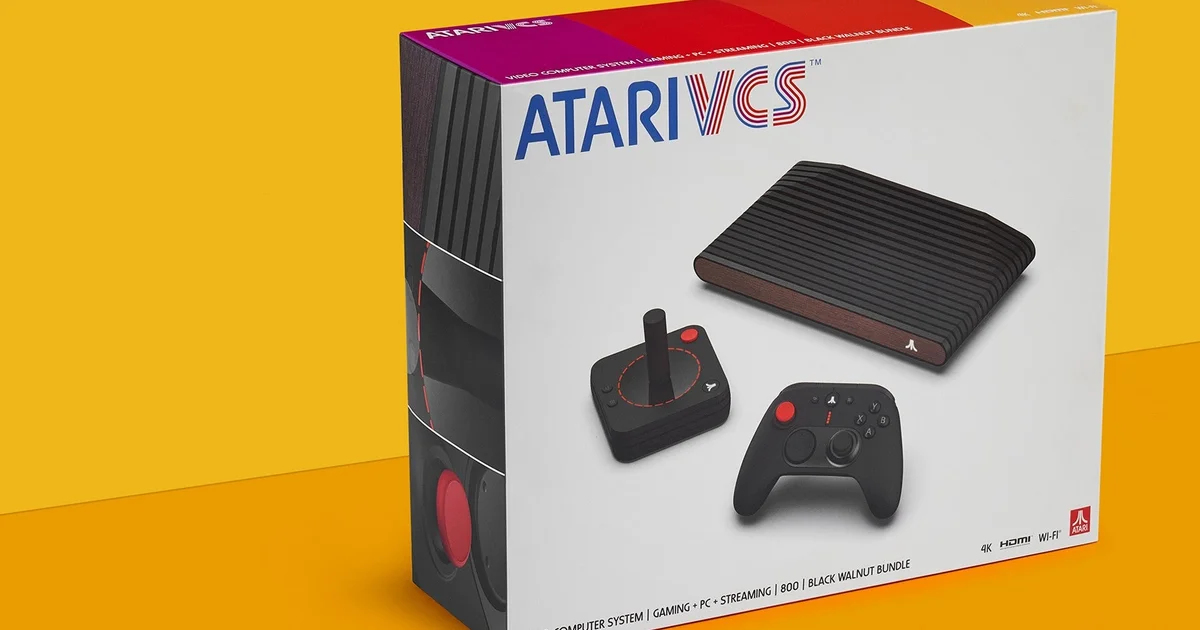
Atari's upcoming VCS retirement illustrates the problem.
The company will close the console's official store on February 1, 2027, but it also intends to modify the operating system so the machine can continue working without relying on Atari's servers.
A PC-like architecture inside a retro console
The modern Atari VCS uses an x86 architecture closely related to conventional personal computers.
Its standard hardware includes an AMD Ryzen Embedded R1606G processor and integrated Radeon Vega graphics.
The system also features 8GB of DDR4 memory and 32GB of internal eMMC storage.
Connectivity includes USB, HDMI and wireless networking, while an M.2 SATA slot supports additional storage.

This makes the machine substantially different from Atari's older cartridge-based systems.
Its software environment is based on Linux, and a separate PC Mode allows compatible alternative operating systems to be used.
That flexibility provides opportunities beyond Atari's own storefront.
However, installing another operating system does not automatically preserve every function of Atari's custom software environment.
A storefront relies on more than a purchasing interface
Digital storefronts commonly depend on several supporting services.
These may include accounts, transaction records, software downloads and license verification.
When the operator retires that infrastructure, installed software can become difficult to use if it still expects communication with unavailable servers.
Atari says its planned migration will remove dependencies on company infrastructure for authentication and software.
This establishes the objective but does not explain the complete implementation.
The manufacturer has not detailed how existing entitlements will be represented locally or which components of the operating system will change.
Local migration is intended to preserve essential functions
Atari intends to distribute an operating system update following the storefront shutdown.
The update should move required functionality to the local machine, reducing dependence on external authentication infrastructure.
The intended result is a VCS that remains useful after official online services are withdrawn.
However, the precise process has not been published.
It is not yet known how accounts, installed applications and existing software licenses will be handled during migration.
No exact release date has been announced for the update.
Atari plans to provide instructions in early 2027.
Until then, claims about automatic migration or specific system modification procedures would be unsupported.
Installed games and redownloads are separate issues
Atari's communications indicate that previously downloaded games and applications should remain usable.
That is different from guaranteeing that previously purchased software can be downloaded again after the store closes.
Launching an existing application and retrieving its installation files can depend on different systems.
A device may remain operational offline even after its original download infrastructure has disappeared.
The current announcements do not establish universal post-shutdown redownload rights or functionality.
Owners should review their libraries and follow Atari's forthcoming migration guidance rather than assuming that changes to authentication solve every preservation problem.
Home Brew creates a potential alternative distribution system
Atari also plans an application called Atari Home Brew.
Its intended purpose is to let users install independently developed games and software without accessing the original storefront.
For developers, this could provide a way to continue distributing VCS-compatible content.
For owners, it could allow new software to be added after the commercial platform has closed.
The company has not yet published complete technical specifications for the application.
Supported package formats, update mechanisms, security checks and compatibility rules remain unknown.
An official homebrew distribution tool should not be confused with unrestricted system access or the removal of all software protections.
PC Mode provides another path
The VCS includes a PC Mode designed to support compatible alternative operating systems.
This allows the hardware to serve purposes beyond running software distributed through Atari's interface.
However, using Linux or another operating system does not automatically make games purchased through the VCS store compatible.
Drivers, graphics capabilities, system resources and application requirements still matter.
The x86 architecture increases flexibility, but the VCS remains a relatively modest computer by modern performance standards.
Third-party services require separate consideration
The VCS has also supported applications related to video streaming and cloud gaming.
Those services may depend on infrastructure operated by companies other than Atari.
Removing Atari's own authentication requirements cannot guarantee that every external application will remain operational.
Third-party providers may change their compatibility requirements or discontinue support independently.
Atari has not provided a comprehensive list of services guaranteed to work after migration.
Local console functionality and continued access to external services therefore need to be treated separately.
The migration still needs to be demonstrated
Atari's retirement plan involves several distinct stages.
Digital purchases end on January 31, 2027, and the official store closes on February 1.
A planned operating system update should move relevant functions to the local device.
The company will then end official platform support once the transition is complete.
The Home Brew application is also intended to form part of the process.
The exact sequence and timing of the software releases have not yet been established.
The migration's success will depend on practical results, including local startup, access to installed games, application stability and the usability of the new distribution mechanism.
Independent tests of the future software are not yet available.
A wider lesson for connected hardware
The Atari VCS retirement raises a broader question about the lifespan of connected devices.
Can a manufacturer withdraw commercial support without making functioning hardware unusable?
The answer often depends on software design and the role of external authentication services.
A system that can operate locally is less vulnerable to the disappearance of its original infrastructure.
Atari says it intends to move the VCS in that direction.
If the company delivers a reliable migration, the machine could remain valuable for retro gaming, independent software and general computing tasks.
For now, the storefront closure date is confirmed, while the success of the operating system transition remains to be demonstrated.