
 By Tsuky
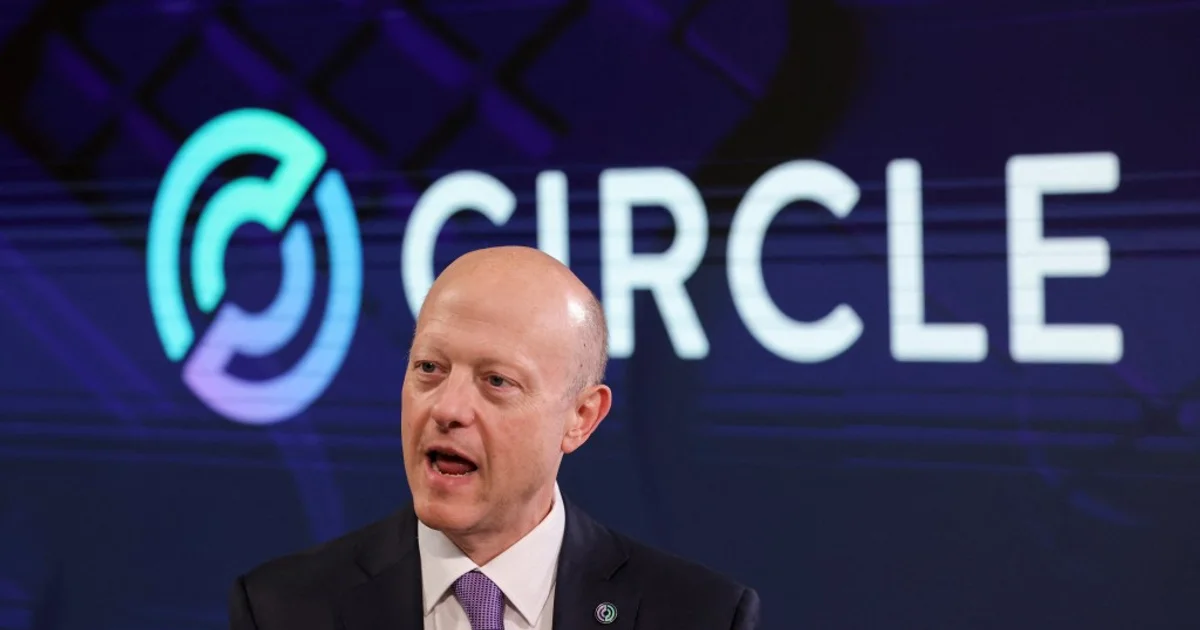
Sending money across borders should be a straightforward digital operation. In practice, international payments can still involve multiple banks, currency conversions and delays before the recipient receives usable funds. Fees and settlement times vary considerably between payment routes. For businesses paying overseas suppliers or contractors, those complications can create routine administrative work. Circle believes stablecoins can address some of those problems. The issuer of USDC is planning to expand into approximately 40 emerging and developing markets. Co-founder and CEO Jeremy Allaire described the strategy to Reuters on October 16 while attending meetings of the International Monetary Fund and World Bank in Bangkok. He highlighted growing demand in Southeast Asia, Latin America, Africa and the Middle East. The announcement should not be mistaken for a completed expansion. Circle has not said that forty new countries began offering its services on October 16. It has described a strategic objective without publishing a full list of target countries or an individual launch schedule. That distinction is important because making a digital token transferable worldwide is not the same as establishing a complete financial service in every market.
Why Circle sees opportunity in emerging economies
Stablecoins first became widely familiar as tools within cryptocurrency markets. Traders could move between digital assets and tokens designed to track the value of conventional currencies without necessarily returning to a traditional bank account. Circle wants USDC to serve a much broader role. Businesses in emerging markets can encounter difficulties receiving international payments or obtaining suitable digital financial services. Individuals may also want more flexible ways to transfer money across borders. Allaire argues that these needs are creating demand for internet-based financial infrastructure. He describes the blockchain industry as moving from early adoption toward wider commercial use. That remains the executive's assessment, not proof that stablecoins have already displaced traditional banking across the regions mentioned. Local financial institutions remain essential for many transactions. A recipient may need to exchange USDC for local currency or receive funds in a conventional bank account. The technology can help transfer value between systems, but practical usability depends on the services connecting those systems to the local economy. That is one reason Circle is investing heavily in payment infrastructure rather than relying only on the popularity of its token.
USDC is seeking a role beyond cryptocurrency exchanges
USDC is a stablecoin designed to maintain a value close to one US dollar. Circle manages its issuance and associated reserve and redemption arrangements. The token allows dollar-denominated value to move across supported blockchain networks. However, holding USDC is not automatically equivalent to holding a conventional insured bank deposit. Redemption conditions, intermediaries and legal protections depend on the applicable jurisdiction and how the tokens are held. Those distinctions matter when discussing everyday payments. A business receiving USDC needs to know whether it can retain the tokens, use them for other transactions or exchange them for local currency at a reasonable cost. If a supplier or employee requires payment in a national currency, the digital transfer is only one stage of the process. Banking relationships and local payout services become essential. That means Circle's expansion cannot consist solely of making more digital wallets available. It requires financial partners capable of handling the real-world stages before and after the blockchain transaction.
Tether remains the larger stablecoin competitor
Circle is expanding into a market where it faces an established rival. According to market figures cited by Reuters on October 16, USDC accounts for approximately 25 percent of the global stablecoin market. Tether's USDT represents close to 60 percent. These shares are estimates and can change with market conditions. They nevertheless illustrate Tether's substantial lead in circulation. Circle therefore faces more than the challenge of persuading customers to use stablecoins. It must convince financial institutions, payment providers and businesses to select USDC rather than competing digital dollars. The decision may depend on the reserve structure, redemption arrangements and regulatory position of the issuer. But practical factors also matter. Fees, liquidity, local currency access and software integration can determine whether a payment route is useful. Existing customer habits and distribution partnerships may favor one stablecoin over another in particular markets. Circle must build a compelling operational network rather than assume that its token's technical characteristics alone will secure adoption.
USDC circulation reached $73.3 billion in Q2
Reuters reported that USDC circulation reached $73.3 billion in the second quarter of 2026. That represented a 19 percent increase from the corresponding period a year earlier. The figure demonstrates the significant scale USDC has already achieved. It should not be confused with Circle's revenue. The value of stablecoins in circulation represents outstanding digital tokens, not the income earned by the issuer. Circle's business model also includes financial activities associated with reserves and services provided to partners. Growth in circulation can contribute to its commercial opportunities, but it is not equivalent to the same amount of profit or new sales. Future expansion will depend on regulation, customer demand and competition. The announcement of forty target markets does not provide enough information to calculate future circulation or the number of potential new users. Without specific countries, service categories and rollout dates, such projections would be speculative.

The Tazapay deal could be central to Circle's strategy
Circle is backing its international ambitions with corporate transactions. On September 8, the company announced a definitive agreement to acquire Tazapay, a Singapore-based provider of business-to-business cross-border payment infrastructure. Tazapay has established banking and financial technology relationships in several regions. According to Circle's official announcement, it works with more than sixty banking and fintech partners. Its local payout infrastructure covers more than one hundred markets. The company also reports annualized payment volume exceeding $25 billion. Approximately 60 percent of its transaction volume already involves stablecoins, according to the figures shared by Circle. These capabilities help explain the planned acquisition. A blockchain transfer can move digital value quickly, but a successful international payment often requires a recipient to obtain usable funds through familiar local channels. Tazapay's existing relationships could help provide those services. Circle wants to combine USDC with payment infrastructure already connected to financial institutions. The acquisition is not complete, however. Circle expects the deal to close in 2027, subject to customary conditions and regulatory approval. Its future integration benefits should therefore be described as planned rather than already delivered.
Reuters puts the proposed Tazapay deal at $400 million
Reuters described the proposed acquisition of Tazapay as a $400 million transaction. That gives an indication of the importance Circle attaches to international payment infrastructure. The company's September 8 announcement confirms the signed acquisition agreement and explains its strategic purpose, but the opened official statement does not specify that purchase amount in its main text. The figure should therefore be attributed to Reuters. The agreement itself remains subject to completion. Regulatory approvals are required, including approval from the Monetary Authority of Singapore. The anticipated closing date is in 2027. That timeline is important when evaluating Circle's wider geographic objectives. A company may identify a large international opportunity before all the infrastructure intended to support it has been integrated. Building a global payment network is a longer process than announcing support for a digital asset. Circle's expansion ambitions will need to be followed through actual completed transactions, new partnerships and service availability.
Binance is also investing in Circle
Another part of the strategy involves Binance. On September 22, Circle announced a $100 million strategic investment from the cryptocurrency exchange and the renewal of their commercial partnership for five years. That transaction is separate from the proposed Tazapay acquisition. It nevertheless illustrates the importance of distribution. A stablecoin becomes more useful when it is supported by the wallets, applications, exchanges and payment services that customers already use. Partnerships with widely used platforms can help expand access. But they do not guarantee that every user will begin using USDC for ordinary payments. Different markets have different needs. Some customers primarily require cross-border business settlement. Others use digital dollars for cryptocurrency trading or transfers between individuals. The new investment strengthens an existing commercial relationship. It does not establish that USDC has already launched new payment services across all forty target markets.
Arc and Circle Payments Network are part of the same expansion
Circle is increasingly presenting itself as a financial infrastructure company rather than only a stablecoin issuer. Its Circle Payments Network is intended to connect businesses and financial partners involved in moving money internationally. The company also launched the Arc blockchain mainnet in September 2026. Arc is designed to support financial operations and digital settlements. These products address different requirements associated with institutional payments. Businesses need predictable costs, software integration and reliable records. They also need compliance procedures and ways to move between digital and conventional financial systems. A blockchain can handle certain steps. It does not automatically provide local banking relationships or every service required for a commercial payment. Circle is attempting to combine several layers of infrastructure. However, the existence of Arc and Circle Payments Network does not mean every country discussed by Allaire already has access to their complete functionality. Their availability depends on partnerships, supported services and local requirements. The operational details will be essential in determining what Circle's geographic expansion actually delivers.
Regulation is likely to be the hardest part
Digital assets can cross borders quickly. Financial authorizations do not. Countries apply different rules to payment services, capital movements and currency conversion. Some require specific licenses. Others restrict certain activities involving digital assets or international transfers. Financial service providers must also address customer identification, anti-money-laundering obligations and consumer protection. These requirements make Circle's forty-market objective more complicated than a technical deployment. Making a wallet or token accessible in a country does not automatically authorize a company to provide regulated payment services there. Allaire sees greater regulatory clarity as an important driver of stablecoin adoption. Reuters reported his comments about the US GENIUS Act, which is expected to take effect in January 2027, alongside regulatory developments involving Circle. Such changes may support the company's wider credibility. They do not replace the legal requirements of the markets it wants to enter. That is why the missing country list matters. A meaningful evaluation will require evidence of local approvals, payment partners and services customers can actually use.
Stablecoins can reduce friction without eliminating every cost
The practical appeal of stablecoins is relatively straightforward. A business needs to pay someone overseas. If both parties have access to compatible infrastructure, a digital transfer may simplify part of the process. But costs do not necessarily disappear. Network fees, service charges and currency conversion expenses may still apply. Local liquidity can influence the amount the recipient ultimately receives. Banking hours and compliance processes can affect the last stage of settlement. Security is also an important concern. Users must protect credentials, verify recipient addresses and avoid fraudulent services. Blockchain transactions do not necessarily offer the same dispute or refund processes as conventional card payments. For businesses, the quality of a payment service depends on more than transfer speed. Reliability, total cost, regulatory compliance and support when something goes wrong are equally important. Circle will need to demonstrate those benefits in individual markets. A faster technical transfer is useful only when the complete payment journey works for its users.
AI agents are becoming a potential source of payment demand
Allaire also highlighted another emerging use case. AI agents increasingly interact with online resources as part of automated workflows. A software agent may need to pay for data, computing capacity or access to specialized services. Some transactions can involve very small amounts. Traditional billing arrangements may be awkward when requests are frequent and automated. Allaire told Reuters that machine-to-machine activity is contributing to USDC use, including tiny payments associated with online research and real-time information. That is the executive's account of an emerging trend. It does not establish that AI agents account for most USDC transactions or that autonomous software already dominates the stablecoin economy. Payment-enabled agents also raise difficult security questions. Their spending needs authorization and limits. Services must be trustworthy, and transactions need to be traceable. Malicious instructions could otherwise create opportunities for unauthorized purchases. Allaire acknowledged the risks associated with increasingly sophisticated automated threats. This is another possible use for programmable money, not proof that all the necessary security and governance challenges have been solved.
Forty target markets, but no published country list
The most important missing detail is also the simplest. Circle has not identified all forty markets it intends to enter. Allaire named four broad regions, but each contains countries with different economies, currencies and regulatory systems. The needs of an exporter in Southeast Asia may differ substantially from those of a family receiving an international transfer in Africa. Access to banks, mobile networks and local payment services also varies. Without country names and dates, it is impossible to determine which users will benefit first. It is equally difficult to forecast the financial impact. Potential transaction volumes, adoption rates and future revenue remain uncertain. That does not make Allaire's statement meaningless. It establishes a clear strategic direction. But it is not equivalent to a completed product rollout. To turn the target into measurable progress, Circle will need to announce local partnerships, obtain relevant approvals and document which services are live in each market.
Circle is building a payments business around USDC
The October announcement shows how Circle's business is evolving. USDC remains its best-known product, but the company wants to combine stablecoin issuance with financial infrastructure and international payment services. The proposed Tazapay acquisition could expand local payout capabilities. The Binance partnership supports distribution. Arc and Circle Payments Network provide additional infrastructure for developers and financial institutions. Targeting forty emerging markets adds a geographic dimension to those efforts. The strategy is coherent, although its components remain at different stages of development. Some services are already operating. Other transactions have been announced but not yet completed. The geographic expansion still lacks a detailed public schedule. Against Tether and established international payment networks, Circle will ultimately need to demonstrate more than the circulation of its token. It must show that businesses can send and receive money more conveniently, reliably and legally. The next important milestone may not be another rise in USDC circulation. It may be the announcement of a specific country, a named payment service and customers who can actually use it. That is when the ambition of forty markets will begin turning into a verifiable international rollout.