
 By Tsuky
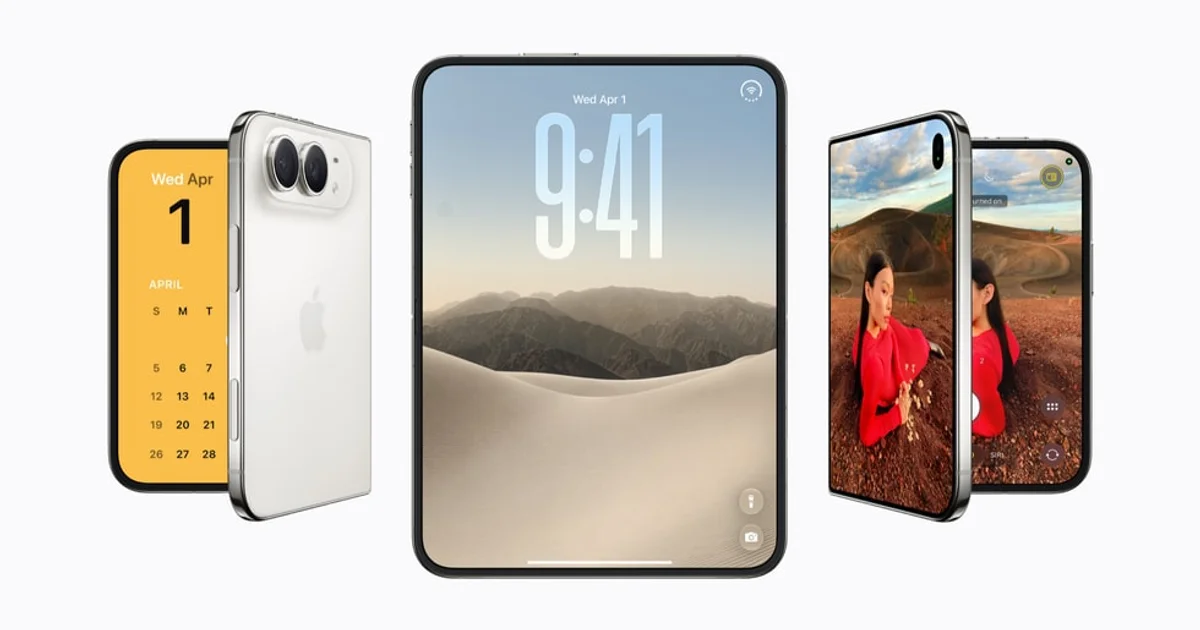
At 5AM Pacific Time on Friday, October 16, Apple opened preorders for the iPhone Duo. The company's first foldable smartphone had been announced more than a month earlier, giving interested buyers time to decide which model they wanted. Apple even allowed customers to prepare their configurations before preorders went live. But the initial delivery windows did not last long. Less than an hour after the launch, The Verge reported that Apple's US online store was showing late-January delivery estimates across the configurations it checked. Business Insider subsequently reported January 25, 2027, as the estimated shipment date for new US orders, including multiple colors, carriers and storage capacities. Those dates represent a delay of more than three months relative to the device's scheduled October 23 retail launch. They do not mean that Apple has postponed the iPhone Duo itself until January. The official release date remains unchanged. Instead, the online ordering system is assigning some customers to later delivery windows because earlier allocations have already been taken. That is a familiar pattern during high-profile technology launches, but the speed and length of this particular delay have made it notable.
Delivery estimates moved into 2027 almost immediately
Apple attempted to make the preorder process as efficient as possible. Before October 16, buyers could select their preferred color, storage capacity, carrier and financing options. They could save those choices to their shopping bag and complete the transaction quickly when ordering opened. That arrangement helps reduce the time required to make a purchase. It does not increase the number of phones available for a particular delivery date. Once the devices assigned to the earliest shipment windows were reserved, Apple's estimated fulfillment dates moved to later inventory allocations. According to The Verge, the shift occurred in less than an hour. Business Insider's checks also indicated that the problem extended across the available combinations rather than affecting only one particularly popular model. This suggests pressure on the initial online supply in the United States. It does not establish that every warehouse, store and national market has exhausted its allocation. Delivery dates depend on location, inventory distribution and the timing of additional shipments. An estimate reported on October 16 is a snapshot of availability, not a permanent deadline for every future order. Customers may see those dates change as Apple's supply picture develops.
Apple says demand has been extraordinary
Apple has characterized the initial response to the Duo as extraordinary. The description is consistent with the rapid movement in delivery estimates. The Duo is Apple's first major attempt to bring a folding display to the iPhone, and it represents a substantial design departure from the company's conventional smartphones. The product offers an experience Apple customers have not previously been able to buy without moving to another mobile platform. That makes the launch more significant than a routine annual processor or camera upgrade. There is also considerable pent-up interest. Samsung and other Android manufacturers have sold foldable smartphones for years. Apple customers who wanted to retain iOS while using a folding device had no comparable first-party choice. The Duo changes that. Still, a rapidly growing wait time does not reveal the total number of orders. Apple has not disclosed how many units it initially allocated to online preorders or how many customers completed purchases during the first hour. Without those figures, it is impossible to distinguish exactly how much of the delay comes from unusually strong demand and how much comes from limited available supply. Both factors may be contributing.
Long wait times do not automatically prove blockbuster sales
Preorder delays are often treated as evidence that a product has become an overwhelming commercial success. The reality is more complicated. Delivery estimates reflect the relationship between incoming orders and the quantity of stock available for specific fulfillment periods. If a manufacturer begins with a relatively small allocation, those delivery windows can fill rapidly. That can happen even when overall sales are modest compared with established mass-market products. Conversely, a company with very large initial inventory may experience strong demand without immediately creating months-long waits. The observed delay therefore tells us that Apple's earliest online allocations were insufficient to satisfy the orders arriving at that point. It does not reveal the absolute size of the market. The Duo also introduces manufacturing challenges that differ from those of conventional iPhones. Its folding display, custom hinge and dual-sided internal architecture require specialized production and assembly processes. Any such component can potentially become a manufacturing constraint. But Apple has not identified a specific Duo component as the cause of the reported delivery delays. Blaming the hinge or folding OLED panel would therefore go beyond the available evidence. The responsible explanation is that supply and demand are interacting, while the precise contribution of each remains unknown.
Apple was already warning about supply constraints
Business Insider noted that Apple's broader supply chain has been operating with reduced flexibility. During the company's July earnings discussion, Tim Cook warned that strong product demand and supply limitations could create greater pressure in the following period. His comments concerned Apple's overall business, not a confirmed shortage specific to the Duo. They nevertheless provide relevant background. A modern smartphone relies on a complex network of suppliers producing processors, memory, displays, batteries, cameras and mechanical components. Manufacturing capacity is not equally flexible across all categories. New designs can be particularly difficult to scale because suppliers must meet additional requirements for yield, durability and assembly consistency. The Duo's folding format adds hardware that ordinary iPhones do not need. Apple must also manage the launch alongside the rest of its iPhone 18 lineup. That creates competing demands for manufacturing resources. The company has not revealed exactly how it divided production between its models. Nor has it published a schedule showing how quickly Duo output will increase over the coming months. For now, the evidence supports a supply-constrained launch, but not a definitive explanation of which manufacturing process is setting the pace.
A $1,999 starting price has not stopped the earliest buyers
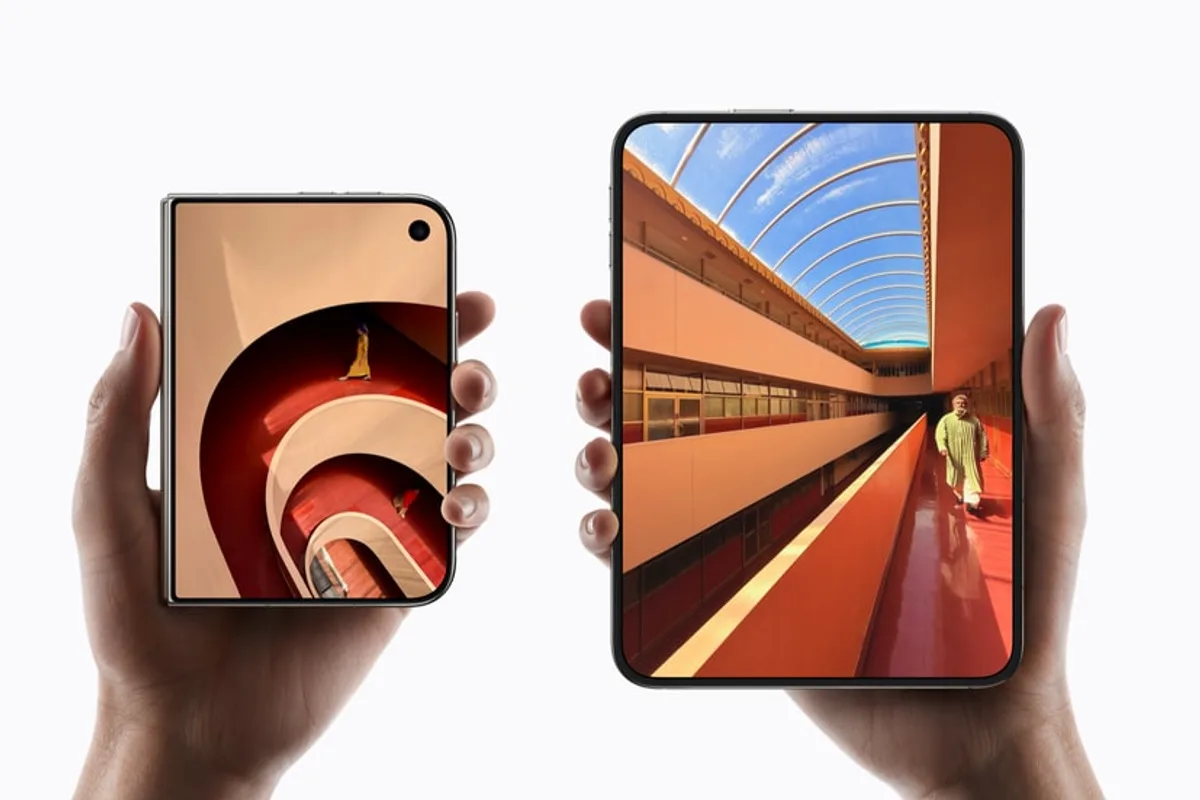
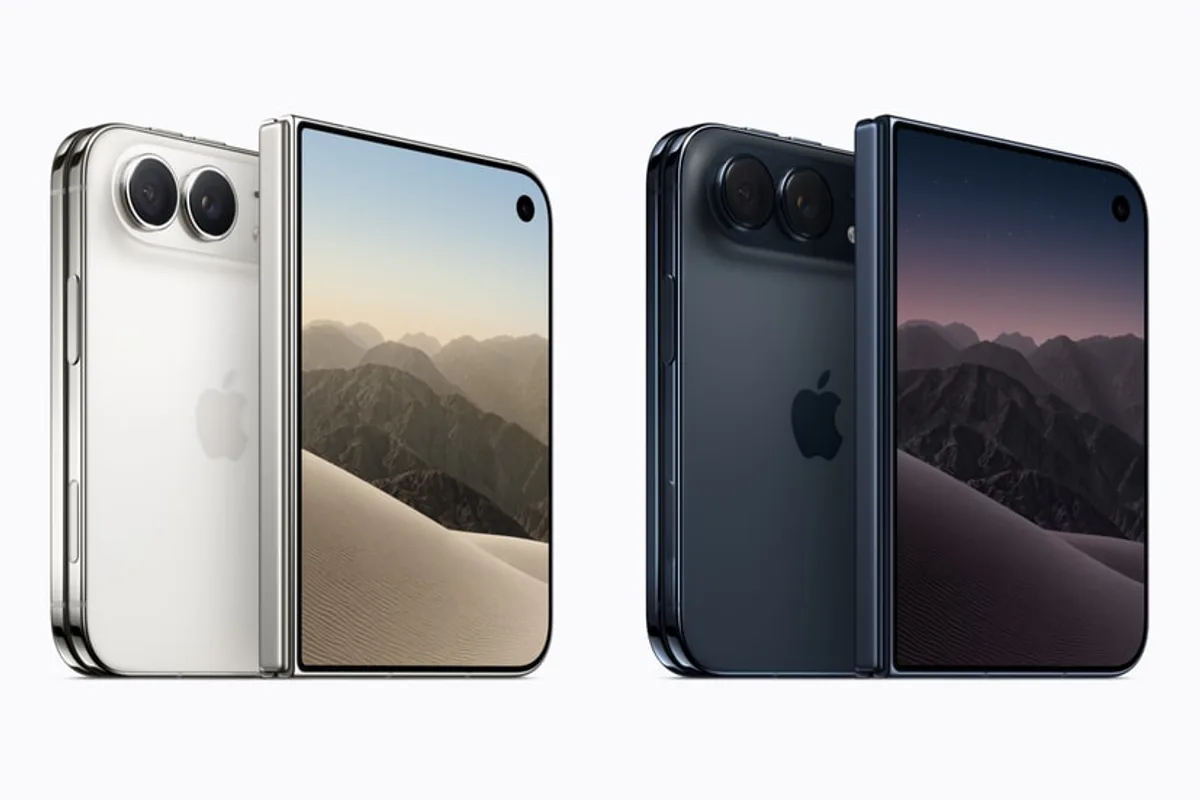
The iPhone Duo is not a conventional mass-market handset. In the United States, pricing begins at $1,999 for 256GB of storage. The highest-capacity model, with 2TB, costs $3,199. That places it above mainstream premium smartphones and many competing foldables. Apple is asking customers to pay for a fundamentally different form factor. Closed, the Duo has a 5.4-inch outer display intended for ordinary phone tasks. Opened, it reveals a 7.6-inch inner display, the largest screen Apple has offered on an iPhone. The device runs on the A20 Pro chip and uses a dual-battery architecture designed around its folding body. Apple also highlights a precision-engineered hinge and titanium construction. The company has adapted iOS 27 to the larger interior display, including Split View multitasking and interfaces that respond to folding and rotation. These changes make the phone more than a standard iPhone with a different shape. Whether they justify its price for most buyers remains another matter. Real-world durability, battery endurance, thermal performance and application support all need independent evaluation. A fast-selling preorder allocation does not answer those questions.
The folding design is meant to change everyday use
Apple's pitch centers on having two device experiences in one. The exterior screen is designed for quick interactions, such as replying to messages, checking notifications and making calls. Opening the phone provides a substantially larger area for video, reading, games and productivity. iOS 27 can display two applications side by side through Split View. The interface also adapts when the phone is folded, rotated or propped at an angle. In some situations, the Duo can be used without holding it fully open. The design may appeal to people who want a larger workspace but do not want to carry a separate tablet. The real benefit will depend heavily on third-party applications. Software designed to make intelligent use of both display sizes could be substantially more convenient. Poorly adapted applications might introduce awkward layouts or inconsistent behavior. The transition between screens is another important factor. Apple has demonstrated how its own software handles the folding mechanism. It remains to be seen how consistently the broader application ecosystem delivers the same experience. That is one reason the first independent reviews will matter more than early preorder excitement.
October 23 is still the official retail launch
Despite the long online delivery estimates, Apple's announced release schedule has not changed. The Duo is expected to become commercially available on Friday, October 23, in its first group of markets. Those include the United States, France, Germany, the United Kingdom and numerous other countries. Additional markets are scheduled to follow on October 30. Customers who completed preorders early may still receive their phones as soon as the official launch date. Later buyers may be assigned to shipment windows much further away. Apple also typically reserves some devices for in-store availability. The Verge noted that customers might therefore find an opportunity to purchase the Duo sooner at a physical Apple Store. However, potential stock availability is not a guarantee. Stores can receive different quantities and configurations, and local allocations may be exhausted quickly. A customer seeking a particular color or storage capacity should check local availability rather than assume the global launch date means immediate access to every model. The same caution applies to international delivery estimates. The January 25 date reported by Business Insider concerned the US ordering system at the time of its investigation. It should not be treated as a confirmed shipping date for every buyer in France or another European market.
Should customers rush to buy or wait for reviews?
The dramatic delivery estimates create a temptation to buy as soon as any unit becomes available. That is understandable for people who have been waiting years for a foldable iPhone. But the Duo is also a first-generation Apple product in a hardware category that presents specific durability challenges. The folding display and hinge will be operated repeatedly over years of ownership. Independent testing should help establish how the device handles regular use, heat, battery consumption and the transition between display modes. Its high purchase price increases the importance of those questions. Anyone considering a purchase should check Apple's current estimated delivery date for the chosen model and region. They should also examine nearby store pickup options when availability opens. There is little reason to assume that a long delivery estimate today will remain unchanged throughout the following months. Supply may improve, although Apple has not guaranteed a faster timetable. Buyers should also be cautious about paying substantial premiums to unofficial resellers merely to obtain an early device. The value of avoiding a wait needs to be weighed against the additional cost and any complications involving warranty or returns.
Apple enters a foldable market that already has established rivals
The Duo is an important step for Apple, but it is not the invention of the foldable smartphone. Samsung began selling foldable phones in 2019, and Google and several Chinese manufacturers have since developed competing designs. Those companies have already worked through multiple generations of hinge designs, flexible displays and software adaptations. Apple enters the category later, with a premium-priced product and the advantage of an existing iOS user base. That ecosystem may prove central to its appeal. A customer who uses iCloud, Apple Watch, AirPods and other Apple services may prefer to purchase a Duo rather than move to Android for a folding device. The initial preorder response suggests that at least some buyers were waiting for exactly that combination. But it does not establish whether the Duo will substantially expand the overall foldable market or mainly encourage existing iPhone owners to purchase a more expensive handset. Those outcomes require longer-term sales data and evidence about who is actually buying the device. A launch-week ordering spike cannot resolve the distinction.
Apple's next challenge is fulfillment, not publicity
The iPhone Duo has already achieved something important for Apple. It has attracted enough early attention for online delivery estimates to move into the following year within minutes of preorders opening. The company is presenting the response as extraordinary. Yet the commercial meaning of that response remains uncertain without actual order volumes and production data. An initial shortage can reflect a successful launch, limited manufacturing capacity or a combination of both. The distinction will become clearer as the first deliveries begin on October 23. Customers will then be able to assess the hardware, while market observers can follow changes in availability and shipping times. For Apple, strong interest creates an opportunity. It also creates an obligation to deliver a product that meets expectations at an unusually high price. The company must now convert preorder enthusiasm into completed shipments, sustained customer satisfaction and a manufacturing process capable of meeting demand. The Duo has passed its first test: getting people interested. Its next test is more practical. Apple needs to get the phones into customers' hands without making a three-month wait the defining feature of its first foldable iPhone.