
 By Camille
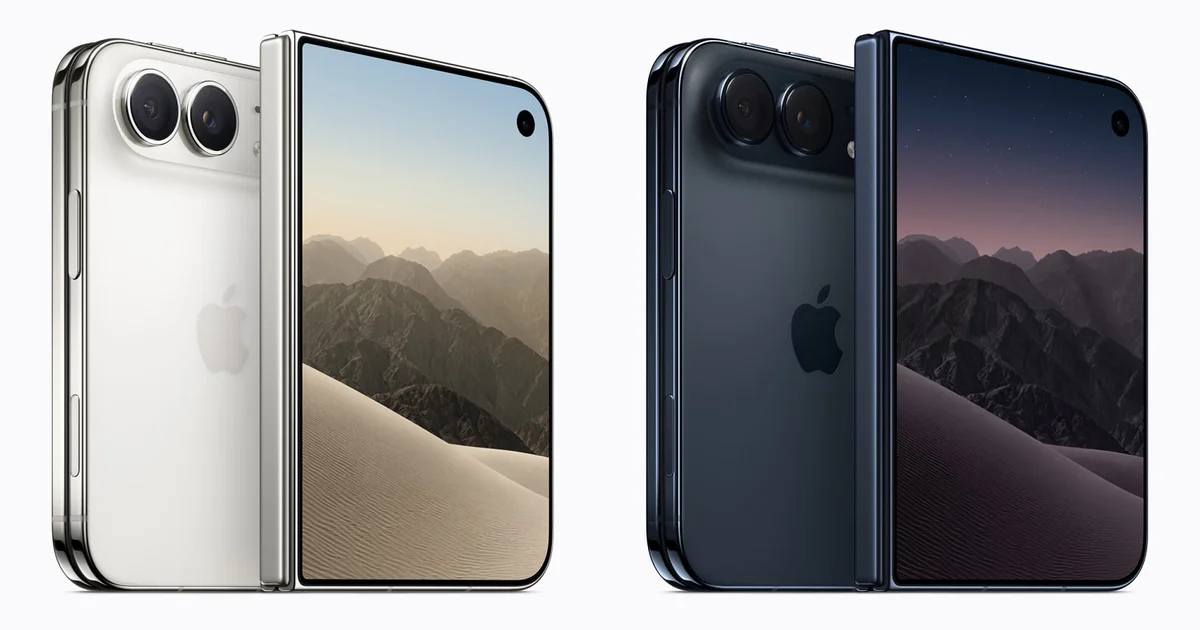
An extra €1,200 buys a lot of smartphone accessories. In the emerging secondary market for Apple's iPhone Duo, it may buy something less tangible: the promise of receiving the phone sooner. Preorders for Apple's first foldable began on October 16. Within an hour, online delivery estimates for some US orders had moved into January 2027. Two days later, German technology publication ComputerBase investigated what buyers were paying on eBay. Its findings suggest that the shortage has created a lucrative opportunity for resellers. Across four storage configurations, median transaction prices in its small sample were 25 to 32 percent above Apple's official German retail prices. The most expensive individual transaction documented for the 2TB version reached €5,530. The phone itself has not become more powerful or acquired any new features. The premium reflects access to something scarce: an early allocation.
The 2TB model has a €5,000 resale median
ComputerBase examined the five most recent eBay transactions for each storage configuration, regardless of color, as of October 18. The 256GB iPhone Duo officially costs €2,299 in Germany. Its median resale price was €2,999. For the 512GB model, Apple's €2,549 retail price compared with a €3,299 resale median. The 1TB version rose from an official €3,049 to a median of €3,823. The most dramatic figures concerned the 2TB configuration. Apple prices that version at €3,799 in Germany. ComputerBase's five-transaction sample produced a €5,000 median, approximately 32 percent above retail. Individual observations included €5,530, €5,450, €5,000, €4,743 and €3,700. That spread matters. The €5,530 figure is a particularly expensive individual transaction, not the standard market price. Likewise, the €5,000 median describes five observed transactions rather than a comprehensive average for every Duo being resold. The sample is small, geographically specific and time-sensitive. It nevertheless demonstrates that substantial resale premiums were appearing before the official retail launch.
A resale transaction tells us more than an outrageous listing
Online marketplaces are full of ambitious asking prices. A seller can advertise a popular device for almost any amount. That does not mean someone is willing to pay it. ComputerBase's approach is more informative because it examines recent transactions rather than relying entirely on active listings. The median also helps reduce the influence of extreme values. But five transactions per model still provide only a narrow view of the market. They cannot establish the average resale value across Germany, let alone Europe or the world. The findings should therefore be interpreted as evidence of an immediate speculative market rather than a definitive pricing index. That distinction is important because the market may change quickly. More inventory could reduce premiums, while continued shortages might sustain them. Even a handful of transactions shows that some buyers value earlier access very highly. It does not tell us how many other customers are unwilling to pay anything above retail.
Why Apple's first foldable is attracting resellers
The conditions are unusually favorable for speculation. The iPhone Duo is Apple's first folding smartphone, arriving years after Samsung and several other manufacturers established the category. For customers committed to iOS, it offers something that previously required switching to a different mobile ecosystem. The device combines a compact 5.4-inch outer screen with a 7.6-inch folding display. It also features an A20 Pro processor, a titanium structure and software adapted for multitasking. The hardware is distinctive within Apple's lineup. The supply picture, meanwhile, remains uncertain. Apple has not disclosed how many Duo units are being manufactured or how many were allocated to the initial launch. Its specialized folding display and hinge introduce production requirements that differ from conventional iPhones. Those characteristics may complicate manufacturing, although no single component has been officially identified as the cause of the preorder delays. The combination of a highly anticipated device and constrained early availability creates the opportunity resellers are exploiting. The exact balance between unusually high demand and limited production remains unknown.
The warning came before preorders opened
ComputerBase notes that supply concerns had already been raised during the summer. In July, analyst Ming-Chi Kuo warned that limited launch availability could make the Duo attractive to scalpers. That prediction is consistent with the resale activity observed after preorders opened. The sequence is straightforward. Apple announced the phone in September. Customers began reserving it on October 16. Shipping estimates quickly moved months beyond the official release date. By October 18, some resale transactions were already carrying premiums of around 30 percent. But a sequence of events is not proof that Apple deliberately engineered the shortage. There is no verified public inventory figure that would establish whether the company intentionally restricted supply or simply could not manufacture enough devices in time. The distinction matters because launch shortages can result from many factors, including manufacturing capacity, component availability and unexpectedly strong demand. The public evidence supports a tight early supply situation. It does not establish a deliberate scarcity strategy.
Buyers may be paying for a preorder rather than a phone
The timing introduces a particularly important risk. As of October 18, the iPhone Duo had not yet reached its official retail release date. Apple's first store availability is scheduled for October 23. That means someone advertising a Duo for resale may not yet physically possess the device. Depending on the individual listing, the seller could be offering an allocated preorder or promising to transfer the phone after receiving it. Those arrangements should not be confused with buying a product already in stock and ready to ship. If Apple's fulfillment estimate changes, the reseller may also face a delay. The buyer could end up paying a substantial premium without receiving the expected speed advantage. There are additional risks involving seller identity, refunds, payment protection and the terms of the marketplace transaction. Not every high-priced listing is fraudulent, and not every reseller will fail to deliver. But the combination of expensive hardware, speculative pricing and future delivery introduces more uncertainty than purchasing directly through an authorized channel. That risk deserves attention before someone transfers several thousand euros.
Apple limits purchases, but the resale market continues
ComputerBase reported that its own Apple Store purchasing test showed a limit of two Duo devices per customer. Such restrictions can make large-volume buying more difficult through a single account. They do not eliminate the possibility of resale. Individuals can buy a phone and later sell it. Separate buyers may also use different retailers or ordering channels. The existence of a resale listing does not establish whether its seller violated any purchasing restriction. The more important question is how effectively initial stock can meet demand. Limits on purchases can help distribute scarce inventory. They cannot manufacture additional folding displays, hinges or complete devices. Ultimately, a sustained improvement in availability would have a stronger effect on the incentive to pay large premiums. That depends on Apple's production and distribution capabilities.
Was the Duo released before Apple had enough stock?
The shortage has prompted criticism of Apple's timing. Bloomberg journalist Mark Gurman argued that the company launched the Duo before its supply was sufficiently established. He suggested a more reasonable inventory situation might not emerge until November at the earliest. ComputerBase cited that assessment in its October 18 report. It remains an interpretation from a journalist, not an official Apple production announcement. Apple has not confirmed that the phone was released prematurely. Nor has it published a detailed manufacturing ramp showing when availability will normalize. Still, the criticism raises a legitimate commercial issue. Launching an important new product with limited inventory can create publicity and excitement, but it can also frustrate customers. People who completed their orders immediately may receive their phones close to the launch date. Those arriving later can face extended delays or encounter sellers demanding hundreds of euros above retail. The result is an uneven purchasing experience for customers seeking exactly the same product.
October 23 could change the resale market
The iPhone Duo is scheduled to become available in its first retail markets on October 23. That date could change the economics of resale. If Apple Stores and other authorized retailers receive additional devices, some customers may find a faster option without paying a reseller. Availability may differ by location, color and storage capacity. There is no guarantee that every store will have meaningful inventory. But even limited additional stock can influence speculative prices. A customer willing to pay a €1,200 premium today might reconsider if a local retailer offers a reasonable delivery date. The reverse is also possible. If supply remains severely constrained, early access may continue to attract buyers willing to pay more. ComputerBase explicitly described its pricing findings as a snapshot. The figures should not be projected into future weeks without new observations. Reviews of the finished device are also expected around launch, and those may affect demand as prospective buyers learn more about its strengths and compromises.
German resale prices are not European retail prices
The geographical context should not be overlooked. ComputerBase's official prices come from Apple in Germany. Its resale observations concern eBay transactions examined for that market. Those numbers are not automatically the retail prices that Apple charges in France or other European countries. Taxes, local pricing and availability can differ. A buyer in another country should check the relevant Apple Store and authorized retailers before comparing an advertised resale price. There are also practical questions about buying across borders. Warranty procedures, proof of purchase, return conditions and compatibility details can affect the overall value of a device. For such an expensive product, the seller's reputation and the available payment protection are more important than a vague promise of early delivery. The fact that a listing advertises an iPhone Duo does not by itself establish that the advertised device has been received, inspected or prepared for shipment.
A 30 percent premium is hard to justify for an untested first generation
There will always be enthusiasts willing to pay extra for early access to major technology launches. But the Duo has a particularly high starting price even before speculative premiums. Adding several hundred or more than a thousand euros increases the financial risk considerably. The product is also Apple's first generation in a new hardware category. Its folding screen and hinge need to prove their durability under everyday use. Battery life, software adaptation and long-term reliability will become clearer as independent reviewers and customers spend more time with the device. Those are important considerations for a phone expected to serve as someone's primary device for years. Waiting may therefore provide two benefits. It could allow supply to improve, potentially reducing the incentive to pay resale premiums. It could also allow buyers to make a decision based on real-world testing rather than launch excitement. Neither outcome is guaranteed, but the trade-off deserves consideration.
The premium is real, but Apple's price hasn't changed
The German resale market is showing an unmistakable early pattern. Some buyers are paying substantially more than Apple's official prices to secure an iPhone Duo before general availability improves. ComputerBase's transaction sample puts the median premium at roughly 25 to 32 percent, depending on storage capacity. The highest individual amount documented for the 2TB model was €5,530. Those numbers reveal the commercial value attached to scarce early inventory. They do not mean that Apple has raised the price of the phone. Nor do they prove that the Duo has already become a long-term sales success. The size of initial production and total order volume remain undisclosed. What is clear is that some buyers are prepared to spend a great deal to avoid waiting. The next few weeks will show whether that willingness survives additional shipments and the first independent reviews. Until then, paying €5,000 for an iPhone Duo is not purchasing a better version of Apple's first foldable. It is paying a premium for someone else's position in the delivery queue — and accepting the uncertainties that come with it.