
 By Adri
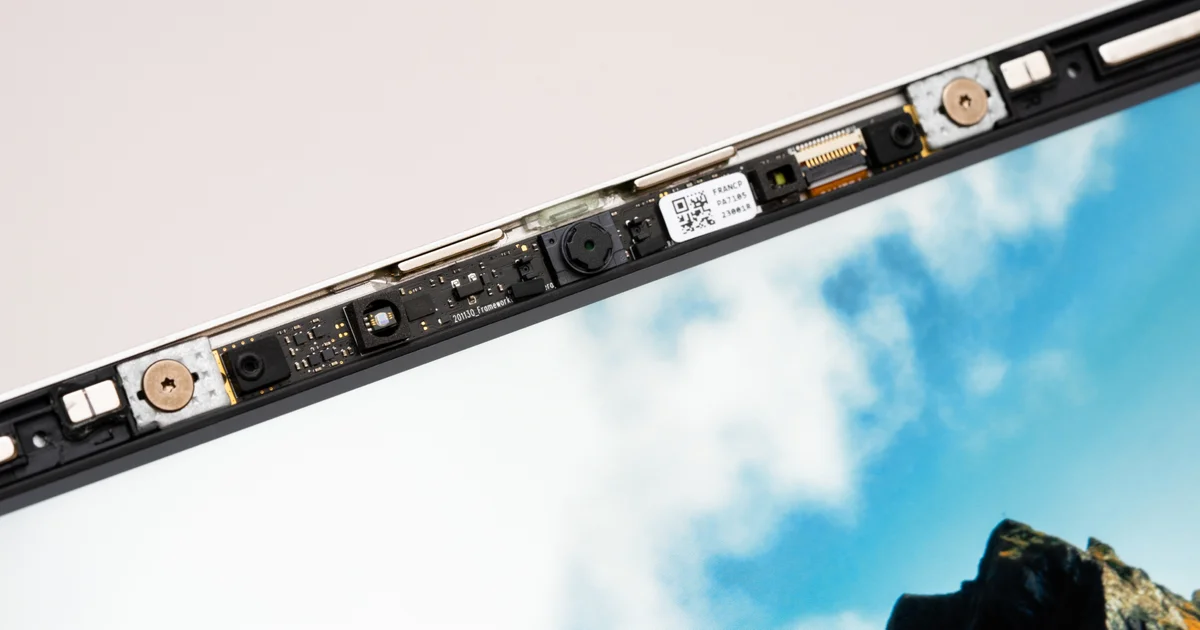
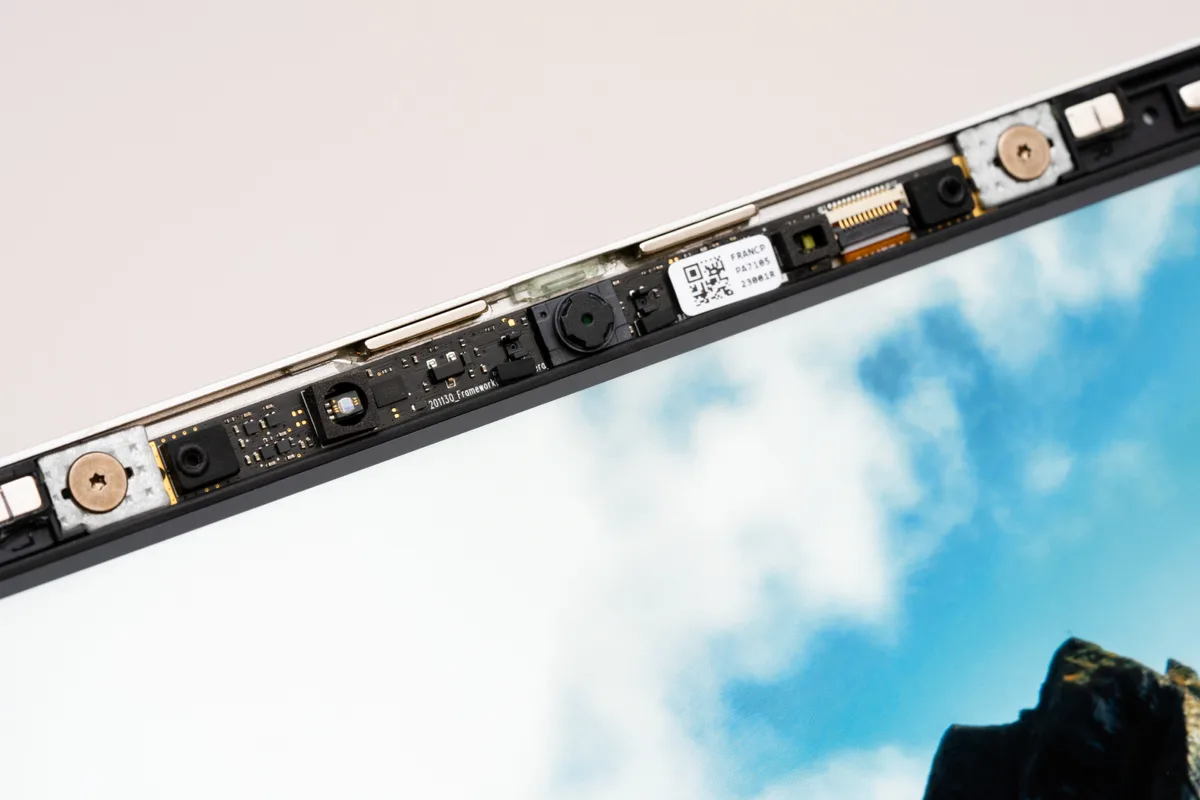
An integrated laptop webcam appears to be a relatively simple device.
A small lens, image sensor and a few electronic components seem sufficient to deliver a video stream.
In practice, modern laptop cameras may use a considerably more complicated architecture than traditional USB webcams.
The sensor sends data to an image processing unit, which must communicate with the operating system, load suitable firmware and expose video streams to applications.
If one of those components is missing, a computer may physically recognize its camera without being able to use it.
That is one reason Linux developers have been preparing support for upcoming Intel camera controllers before the associated computers reach the market.
On October 26, 2026, Phoronix reported that the media changes merged for Linux 7.4 include Intel IPU8 support.
Intel IPU8 prepares the camera pipeline for Nova Lake
IPU stands for Image Processing Unit.
It refers to hardware responsible for parts of the acquisition and processing of camera sensor data.
In a modern laptop, an image sensor may connect through MIPI CSI-2 rather than a conventional USB interface.
This approach allows manufacturers to integrate imaging components suited to mobile devices' physical and power constraints.
However, it requires the operating system to understand the specific hardware.
Intel IPU8 is a newer generation of that architecture.
Its Linux support is being prepared particularly for future Nova Lake laptops.
Early development work began months before the latest integration.
The October patch series extends the existing unified driver to recognize IPU8, initialize its hardware and communicate with its firmware.
The aim is to establish the necessary foundations before computers using the controller become available.
An IPU6 driver now supporting several generations
One notable aspect of the development is how it is organized within Linux.
Despite its name, the IPU6 driver is no longer limited to sixth-generation image processing hardware.
Developers have expanded a common codebase to include IPU7, IPU7.5 and IPU8.
This allows the different generations to share common mechanisms.
It also reduces the need to maintain several separate implementations of very similar functionality.
In a technical proposal published in early October, Intel engineer Divyamani Tripathi explained that IPU8 shares several hardware and software components with IPU7 and IPU7.5.
These include firmware interfaces, memory management mechanisms and initialization procedures.
Much of the development therefore involves identifying differences between generations rather than writing a completely independent driver.
That can simplify future maintenance, although it does not mean every platform has identical features.
Seven patches add the necessary IPU8 initialization
The Intel series contains seven patches.
It modifies sixteen files within the driver and its interfaces.
The first changes introduce identification of the new hardware generation and adapt the structures used for firmware communication.
Other modifications address hardware registers, memory management and power sequencing.
Adding the PCI device identifier allows the kernel to recognize an IPU8 controller when it is present in a compatible computer.
That recognition is fundamental.
Without it, the driver may not know which hardware is installed or how to begin initialization.
However, recognizing a component is not sufficient to produce an image.
The operating system must also start its firmware and configure the path through which sensor data will be transferred.
That is why the series includes changes to the capture subsystem and IPU8's internal interfaces.
Firmware communication required specific corrections
Intel's technical documentation shows that IPU8 support involved more than adding a new hardware identifier.
IPU8 expects a particular version of the firmware communication protocol.
Without the correct message layout, the controller could reject its boot sequence.
The developers therefore added the structures required to communicate using the expected format.
They also adjusted initialization paths that differ from those used by IPU7.
The technical report describes actual hardware tests in which incorrect configurations prevented the firmware from booting.
Those failures helped validate the required changes.
For future users, the underlying issue is straightforward.
A webcam depends on several internal components that are not normally visible in ordinary system settings.
If those components cannot initialize correctly, a video-conferencing application cannot solve the problem on its own.
Real hardware testing with two OmniVision sensors
The patch series was not validated solely through successful compilation.
Intel reports testing it on actual IPU8 hardware equipped with two OmniVision OV13B10 sensors.
The tests confirmed several important stages.
The controller was detected.
The image acquisition firmware started successfully.
The media controller topology exposed both sensors and their associated CSI-2 capture nodes.
This provides technical evidence that the basic driver functions on the tested platform.
However, it does not demonstrate that every future Nova Lake webcam will work immediately in mainstream applications.
Laptop manufacturers may select different image sensors.
Wiring, ACPI descriptions and firmware may also vary between models.
Compatibility will therefore need to be tested on actual commercial laptops rather than inferred entirely from the reference hardware.
ISYS and PSYS handle different stages of imaging
The IPU8 work distinguishes two important hardware subsystems.
ISYS handles the acquisition of data coming from camera sensors.
It is responsible for receiving raw image streams and exposing them to subsequent software components.
PSYS concerns image processing functions.
Depending on the architecture, these may involve additional transformations applied to captured sensor data.
Intel specifies that ISYS support is the primary target of the current validation.
The patches also include parts of PSYS hardware initialization, including memory configuration and power sequencing.
However, the unified driver does not yet have a complete consumer for a PSYS processing pipeline.
That distinction matters.
Being able to initialize a hardware block does not mean all of its advanced image processing features are immediately available to applications.
The merged support represents an integration milestone, not necessarily the completion of the entire camera processing stack.
Why modern webcams can be difficult to support on Linux
An integrated camera depends on multiple software layers.
First, the system needs a driver capable of communicating with its image processing controller.
A separate sensor driver may also be necessary.
The kernel needs to understand the physical connections between components, often through information provided by the computer's firmware.
Power management must correctly activate and deactivate the camera.
Finally, userspace applications need a way to interpret the resulting image streams.
On Linux, libcamera plays an important role in supporting many modern camera architectures.
Services such as PipeWire may then provide video streams to applications.
A working IPU driver therefore does not automatically guarantee that every video-conferencing program recognizes the webcam.
A system may correctly detect its image sensor while lacking the pipeline required to deliver usable video.
Adding IPU8 support is an important step, but does not eliminate these additional requirements.
Existing Intel laptops demonstrate the challenge
Previous generations of Intel camera hardware already illustrate these difficulties.
For several years, some Linux laptop owners needed additional modules or specialized configurations to enable their built-in webcams.
The gradual inclusion of IPU6 support in the mainline kernel improved the situation.
However, differences between sensors, firmware and laptop platforms can still cause problems.
Recent technical reports show that some systems require additional adaptations for specific sensors or power-control circuits.
Kernel developers are trying to reduce reliance on drivers maintained outside the mainline source tree.
Bringing IPU7, IPU7.5 and IPU8 into a shared infrastructure supports that objective.
It can simplify maintenance and make distribution integration more straightforward.
Nevertheless, it would be premature to declare that every Intel webcam compatibility problem on Linux has been solved.
Linux 7.4 also adds new image sensor drivers
The media subsystem updates go beyond Intel's image processors.
Linux 7.4 also gains drivers for several camera sensors.
The published list includes Sony IMX576, Samsung S5KJN5 and Himax HM1246.
Several OmniVision sensors are also covered, including OS02G10, OV05C10 and OG0VA1B.
These additions expand the range of hardware that Linux can potentially support.
They do not necessarily represent announcements of new commercial products.
The same sensor may be used in different device categories depending on manufacturer decisions.
Its driver must also be paired with the correct platform configuration.
Seeing a sensor listed in a kernel update does not automatically prove that a particular phone or laptop will be supported.
Rockchip, Qualcomm, NXP and STM32 also receive improvements
Linux Media covers much more than PC webcams.
It also supports embedded systems, industrial devices and development platforms.
Linux 7.4 adds a new MIPI capture driver for the Rockchip RK3576.
The changes include additional CSI-2 support for selected Qualcomm platforms.
Other developments target NXP's i.MX95 and DCMIPP subdevices associated with the STM32MP25.
New support for selected Maxim components and ITE HDMI bridge chips is also included.
These additions illustrate the variety of hardware using the Linux multimedia infrastructure.
For device manufacturers, upstream driver support can potentially simplify long-term product maintenance.
It can also make it easier to benefit from fixes applied to common kernel interfaces.
Laptop manufacturers will still determine real compatibility
Upstream IPU8 support is encouraging for future Nova Lake computers.
It gives Linux distribution developers time to prepare the required software components.
However, laptop manufacturers still have important responsibilities.
They must select suitable image sensors, provide correct hardware descriptions and ensure compatible firmware is available.
Boot-time configuration and power management also matter.
Two laptops based on the same processor family can therefore behave differently under Linux.
The processor name alone is not always enough to predict webcam compatibility.
For users, validation of a specific laptop model with a particular distribution will remain the most useful information.
Real-world testing after commercial release will establish how complete the support actually is.
There is no reason for existing users to rush into Linux 7.4
This development primarily concerns preparation for future hardware.
The Nova Lake laptops targeted by the changes are not described here as already commercially available.
Linux 7.4 is also still progressing through development before its stable release.
Owners of existing computers therefore do not need to replace their kernels simply because IPU8 support has been merged.
A webcam that already works correctly may show no visible change.
When troubleshooting an existing laptop, identifying the exact camera controller and sensor remains important.
An IPU6 problem will not necessarily be resolved by an IPU8-specific change.
Installing an experimental kernel can also introduce unrelated compatibility or stability problems.
Updates supplied and tested by a Linux distribution remain the preferable option for most users.
A quiet but meaningful improvement for future Linux laptops
Intel IPU8 support is not a spectacular feature from the average user's perspective.
It does not announce a higher webcam resolution or a new artificial intelligence capability.
Instead, it prepares the technical foundation that allows the operating system to communicate correctly with another generation of imaging hardware.
Unifying IPU7 and IPU7.5 support within the same driver also represents important maintenance work.
It reduces the need for separate implementations and allows developers to manage related hardware through shared code.
The real value will become apparent when the first Nova Lake laptops reach users.
If manufacturers integrate their sensors correctly and the required software components are available, Linux should be better prepared to handle their cameras.
That is the broader purpose of the work: reducing the risk that someone purchases a new laptop only to discover its built-in webcam still requires a collection of separate drivers and experimental workarounds.