
 By Tsuky
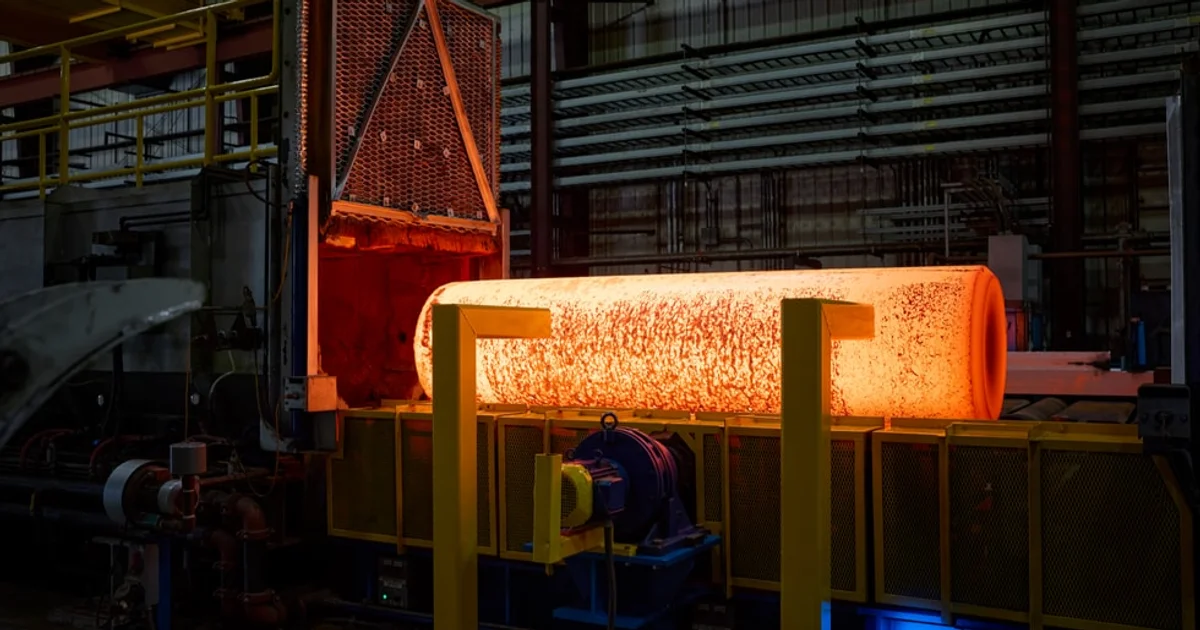
In Houston, Pennsylvania, Perryman Company melts, forges and rolls titanium that will be used in Apple products, including its first foldable iPhone. The industrial process is far removed from the polished consumer device, but it is precisely the part of the supply chain Apple wants to highlight.
The company announced on October 20 that it will commit up to $100 million to Perryman over the next three years. It is also expanding its relationship with Delaware-based Qnity Electronics to produce advanced films for the variable-aperture camera system in iPhone 18 Pro.
Both agreements are part of Apple's American Manufacturing Program. The initiative sits within a broader four-year, $600 billion commitment to US manufacturing and innovation announced by the company.
These figures describe industrial commitments across different timeframes and categories. They should not be interpreted as money already spent, nor as evidence that Apple's latest phones are manufactured entirely in the United States.
Why titanium matters for Apple's first foldable
iPhone Duo uses a grade 5 titanium enclosure, combining structural strength with the demands of a folding design.
A foldable smartphone requires more complex mechanical engineering than a conventional handset. The frame, hinge and internal support structures must accommodate repeated movement while protecting delicate display components.
Perryman will supply titanium made with a minimum of 80% recycled content for the relevant enclosure materials. Apple says the company processes the metal at its facility in Houston, Pennsylvania.
The recycled-content figure applies to the titanium described in the supply arrangement. It is not a claim that 80% of the entire phone is recycled material, nor does it establish an equivalent percentage reduction in carbon emissions.
Apple introduced iPhone Duo in September, with a 7.6-inch inner display and a 5.4-inch outer screen. Preorders opened on October 16, and retail availability is scheduled for October 23.
The device combines a precision hinge with titanium structural components and a flexible display protected by specialized layers. Apple has also described reinforcement mechanisms intended to improve durability under repeated folding.

The origin of the material is an important manufacturing detail, but it does not independently establish the finished device's real-world durability. That will also depend on component geometry, processing tolerances, assembly quality and long-term mechanical performance.
Apple has not said that the entire $100 million commitment is dedicated exclusively to iPhone Duo. Perryman is expected to supply titanium for multiple Apple products.
Qnity's contribution is less visible but technically significant
The Qnity Electronics partnership concerns advanced films used in the variable-aperture mechanism of the iPhone 18 Pro camera.
Qnity joined Apple's American Manufacturing Program in March. The new agreement extends its role in manufacturing specialized components for the 48-megapixel Fusion Main camera.
Unlike a fixed-aperture smartphone camera, iPhone 18 Pro can mechanically adjust the amount of light entering its main sensor.
Apple's design uses six laser-cut aperture blades controlled by a rotor mechanism. The Camera app offers automatic adjustment and four manual aperture settings, providing users with greater control over exposure characteristics and depth of field.
The aperture can open to f/1.48 to admit more light in dark scenes. Narrower settings, extending to f/4, increase depth of field and can help keep more elements of a photograph in focus.
These optical adjustments work alongside computational photography rather than replacing it. Exposure duration, sensor characteristics and image processing still contribute substantially to the final image.

Apple confirms that Qnity will produce advanced films essential to the camera system in the United States. It has not provided a detailed description of their composition or the exact proportion of the complete aperture assembly that will be domestically manufactured.
That leaves a distinction between confirmed component sourcing and assumptions about where the entire camera module is produced.
Nearly 100 American-made components do not mean a fully American-made iPhone
Apple says nearly 100 components used across iPhone Duo and iPhone 18 Pro come from American companies operating in more than a dozen states.
Component count is not the same as manufacturing value. A small radio-frequency component, a specialized film and a major processor have very different costs and industrial requirements.
The October announcement highlights an expanding network of suppliers.
Broadcom is modernizing its Fort Collins, Colorado, operations under a previously announced $1.5 billion investment. Its multiyear agreement with Apple is expected to support production of more than 15 billion US-made chips.
Corning manufactures specialty glass in Harrodsburg, Kentucky, including Ceramic Shield. Apple expects the site to supply all cover glass for iPhone and Apple Watch units sold worldwide by the end of 2026.
Coherent produces advanced laser technology at its Sherman, Texas, facility for features including Face ID. TSMC is expanding chip production in Arizona, with Apple reporting that its partner will manufacture more than 100 million chips for the company in 2026.
Amkor Technology is also developing an advanced packaging and testing facility in Peoria, Arizona. Apple expects to become one of its first customers when the relevant manufacturing capacity becomes available.
These activities represent different stages of semiconductor and electronics manufacturing. A chip fabricated in Arizona may still require additional operations elsewhere before it becomes part of a finished product.
The supply chain remains international
Apple's announcement is best understood as an expansion of domestic manufacturing capability in selected areas.
Designing a processor, manufacturing the silicon, producing structural materials, packaging chips and assembling a finished smartphone are separate processes. They frequently take place at different facilities and across national borders.
The new agreements do not announce a wholesale transfer of iPhone assembly to the United States.
This limits what can reasonably be inferred about manufacturing costs, logistics and exposure to international trade policy. Domestic sourcing of a critical material may improve supply flexibility without eliminating dependence on global suppliers.
Apple also connects its supplier strategy to its environmental targets. The company has committed to achieving carbon neutrality across its footprint by 2030 and requires direct suppliers to transition manufacturing to renewable electricity by the end of the decade.
The use of recycled materials supports that strategy, but the environmental effect of any specific component cannot be determined from recycled-content percentages alone.
Houston, Texas, is part of a separate manufacturing expansion
Apple is also expanding industrial training and production capabilities in Texas. In August, it opened a 20,000-square-foot Advanced Manufacturing Center in Houston.
The facility provides training for small and medium-sized manufacturers in areas including advanced production processes, final assembly principles and printed circuit board design considerations.
It is located within the same Houston industrial complex where Apple builds advanced AI servers and plans to begin Mac mini manufacturing during 2026.
That work is separate from Perryman's titanium operations in Houston, Pennsylvania, and from the Qnity camera-component agreement.
Together, these initiatives illustrate Apple's strategy of developing specialized manufacturing capabilities across multiple locations rather than announcing a single domestic production line for every part of a consumer device.
The October 20 agreements establish two concrete commitments: up to $100 million in titanium purchases over three years and expanded domestic manufacturing of advanced camera films.
Apple has not disclosed the percentage of iPhone Duo titanium requirements that Perryman will ultimately supply, the total financial value of its expanded Qnity arrangement or the effect of either agreement on device pricing.
Those details will determine how much of the new industrial activity translates into a measurable shift in Apple's actual manufacturing footprint.