 By Tsuky
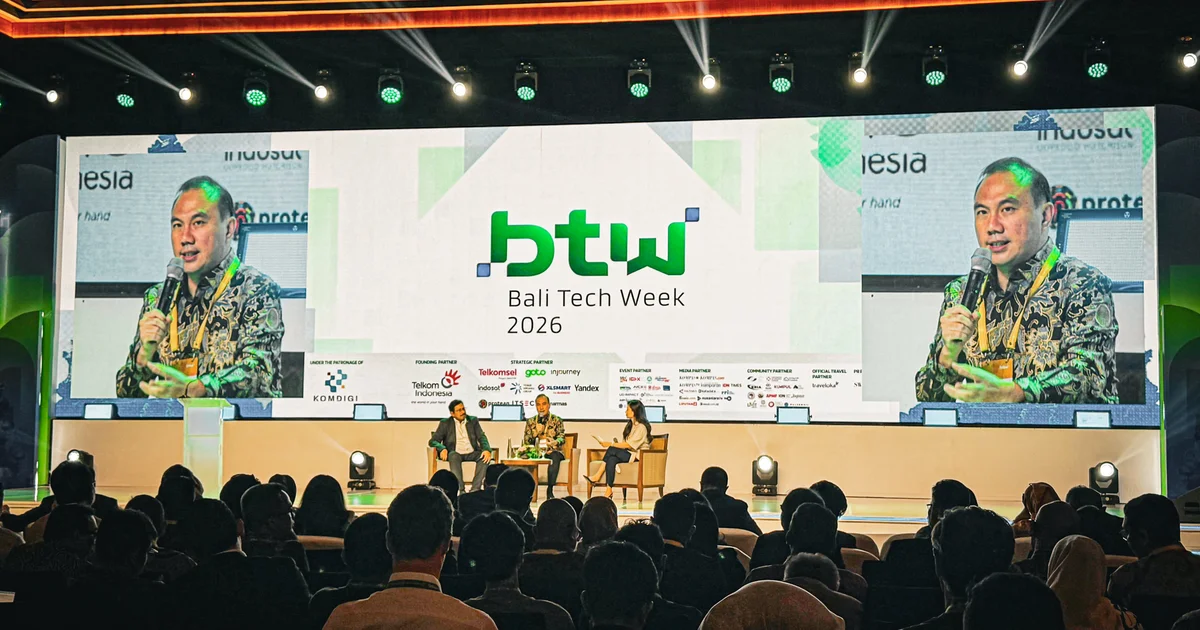
Ask an AI assistant to draft a letter in English, and the result may be impressive. Ask it to respond in a regional language with the expressions people actually use at home or in local businesses, and the experience can be very different. That is the problem GoTo is trying to address. The Indonesian technology group, known for Gojek and its wider digital services ecosystem, unveiled a new language model at Bali Tech Week on October 19, 2026. Its significance goes beyond its 27 billion parameters. The model has been adapted for linguistic and cultural contexts that global AI systems may not understand as consistently as English. GoTo targets Bahasa Indonesia alongside Javanese, Sundanese, Balinese and Batak. More importantly, the company has released the model weights on Hugging Face. This is not merely a conference demonstration or a promise of future access. Researchers, universities and businesses can obtain the model and use it as a foundation for their own software, subject to its licensing conditions. The release illustrates an increasingly important idea in artificial intelligence. The largest model is not necessarily the most useful one for every population.
Building AI for a multilingual country
Indonesia has a national language, Bahasa Indonesia, which helps connect people across a geographically extensive archipelago. But the country also has a rich variety of regional languages. Javanese and Sundanese are spoken by substantial communities. Balinese reflects another distinct cultural setting, while Batak encompasses multiple related language varieties used particularly in Sumatra. That diversity creates challenges for AI systems. Models trained mainly on the most abundant online material may produce uneven results when users communicate in less represented languages. The issue is not simply translation accuracy. Everyday conversations contain cultural references, local business practices and expressions whose meaning depends on context. An assistant used by a merchant needs to understand what a customer is actually requesting. A public service chatbot must avoid distorting information given by residents. GoTo wants to improve that local understanding. Its leadership argues that Indonesia should not remain exclusively a consumer of technology built for other markets. The country should also help create systems suited to its own needs.
The model weights are available, not just an API
Availability is one of the most important aspects of the launch. The model has been published on Hugging Face under the identifier GoToCompany/gemma3-27b-cpt-gotoai-v3-instruct. Organizations can obtain the necessary files and prepare their own deployment environment. They may then adapt the system to specific tasks and services. That differs from a product accessible only through a vendor-operated API. Companies relying exclusively on hosted services depend on the provider's pricing, availability and access policies. Downloadable model weights give some organizations the option to run the technology on infrastructure they control. That can provide additional flexibility over deployment and data handling. It does not make the service free to operate. Servers, GPUs, electricity, maintenance and security all have costs. However, organizations do not need to reproduce the entire original training process. For a local university or startup, having a capable base model can significantly lower the barrier to developing specialized AI applications.
Google's Gemma 3 provides the technical foundation
GoTo is not claiming to have created the entire model without existing technology. The release is based on Google's Gemma 3 family. GoTo's engineers continued training the model using additional language data and then adapted it for instruction-following tasks. That approach allows developers to retain the general capabilities of an existing model while specializing it. It can be particularly attractive when an organization has useful regional data but lacks the resources to train a large model from scratch. However, one legal distinction matters. GoTo uses the term open source in its announcement. The model weights are publicly accessible, and the company says organizations can use and adapt the technology. But the release is derived from Gemma and remains subject to the relevant Gemma license terms. Free access and commercial usability do not necessarily mean unrestricted licensing under a conventional open-source definition. Developers should examine those terms before redistributing or commercially deploying the model. This does not reduce the value of the release. It clarifies exactly what rights and responsibilities accompany it.
Training focused on Indonesian-language material
To specialize the model, GoTo gathered Indonesian text from sources including media partners and public-sector websites. The company also assembled additional regional-language data. The process addresses a fundamental limitation of language model development. AI systems learn linguistic patterns from their training examples. When a language is poorly represented, responses may become less reliable, particularly for local expressions and contexts. According to information provided to The Business Times, GoTo's additional training used approximately 65 billion tokens. A large portion consisted of Indonesian material. The company also included English text and data from the four regional language groups. These figures indicate the scale of the training effort. They do not independently establish the resulting model's linguistic quality. Data selection, cleaning and evaluation are equally important. Large quantities of repetitive or unreliable material can introduce errors. The composition of a dataset can also influence the biases a model reproduces. For that reason, independent evaluation will remain important despite the substantial amount of training data.
A university partnership supports contemporary Batak data
GoTo placed particular emphasis on collecting Batak-language material. For that work, it collaborated with Universitas Sumatera Utara. The objective was to gather data reflecting contemporary usage rather than relying entirely on older or less representative sources. The partnership highlights a challenge that is often underestimated in AI development. Material found online does not necessarily represent the way people speak today. Some expressions appear mainly in dictionaries or historical documents. Others evolve through everyday conversations and modern communication. Local academic institutions can help improve the relevance of these datasets. They may also identify linguistic distinctions that automated collection systems would miss. However, the announcement does not establish that every Batak variety is now handled with equal accuracy. That would require detailed assessments involving speakers from different communities and contexts. The university collaboration is an important step in building more representative training material. It is not proof that the resulting model has mastered every dialect.
Can 27 billion parameters outperform an older 70-billion-parameter model?
GoTo makes an interesting performance claim. Its new 27-billion-parameter model reportedly outperforms an earlier 70-billion-parameter system on several Indonesian-language evaluations. Ofir Shalev, the company's group chief data officer, described the comparison to The Business Times. According to Shalev, the new model achieved stronger overall scores across the targeted Indonesian languages. The improvement is attributed partly to more focused training and better local-language data. The technical argument is reasonable. A larger general-purpose model is not necessarily the best option for a specialized task. Training data quality and relevance also influence performance. Nevertheless, the claim has limits. It does not demonstrate general superiority over every internationally available AI model. The results were reported by the developer. Performance may change with the tasks, dialects and evaluation methods selected. Organizations considering adoption should therefore test the model on material drawn from their actual users. That is a more meaningful measure than a single aggregate score.
Further training used NVIDIA H200 GPUs
The Business Times also reported details of the computing resources involved. According to GoTo, continued training used 64 NVIDIA H200 GPUs for approximately five days. An additional instruction-tuning stage took around three days. Those figures provide useful context about the development process. They do not represent its complete cost. The original Gemma 3 model had already been trained by Google. GoTo also needed to collect data, prepare datasets, perform evaluations and coordinate engineering work. The reported GPU durations therefore do not cover every human and computing resource involved. For smaller organizations, this is precisely where the released model can be valuable. They do not need to repeat the initial training of a model containing tens of billions of parameters. Instead, they can start with an existing system and spend their resources on specialized applications. That approach may make projects possible that would otherwise be prohibitively expensive.
A 27-billion-parameter model still needs substantial hardware
GoTo emphasizes that its new model requires fewer computing resources than some substantially larger alternatives. According to The Business Times, an unquantized deployment may require approximately 55 to 65GB of GPU memory under certain configurations. The company cited an NVIDIA A100 with 80GB as one possible option. That remains professional computing hardware. The model is not something every ordinary laptop can run comfortably. Quantization can reduce its memory requirements. These techniques represent model parameters using fewer bits, potentially making deployment on less powerful GPUs possible. However, they may introduce trade-offs involving output quality or performance. The exact results depend on the chosen method. Context length and the number of simultaneous users also affect infrastructure requirements. A configuration serving one researcher is not necessarily suitable for thousands of concurrent requests. The meaningful advantage is that universities and smaller organizations may have more realistic options for self-hosting than with a significantly larger model.
Potential applications extend to merchants and public services
The release is not solely an academic project. GoTo operates businesses where local-language understanding can have immediate practical value. Its ecosystem includes transport, delivery and services for merchants. In an interview with The Business Times, Shalev described technologies used to process photographs of printed restaurant menus. Such systems can help merchants prepare digital listings for GoFood. Other AI functions support the handling of customer complaints, including cases involving photographic evidence. These examples show how language and multimodal models can become useful components of everyday business software. However, the public 27-billion-parameter release should not be assumed to power every current GoTo service. The company says some of its products already use newer or different models. The published system is therefore a foundation for further development, not a complete inventory of GoTo's internal AI technology. Potential applications include document search, customer support, education, translation and administrative services.
Digital sovereignty does not mean complete technological independence
GoTo frames the announcement as part of Indonesia's ambition to strengthen its domestic digital capabilities. The company refers to the country's Indonesia Digital Vision 2045. CEO Hans Patuwo argues that Indonesia should move beyond simply consuming foreign AI products. Developing locally adapted technology could help create businesses and technical expertise. But digital sovereignty requires a precise definition. The model is based on Gemma 3, developed by Google. Further training used NVIDIA GPUs. Distribution takes place on Hugging Face, an international platform. The project is therefore not independent of foreign technology. Its contribution lies in increasing local control over adaptation, language data and deployment. An Indonesian organization can obtain the model weights and choose how to operate the system. That represents a meaningful difference from relying entirely on an externally hosted API. It is an increase in technological autonomy rather than the elimination of every international dependency.
Universities are part of the development effort
The project also involves people beyond GoTo's permanent engineering teams. The company says interns from seven Indonesian universities contributed to its AI initiatives. Their work included preparing training data, supporting model development and participating in evaluations. Some helped gather regional-language material. Others contributed voices to speech technology projects. That training dimension matters. Developing AI models involves much more than writing software. It requires understanding datasets, biases, evaluation methods and deployment constraints. Regional-language systems also benefit from linguistic and cultural expertise. By involving local universities, GoTo hopes to expand the pool of people capable of building and evaluating these technologies. Long-term benefits will depend on continued investment and access to appropriate infrastructure. Publishing a model is one step. Building a sustainable ecosystem requires skilled people, reliable tools and economically viable applications.
The limitations: hallucinations, dialect coverage and privacy
Specialization can improve relevance without eliminating the usual weaknesses of generative AI. The model may still produce inaccurate answers. It may invent references, misunderstand context or confuse related language varieties. Performance can also vary significantly across topics. Strong results in ordinary conversation do not automatically make a model suitable for legal or medical advice. Organizations should therefore carry out their own evaluations before deployment. Those tests need to include the language varieties and expressions actually used by their intended audience. Privacy is another important issue. Self-hosting gives organizations more control over where data is processed. But it also creates responsibilities for securing infrastructure and managing access. Downloading weights from Hugging Face does not automatically guarantee the confidentiality of every application built around them. Licensing conditions must also be reviewed before commercial deployment. Technical accessibility and legal permission are related but distinct matters.
The future of AI will not be decided only in English
GoTo's announcement illustrates a significant direction for artificial intelligence. Global models aim to handle an increasingly broad range of tasks. But their quality may remain uneven when particular languages and cultures are underrepresented in training material. Locally focused development offers another approach. By adapting an existing model to a defined linguistic environment, organizations can potentially build systems that are more relevant to specific communities. That is what GoTo wants to demonstrate with its 27-billion-parameter release. The company reports improvements over an older, larger model. It has published the weights. It is working with universities and encouraging Indonesian organizations to develop their own services. Those are concrete steps. General superiority across every use case remains unproven. Independent testing will need to establish how reliably the model handles different regional languages and whether it provides measurable benefits to users. The project's success should not be judged only by download numbers. It will depend on how many genuinely useful applications can be built from this foundation. The release is a reminder of something often overlooked in the race toward ever-larger AI systems. A model becomes most valuable when it understands the people it is supposed to serve.