 By Kilam
A graphical update can involve several very different technical changes.
Higher rendering resolution, improved textures, more complex lighting and new image reconstruction technologies do not produce identical effects.
The Metro Redux Next-Gen Update combines several of these approaches.
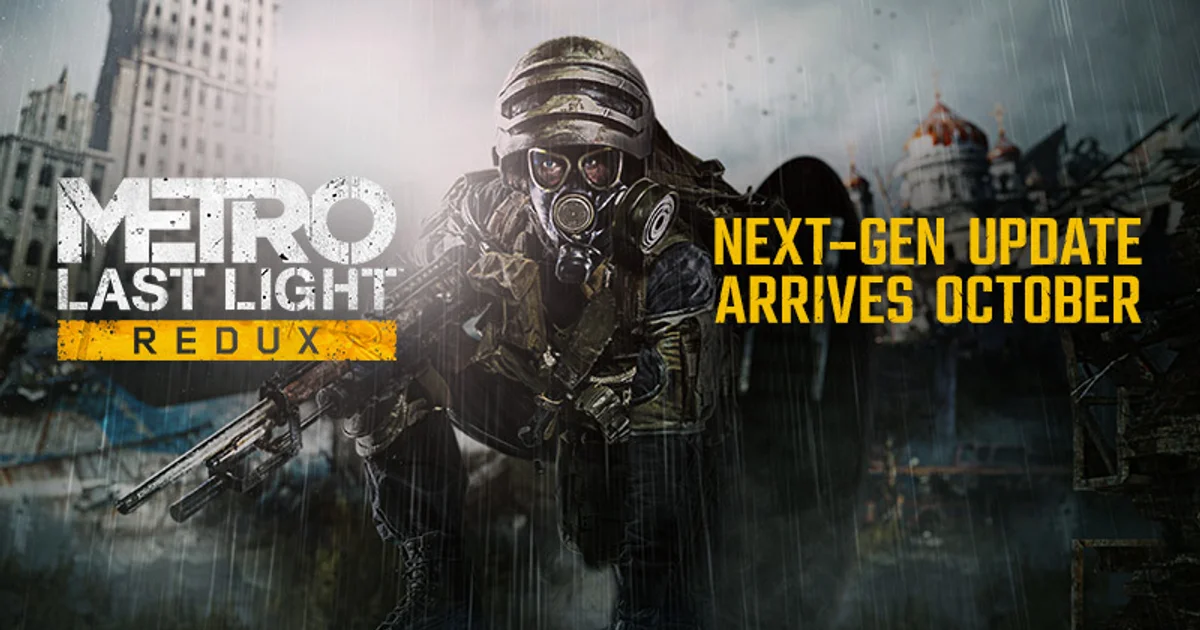
Available since October 29 on PlayStation 5 and Xbox Series, it upgrades Metro 2033 Redux and Metro: Last Light Redux while preserving their fundamental technology.
Native 4K at 60 FPS versus upscaled 4K at 120 FPS
4A Games advertises two main performance options on current-generation consoles.
The first targets native 4K rendering at 60 frames per second.
The second targets 120 frames per second using an image reconstructed to 4K.
The distinction matters because native resolution and reconstructed output are not the same thing.
Native rendering calculates the image directly at the target resolution.
Upscaling instead produces an image using a different internal resolution and reconstructs the final output through additional processing.
Image quality depends on the reconstruction method, the scene, camera movement and temporal stability.
A compatible 120 Hz display is also necessary to benefit from the high-frame-rate mode.
The detailed Xbox notes specifically identify Series X support for 120 FPS, without establishing identical targets for Series S.
Independent testing would be required to determine how consistently the advertised targets are maintained.
PSSR on PS5 Pro and 4A TSR on Xbox Series X
The upgrade includes different image reconstruction technologies depending on the platform.
On PlayStation 5 Pro, the developer confirms support for PlayStation Spectral Super Resolution.
PSSR is designed to reconstruct higher-resolution images from internally rendered information.
On Xbox Series X, 4A Games uses its own temporal reconstruction technology, 4A TSR.
The Xbox implementation also includes anti-aliasing improvements intended to reduce visible image artifacts.
However, the announcements do not provide matched image-quality comparisons between these methods.
Listing support for PSSR or TSR is not sufficient evidence that one version is visually superior to another.
Higher-quality textures and geometry
The Next-Gen Update introduces more detailed textures and greater geometric complexity.
The technical notes mention 4K texture support and additional tessellation capabilities.
Tessellation can increase geometric detail on selected surfaces, improving the representation of their shapes when the content and performance budget permit it.
Improved physically based materials are also included.
These systems allow surfaces to respond more consistently to lighting conditions according to their material properties.
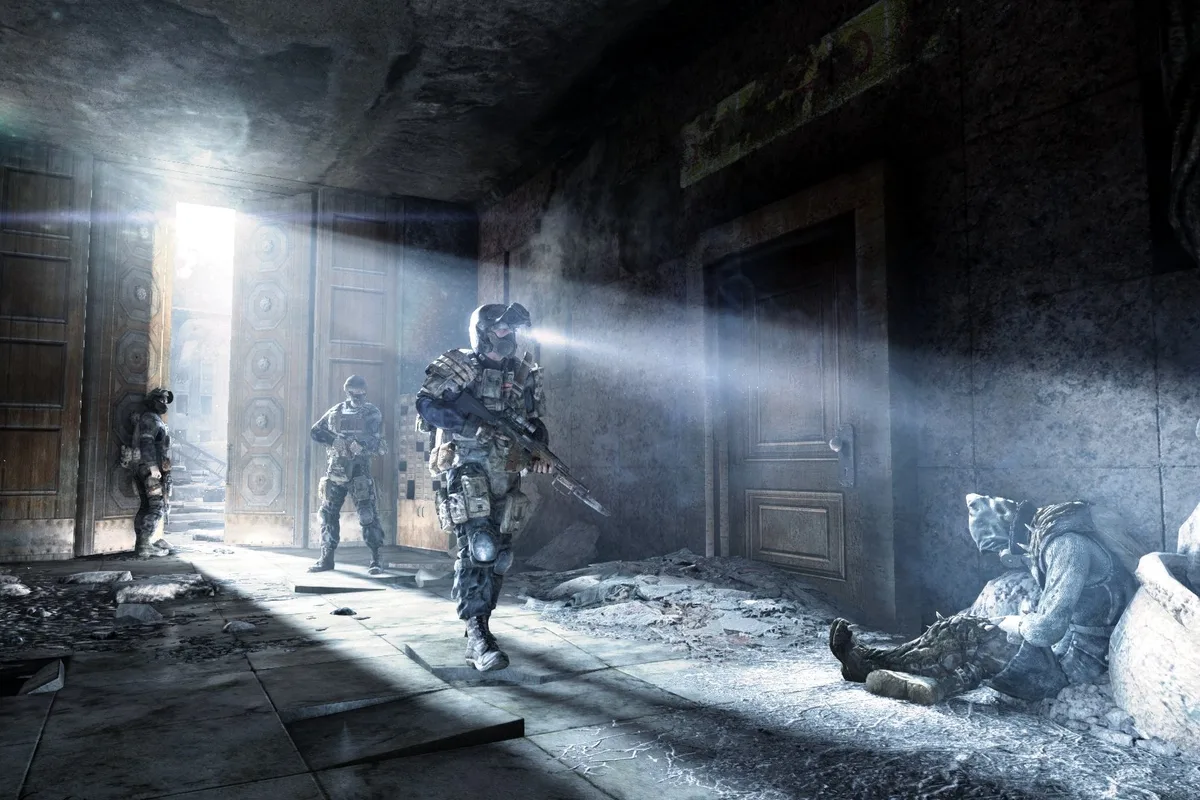
The actual visual improvement depends on the quality of the assets and how they are used throughout each level.
Increasing texture resolution does not automatically rebuild an entire environment.
Lighting improvements without ray tracing
Lighting receives substantial attention in the update.
4A Games reports improved shadows, particle effects and several lighting treatments.
The technical notes also identify screen-space global illumination.
This technique uses information available in the rendered image to approximate selected lighting interactions.
It should not be confused with a full ray-tracing solution.
PLAION explicitly confirms that the update does not include ray tracing.
According to the publisher, implementing that technology would require a deeper revision of the underlying rendering engine.
The development team is currently prioritizing Metro 2039 rather than a complete technical reconstruction of the older games.
Spatial audio and controller feedback
The update introduces platform-specific features beyond graphics.
Xbox players receive spatial audio support and Impulse Trigger feedback.
On PlayStation 5, DualSense adaptive triggers are supported.
These features aim to provide additional feedback during combat and interaction.
Their practical effect depends on the actions performed and individual controller settings.
PC improvements include DLSS, unlocked frame rates and upgraded audio capabilities.
Xbox Play Anywhere and handheld optimization
Xbox Play Anywhere is another addition to the updated versions.
The feature allows eligible games to be used across supported Xbox ecosystem devices under Microsoft's applicable terms.
4A Games also announces optimization for Xbox Ally and Ally X handheld hardware.
That does not establish a particular performance level or battery-life result on those systems.
Those characteristics would need to be assessed separately from the console versions.
Stability fixes are part of the update
The patch notes contain extensive changes beyond rendering.
Save reliability, loading stability and several progression blockers have been addressed.
The notes also document corrections to enemy detection, controller behavior and chapter-specific problems.
On Xbox, instability and graphical corruption related to Quick Resume are among the issues addressed.
These changes can be just as important as improved visual quality for players previously affected by such problems.
Nevertheless, a listed fix does not establish that every possible occurrence of a problem has been eliminated.
A save migration limitation
An important restriction applies to the Microsoft Store upgrade.
According to the official notes, existing saves do not transfer to the upgraded edition.
Starting a new game is recommended.
Chapter selection remains available with predefined equipment, allowing players to revisit individual sections.
Users should check the conditions associated with their installation before replacing existing game files.
The documentation does not establish the same restriction across every PC and PlayStation version.
Why this is not a remake
PLAION's official FAQ describes the release as a technical and quality-of-life update rather than a remake or an entirely new remaster.
The games have not been moved to the newest version of 4A Games' proprietary engine.
The original campaigns and their technical foundations remain intact.
The approach introduces modern compatibility and presentation features without reconstructing every underlying system.
It also imposes limitations, including the absence of ray tracing and the retention of older design elements.
Revisiting the series ahead of Metro 2039
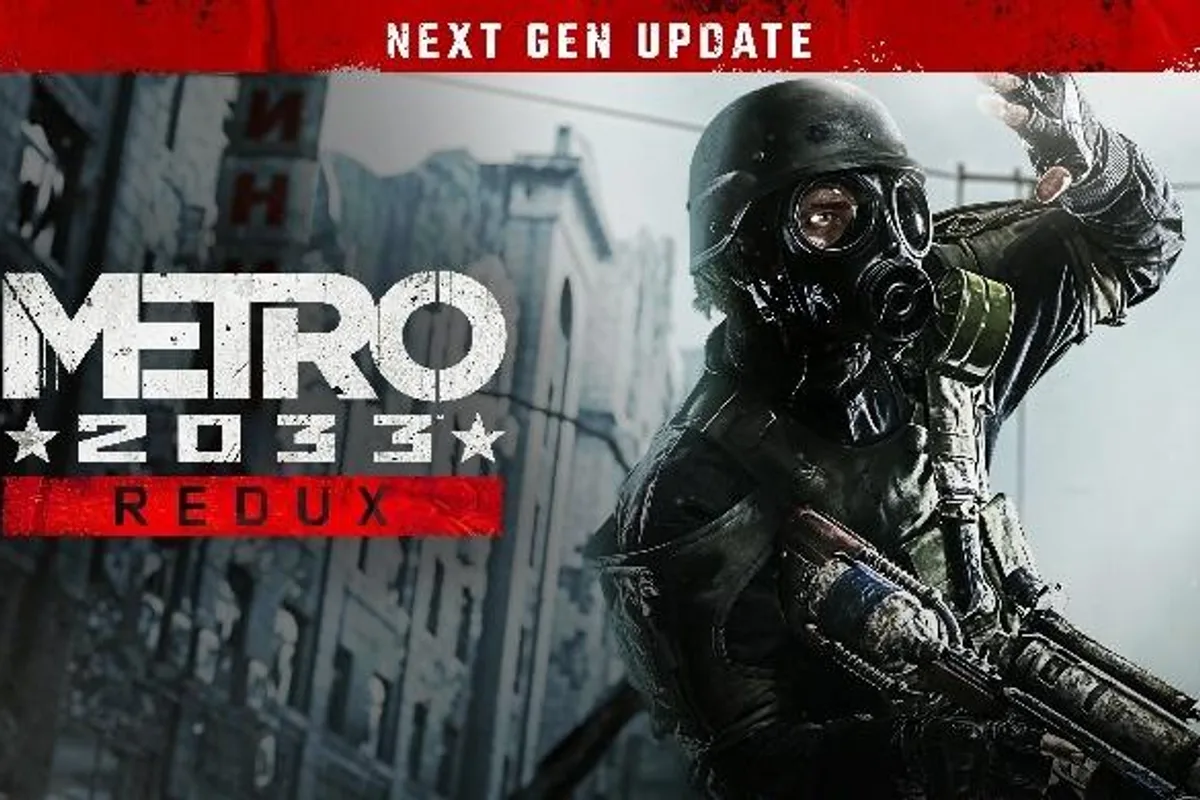
Metro 2033 Redux and Metro: Last Light Redux are now available with their updated features on eligible systems.
PC deployment began October 22, with PlayStation 5 and Xbox Series following on October 29.
PLAION has not announced an equivalent update for Nintendo Switch.
The release arrives ahead of Metro 2039, scheduled for February 4, 2027.
The improved resolution modes, reconstruction technologies and stability fixes represent meaningful technical changes.
A definitive comparison between platforms would still require independent testing using the commercial versions.
For existing eligible owners, the central benefit is a free technical modernization without the requirement to purchase an entirely new remaster.