
 By Camille
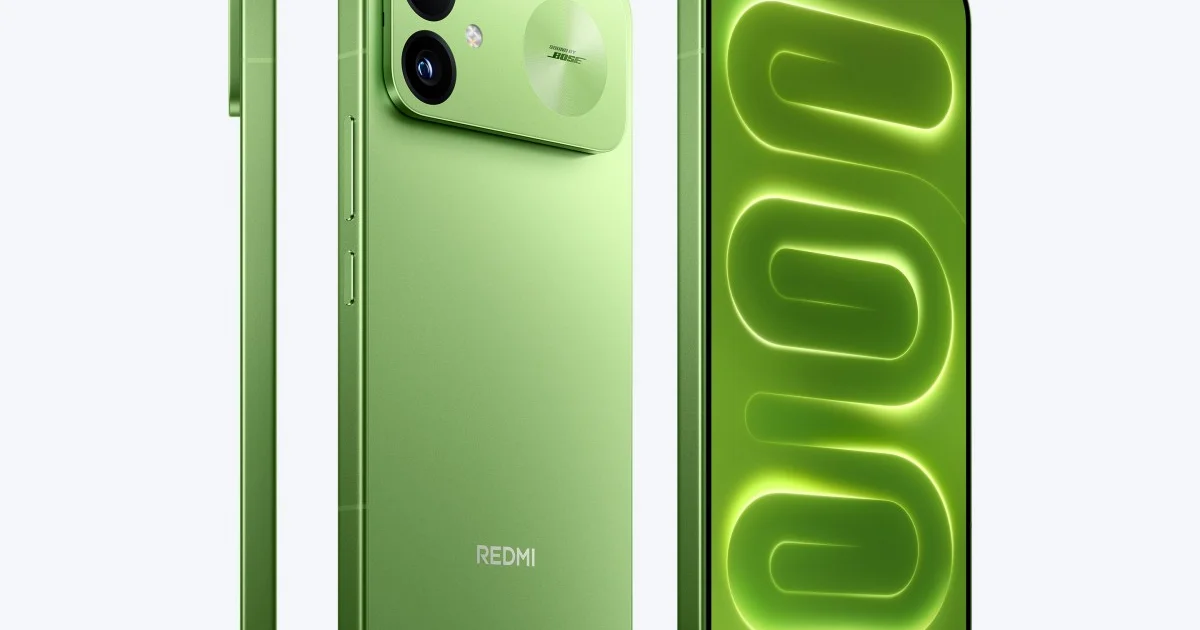
Battery life remains one of the most persistent frustrations for smartphone users. Phones keep getting faster, their displays become brighter and applications grow more demanding. Yet a day involving extensive navigation, photography, streaming or gaming can still require careful monitoring of the remaining battery percentage. Xiaomi is proposing an ambitious response. On October 20, 2026, Redmi confirmed that the standard K100 will feature a 10,000mAh battery. The capacity immediately stands out. It is considerably larger than the nominal capacity of many conventional smartphones. And unlike unusually thick handsets designed primarily for endurance, the Redmi K100 looks much closer to an ordinary premium smartphone in promotional images. At least visually. The manufacturer has not yet disclosed every detail needed to assess its ergonomics. Weight, thickness and independently measured battery life will be essential. The battery capacity is now officially announced. Its real-world benefits still have to be demonstrated.
10,000mAh sounds impressive, but it does not guarantee a specific runtime
Milliampere-hours describe electrical charge capacity. At comparable voltage levels, a larger value generally indicates that a battery can store more charge. However, the figure is not a direct measure of how many hours a smartphone will operate. Endurance also depends on the processor, display, wireless connectivity and software. A demanding game running at a high frame rate consumes energy differently from an ordinary messaging session. Similarly, a difficult cellular connection may require more power than a stable Wi-Fi network. The Redmi K100 pairs its large battery with a display capable of refreshing at 165Hz and a powerful chipset. These components can deliver excellent responsiveness. They can also increase energy consumption when their full capabilities are used. Different usage scenarios will therefore need to be tested. Browsing, streaming, photography and gaming may not show the same improvement compared with phones using smaller batteries. On paper, the capacity is excellent news. In practice, only comprehensive testing will establish how much longer the handset actually lasts.
Silicon-carbon technology is the key to a more compact battery
To reach the advertised capacity, Xiaomi is using silicon-carbon battery technology. The company places the cell within its Jinshajiang battery family. The approach uses electrode materials intended to improve energy density compared with some conventional designs. Silicon is attractive because of its ability to accommodate significant quantities of lithium. However, its use introduces technical challenges, particularly changes in volume during charging and discharging cycles. Manufacturers must therefore manage material composition and mechanical stability. Xiaomi reports a 28% silicon content for the Redmi K100 battery. It also claims a volumetric energy density of 957Wh/L. That specification describes stored energy relative to volume. It is more useful for evaluating compactness than capacity in mAh alone. But caution is necessary. These are manufacturer-reported figures. An independent teardown has not yet established the exact battery volume or how the finished cell is integrated into the smartphone chassis.
Xiaomi also promises strong performance at minus 20 degrees Celsius
Capacity is not the only battery feature being promoted. Xiaomi says its Jinshajiang battery maintains strong performance in very cold conditions, down to -20°C. The claim is noteworthy. Cold temperatures can reduce the available performance of lithium-ion batteries and temporarily affect their ability to deliver energy. A smartphone used outdoors in winter may therefore behave differently from the same device indoors. Xiaomi appears to be suggesting that its battery composition reduces some of those limitations. However, the statement remains a manufacturer claim. It does not necessarily mean the phone can be charged without restrictions at -20°C. Nor does it guarantee battery life identical to what users would obtain at room temperature. The precise testing conditions and charging protections still need to be examined. For people who frequently travel in cold regions, dependable low-temperature performance could be valuable. Independent, reproducible testing will be necessary before treating the benefit as established.
Can 100W charging refill such a large battery quickly?
A very large battery immediately raises another question. How long will it take to recharge? Specialist reporting lists 100W wired charging among the Redmi K100's expected specifications. That is a high charging power. However, it does not allow a full recharge time to be calculated directly. Smartphones do not necessarily maintain maximum charging power from an empty battery to 100%. Temperature, state of charge and protective circuitry influence the charging curve. The charger and cable can matter as well. With a 10,000mAh cell, a considerable amount of energy must be restored. The trade-off may still be worthwhile. A phone that lasts much longer between charging sessions may not need to be plugged in during the working day. Depending on usage, overnight or occasional charging might be sufficient. But tests should examine full recharge time and how quickly the phone regains a useful percentage of its capacity. Advertised wattage is an indication. It is not a substitute for measurements on a shipping device.
Snapdragon 8 Elite is joined by a dedicated D2 chip
The Redmi K100 is not positioned merely as an energy-saving phone. Xiaomi has also designed it for demanding workloads. The manufacturer confirms a Qualcomm Snapdragon 8 Elite chipset. This is the original generation introduced in 2024, not a newer processor with a similar name. The platform remains capable of running demanding applications and games. Redmi adds a dedicated D2 chip for selected graphics and display processing functions. The company highlights features intended to improve gaming fluidity. These may include additional image processing and, in compatible situations, generated intermediate frames. The D2 does not replace the Snapdragon's integrated GPU. It operates as a supplementary component. Its practical value will depend on software integration and game support. A smoother display does not automatically mean the underlying game engine is producing every frame natively. That distinction matters when manufacturers advertise extremely high frame rates.
A 6.83-inch AMOLED screen with a 165Hz refresh rate
The Redmi K100 will feature a 6.83-inch AMOLED display. Its advertised maximum refresh rate reaches 165Hz. The aim is to provide smoother motion than a conventional 60Hz display. This may appeal particularly to players of fast-paced games. It can also improve some interface interactions when the operating system uses higher refresh rates. Redmi announces peak brightness of 3,500 nits. The company also cites a 480Hz multi-finger touch reporting rate and 3,500Hz instantaneous touch sampling. These specifications describe different characteristics. Refresh rate concerns how frequently the display updates. Touch reporting and sampling describe how interactions are detected. Peak brightness should not be confused with continuously available full-screen brightness. Testing conditions can be substantially different. Finally, a display capable of 165Hz does not mean every application will produce 165 distinct frames each second. Software support remains decisive.

More than 40 games are advertised with 165fps support
Redmi says more than forty games will support a 165fps mode. That is a significant part of the phone's gaming-focused marketing. High frame rates can improve perceived smoothness and responsiveness. However, they also increase the demands placed on the system. The graphics processor must render or process more frames. The display must show them. And the handset must manage heat well enough to sustain performance. Xiaomi also emphasizes frame-interpolation features using its D2 chip. Here, the distinction between native rendering and generated intermediate frames is essential. A game running natively at 165fps is not identical to one whose apparent frame rate has been increased through additional processing. Image quality, responsiveness and visual artifacts may differ. Independent testing should therefore examine actual frame rates, long-term stability, temperature and energy consumption. A 10,000mAh battery could be especially appealing for extended sessions. But it remains to be seen how effectively the capacity offsets the demands of a high-refresh-rate gaming system.
Firefly Green offers the first clear look at the design
Xiaomi has released official promotional images of the Redmi K100 in a new Firefly Green finish. The shade appears pale green, with a relatively restrained look in the manufacturer's artwork. The phone has flat sides and a large horizontal camera module. Two rear camera lenses are visible. The right side of the camera area includes a circular surface carrying Sound by Bose branding. On the front, the flat screen has slim-looking borders and a centered camera cutout. The design resembles aspects of the Redmi K100 Pro family. However, the standard model is distinguishable by the arrangement of its camera housing. Images of the K100 should not be confused with those of the previously released K100 Pro, which has a different rear camera configuration. The large battery also makes one physical measurement especially important: thickness. Promotional images do not provide a dependable way to determine that figure. A device that looks slim is not necessarily light. The final dimensions and weight will help explain the design compromises Xiaomi has made.
The Bose label is visible, but audio quality remains untested
Sound by Bose branding is clearly visible on the Redmi K100. That collaboration adds another multimedia feature to a smartphone intended for gaming and entertainment. Specialist reports describe a stereo speaker arrangement. A partnership with a recognized audio company may involve tuning or sound reproduction improvements. But branding alone does not guarantee better audio than competing devices. Smartphone speaker quality depends on driver size, placement and internal acoustic design. Bass reproduction is especially difficult in such compact hardware. Maximum volume and distortion also need to be tested. It would therefore be premature to promise exceptional sound quality simply because a Bose logo appears on the back. Nevertheless, the feature is relevant to a device designed for games and video. Good speakers can improve entertainment when users are not wearing headphones. Their behavior in different hand positions will also matter.
A huge battery raises questions about long-term durability
Beyond daily runtime, battery longevity deserves attention. Rechargeable cells gradually lose some of their capacity through repeated cycles. The rate of degradation depends on chemistry, temperature and charging habits. Silicon-carbon batteries can increase energy density, but their design must manage the mechanical challenges associated with silicon. The Redmi K100 should therefore be assessed using criteria beyond initial capacity. How many cycles can it withstand before losing a substantial amount of performance? How effectively does the handset control temperatures during high-power charging? Can the battery be replaced under reasonable conditions? And how long will Xiaomi provide software updates for this model? The announcements examined do not answer all these questions. Yet a phone that lasts a long time between charges may lose much of its appeal if its capacity declines quickly. The more meaningful advance would combine a large energy reserve with strong performance over several years.
Why Xiaomi is saving important details for October 27
Redmi is following a familiar marketing strategy: revealing headline specifications gradually before the official launch. The presentation is scheduled for October 27, 2026, at 7pm in China. The design and several major specifications are already known. However, final pricing has not been confirmed. That may be one of the most important missing details. A phone with an enormous battery, Snapdragon 8 Elite and a 165Hz AMOLED display looks attractive on paper. Its value depends heavily on the actual asking price. Memory, storage, camera performance and water protection also need to be confirmed in the final commercial specification sheet. International availability remains uncertain. Xiaomi has previously brought some Redmi K-series devices to other markets under Poco branding. That does not prove the standard Redmi K100 will follow the same route. There is no confirmed French launch date under the Redmi K100 name. European buyers should therefore wait for a local announcement rather than assuming availability based on the Chinese schedule.
Exceptional battery life will have to be proven in everyday use
The Redmi K100 combines two ambitious goals. On one hand, Xiaomi is emphasizing an unusually large energy reserve. On the other, it is offering components designed for fast processing, high refresh rates and demanding games. Those priorities can complement each other. A large battery can support intensive activity for longer periods. But the same activity can consume energy quickly. The final result matters more than any individual specification. A good everyday smartphone must remain comfortable to hold, reasonably manageable in weight and capable of dissipating heat. It must also deliver the endurance buyers expect from the advertised capacity. The 10,000mAh number does not answer those questions by itself. Still, Xiaomi has an interesting opportunity. It may demonstrate that a capacity once associated mainly with bulky devices can fit into a phone with more mainstream premium ambitions. The October 27 presentation should clarify pricing and the remaining specifications. Independent testing will then determine whether this generation of batteries genuinely changes the daily experience. For now, the Redmi K100 has one major confirmed selling point. The next question is how much it allows users to do before they need a wall outlet.