
 By Kilam
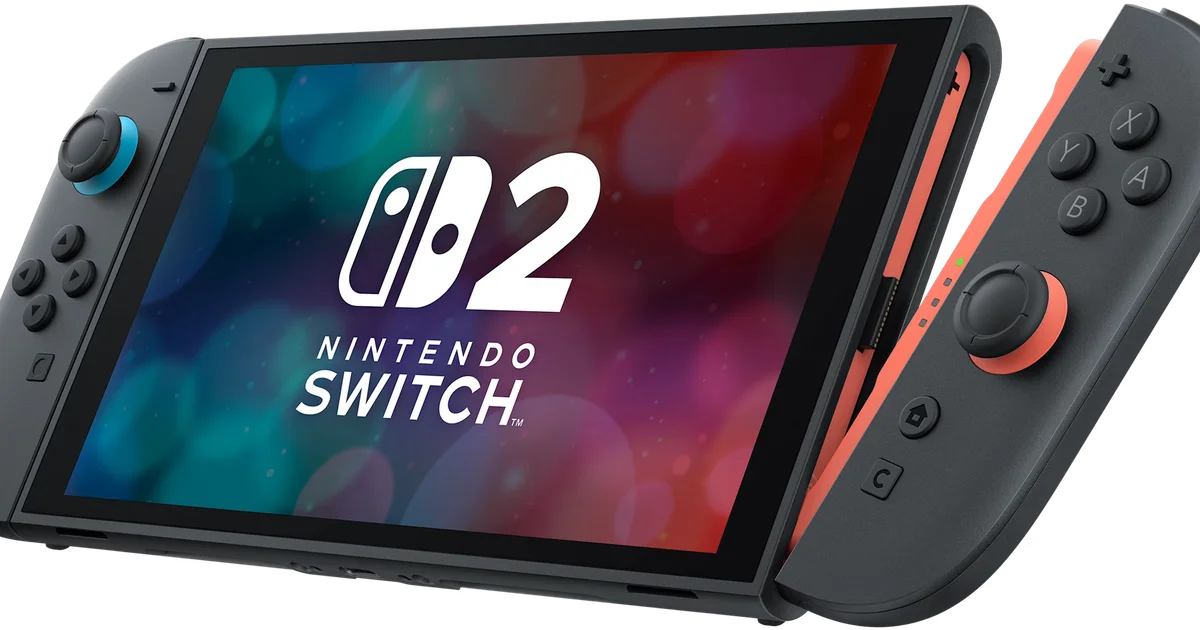
The word jailbreak can describe very different technical achievements.
Code running inside an isolated application does not have the same permissions as a system service.
Similarly, access to a privileged module does not necessarily mean that the operating-system kernel has been compromised.
This distinction is essential when assessing recent Nintendo Switch 2 security research.
Ns2jb represents a genuine breakthrough.
However, its capabilities remain below those of a complete alternative operating environment with extensive control over the system.
SmileBASIC 4 provides an unexpected entry point
Sammy Hajhamid's research begins with SmileBASIC 4.
The application lets Nintendo Switch users create and run programs written in BASIC.
Its interpreter handles data structures supplied by user programs.
The researcher identified a vulnerability involving array manipulation.
An integer overflow produces an incorrect calculation inside the interpreter.
The resulting behavior allows memory references to be manipulated in ways the software was not designed to permit.
This provides the first stage of a longer exploit chain.
The application vulnerability alone does not immediately grant control over every component of the console.
A second vulnerability affects filesystem services
After obtaining limited memory manipulation capabilities, the researcher examined system modules used by the console.
That investigation identified another weakness affecting the FileSystem service.
A memory corruption issue in this context made additional privileges accessible.
Combining the vulnerabilities enabled native code execution with permissions associated with selected system modules.
This differs significantly from ordinary script execution inside a restricted application.
The code can interact with certain functions that the original application should not normally control.
That provides opportunities for system research and more capable homebrew development.
However, it does not establish complete control over the operating system.
The kernel remains a major security boundary
In a secure operating-system architecture, applications, services and the kernel may have separate privilege levels.
Each layer is subject to different protections.
Ns2jb crosses some boundaries between applications and system services.
However, the public exploit chain does not establish arbitrary kernel-level code execution.
That limitation prevents it from being classified as a complete system compromise.
A permanent alternative operating environment would require overcoming additional technical challenges involving startup, process isolation and persistence.
No sufficiently verified public demonstration establishes that all those protections have been defeated.
Why ns2jb disappears after a restart
Ns2jb is described as a tethered exploit.
The injected code and associated memory changes do not survive a normal console restart.
The exploit must be activated again to restore the elevated access.
This is a substantial limitation for users hoping to run unofficial applications regularly.
The original technique also depends on a computer for part of the process.
The term jailbreak therefore does not mean the system stays permanently unlocked.
In this case, it describes a temporary compromise affecting selected software layers.
CivSwitch provides a different entry point
CivSwitch, published by Gezine on November 1, 2026, uses another approach.
The project exploits a cross-site scripting vulnerability in the original Nintendo Switch edition of Civilization VII.
Such vulnerabilities occur when content intended to be treated as data can instead be interpreted as executable code.
According to the project's documentation, the mechanism allows JavaScript execution within the affected application context.
The project also describes an application-level trigger that can be retained in saved data.
That form of persistence does not amount to permanent custom firmware.
It also does not establish access to the operating-system kernel.
CivSwitch primarily demonstrates that another software entry point can support further research.
WebKit provides a third research direction
Another project published in late October focuses on WebKit.
The browser engine is involved in displaying certain web interfaces and integrated pages.
A demonstration using Drift Legends 2 showed experimental access to a browsing environment.
Its author reports certain memory or storage manipulation capabilities within the targeted context.
However, these results do not establish complete operating-system control.
Application isolation remains a significant obstacle.
A vulnerability that affects WebKit and a vulnerability that compromises the kernel represent different technical achievements.
How was artificial intelligence involved?
One unusual aspect of ns2jb involves AI-assisted programming tools.
Sammy Hajhamid explains that he used Codex to automate parts of his research, generate test code and investigate unexpected behavior.
The researcher built an environment capable of interacting with his consoles, observing their output and restarting experiments.
That automation helped explore numerous test conditions.
However, this does not mean that an AI system independently discovered and exploited every vulnerability without human direction.
Target selection, experimental setup and interpretation remained connected to the researcher's work.
The project illustrates how code-generation tools may accelerate certain phases of security research.
Homebrew and complete control are different goals
The ability to run a homebrew application does not mean that all hardware restrictions have disappeared.
Some tools can operate inside a limited environment.
Others require access to more sensitive system resources.
This explains why demonstrations of independent applications may appear before complete custom firmware becomes available.
It also explains the distinction between an experimental file manager, an emulator demonstration and a fully alternative operating environment.
Early projects show that additional functionality is becoming accessible.
They do not guarantee general stability or universal control of the console.
Nintendo can still address software vulnerabilities
The publicly described exploit chains primarily depend on software components.
In principle, the manufacturer can change or patch the affected components through updates.
SmileBASIC 4's observed removal from digital storefronts has already reduced access to the original published entry point.
However, removing an application from a store is not the same as patching every relevant vulnerability.
Additional entry points may also emerge.
Research involving CivSwitch and WebKit shows that specialists are exploring several software surfaces.
The next developments will therefore depend both on Nintendo's defensive updates and the community's discoveries.
A major milestone, not the end of security protections
The technical situation as of November 2, 2026, remains nuanced.
Ns2jb establishes a genuine software compromise involving native code execution and elevated access to selected services.
CivSwitch introduces another entry point based on Civilization VII.
WebKit research offers an additional experimental direction.
However, none of those projects independently establishes complete, persistent control over the Nintendo Switch 2 kernel.
That distinction matters when separating research achievements from consumer-ready solutions.
The next major milestone would be a documented compromise of deeper system protections and a stable alternative software environment.
Until then, describing the console as partially jailbroken is accurate. Calling it completely hacked is premature.