
 By Kilam
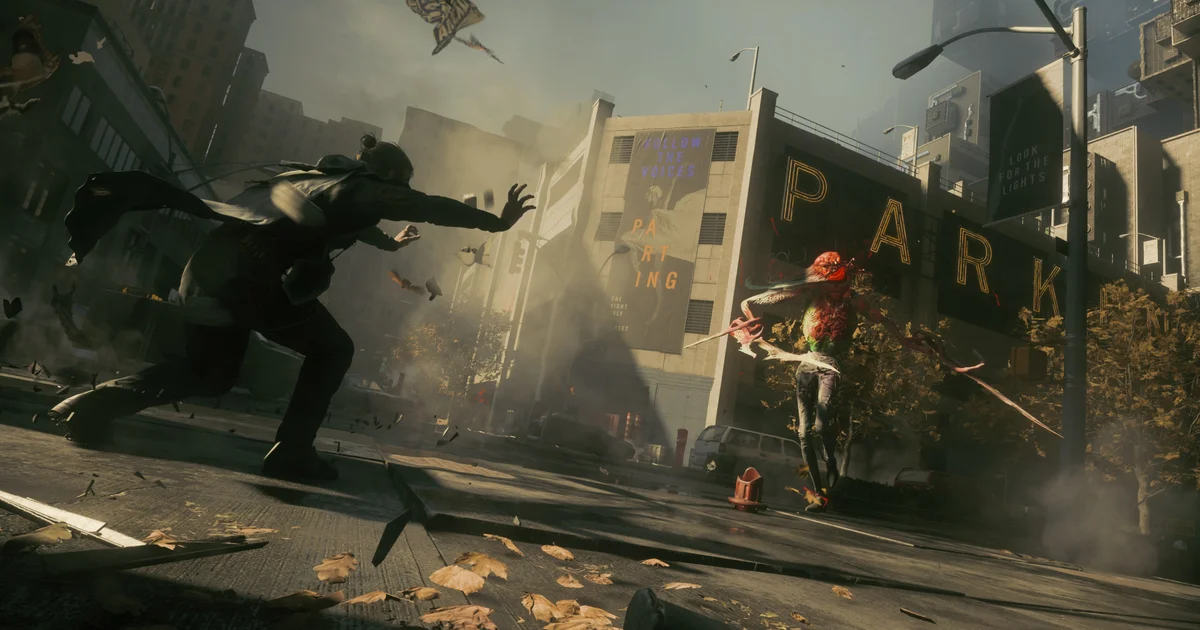
Control Resonant provides an unusually demanding environment for a modern rendering engine. Manhattan's buildings fold into impossible arrangements, streets change orientation, and supernatural phenomena transform familiar urban spaces into compositions that would be difficult to reproduce using conventional level design.
Remedy's Northlight engine handles the artistic ambition remarkably well. The shift from the enclosed Oldest House to a much larger urban environment introduces additional technical challenges, however, and the PC version's extensive graphics options do not eliminate every performance concern.
Northlight's impressive environmental transformation
The original Control established Northlight as a particularly effective engine for atmospheric interiors, convincing materials and advanced lighting. Resonant expands that visual identity into a city containing far more exposed geometry and larger viewing distances.
The resulting environments are striking. Buildings are rearranged into unexpected shapes, recognizable streets appear to defy gravity, and atmospheric effects help connect otherwise contradictory architectural elements.
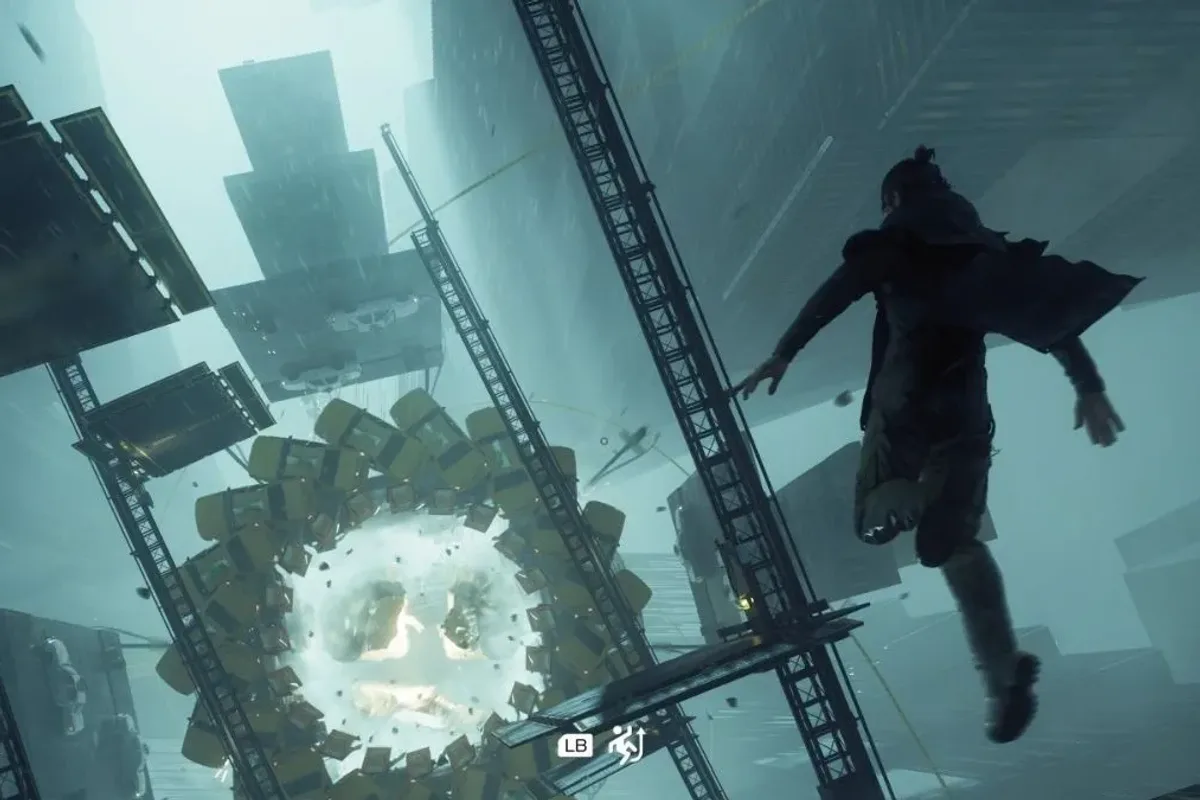
Crucially, the visual design remains closely related to gameplay. Dylan's traversal abilities allow him to approach structures from unusual directions, making the distorted architecture part of the navigation system.
The engine must therefore support both the visual spectacle and the readability required for high-mobility action. Most environments maintain a convincing balance, although crowded combat sequences can become difficult to interpret when multiple effects overlap.
Advanced lighting comes with advanced requirements
Technical investigations of the PC release document extensive graphics features, including ray tracing, path tracing and several contemporary upscaling technologies.
The presence of Nvidia DLSS and AMD FSR provides options for balancing image quality and rendering performance. Their practical value varies according to graphics hardware, output resolution and the particular configuration selected.
Path tracing offers the most ambitious lighting simulation, but it also introduces substantial computational demands. The highest available rendering settings should not automatically be treated as appropriate targets for every gaming PC.
Upscaling can improve performance by reducing the internal rendering workload, but it cannot eliminate all limitations created by scene complexity, CPU demand or memory behavior.
The variety of available options is welcome. Still, obtaining a consistently satisfying result requires more deliberate configuration than simply selecting the highest preset.
Launch compatibility problems require qualification
ComputerBase identified a significant issue involving certain Radeon RX 7000 graphics cards and FSR 4.1 upscaling during its pre-release investigation.
The publication reported crashes under specific conditions and noted that a subsequent update examined on September 21 had not yet resolved the behavior.
Importantly, this was not described as a universal failure across all RDNA 3 graphics cards. Other investigations were able to operate the game on hardware from that generation.
These findings document a genuine compatibility problem around launch, but they should not be presented as proof that the same issue remains unresolved on every configuration in October 2026. Driver updates and subsequent game patches may affect the results.
Separate console evaluations also identify performance compromises. GamePro reported occasional stuttering in loading areas and noticeable aliasing on the standard PlayStation 5, while still considering the overall experience enjoyable.
The Xbox Series X evaluation published by TechRadar describes generally smooth movement but also highlights the prolonged combat encounters created by durable enemies. That latter issue primarily concerns game design rather than rendering performance.
Rendering technology serves the movement system
One of the game's most impressive accomplishments is the relationship between visual complexity and navigation.
Dylan can move through environments that change the expected meaning of floors, walls and vertical surfaces. The engine's ability to present those spaces consistently makes it possible to understand and navigate structures that would otherwise appear completely incoherent.
The design also creates unusually diverse viewing angles. Players can approach architecture from above, below or along gravity-shifted surfaces, revealing portions of the environment that conventional third-person action games rarely expose.
These systems explain why technical ambition cannot be separated from artistic design. Higher-quality illumination and convincing materials contribute to the atmosphere, but the fundamental achievement is the creation of spaces that remain visually compelling while functioning as playable environments.
That accomplishment is visible even without considering the most computationally expensive rendering settings.
An impressive showcase with practical limitations
Control Resonant demonstrates how effectively Northlight can combine unusual geometry, atmospheric lighting and supernatural visual effects. Its environmental presentation is among the strongest aspects of the entire production.
The technical assessment is more complicated. Advanced rendering features demand powerful hardware, while documented launch issues reveal weaknesses in compatibility and consistency.
The game offers enough customization to make performance tuning worthwhile, but no single recommendation applies across every GPU and resolution. Stable frame delivery should generally take priority over enabling every optional effect.
Remedy deserves considerable credit for expanding its engine into an ambitious open-world setting without sacrificing the identity of the Control universe. The remaining concerns do not erase that achievement, but they prevent the PC version from being considered an entirely polished technical release.